Text to imageCafe & brandStyle guide
Seed Exchange · Two-Color Overprint
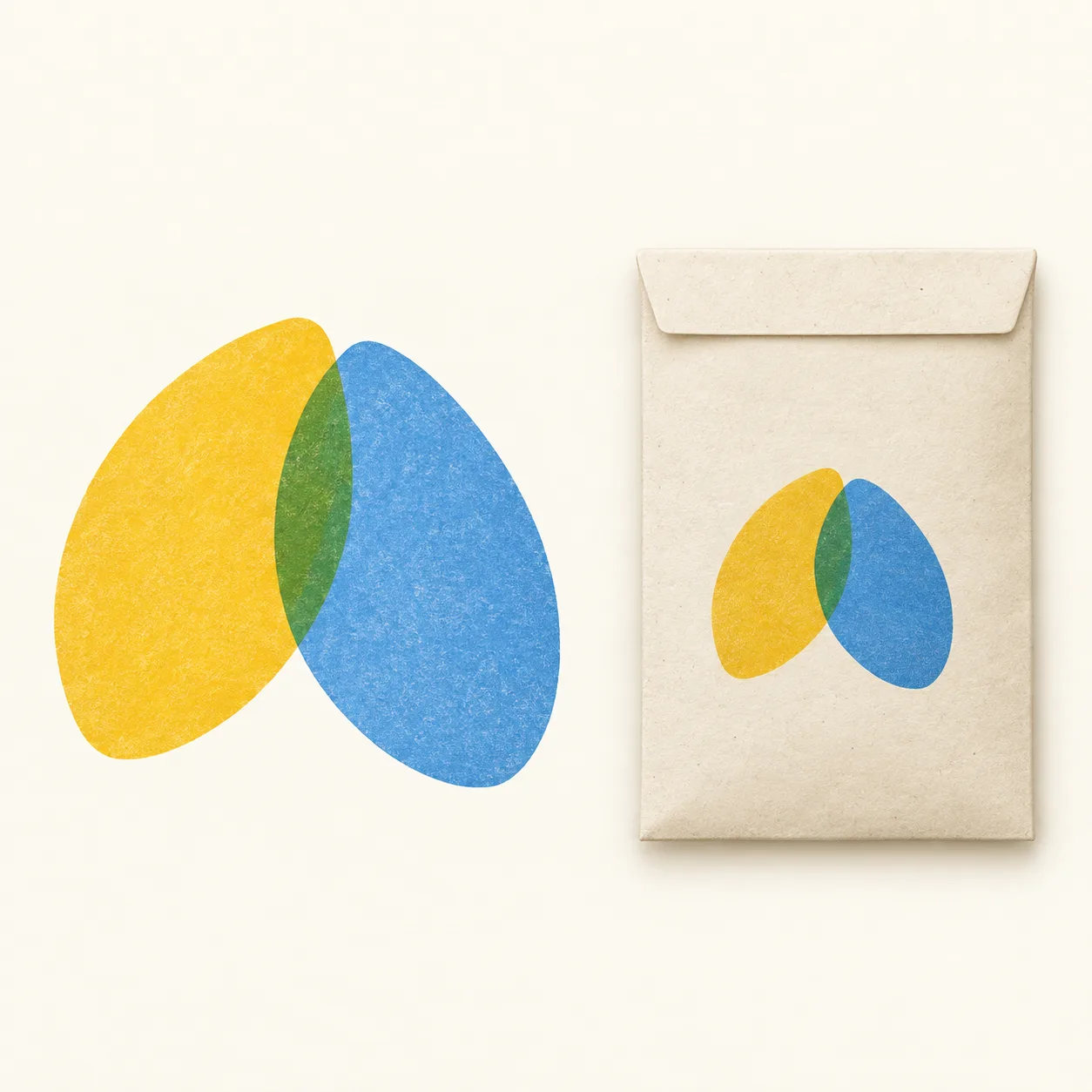
A seed exchange identity that carries the third color formed by two overlapping seed shapes onto a small packet.
Seed Exchange · Two-Color Overprint
- Shape & line
- Draw two solid, gently tapered oval seeds with smooth outlines and no internal lines. Tilt the image-left seed toward the upper right and the image-right seed toward the upper left, overlapping their inner edges to form one broad lens-shaped center while preserving two distinct outer tips.
- Color & light
- Print the image-left seed in translucent golden yellow and the image-right seed in translucent blue. Let their shared area become visibly green through overprinting, with both original colors remaining clear outside the overlap; use soft, even light on the packet so lighting does not imitate the third ink color.
- Texture & material
- Give the packet matte, uncoated ivory paper and the printed shapes a faint, irregular ink grain. Keep the grain subordinate to the solid silhouettes, and preserve the same paper-through-ink appearance in the large emblem and the packet emblem.
- Composition
- Align the large emblem and the packet around a shared horizontal center. Center the smaller emblem on the packet face, keep its seed angles and overlap proportion consistent with the large version, and leave broad ivory margins so the two-color construction remains the visual focus.
Priority
Make the green overlap and the consistent emblem across both scales immediately readable.
What to avoid & what to check
Avoid opaque layered shapes, gradient shading and decorative lettering.
Confirm that both emblems show two seed silhouettes and one green shared area.
Exact prompt for this example
SUBJECT
Create an original identity reference for a community seed exchange: one emblem made from exactly two overlapping seed silhouettes, and one plain paper seed packet carrying the same emblem. The overlap represents seeds shared between neighbors.

COMPOSITION
Use a square, front-facing presentation on warm ivory. Place the large emblem in the image-left half and the smaller upright packet in the image-right half, with generous space between them. Show the packet face clearly so the repeated emblem is easy to compare.

STYLE GUIDE
1. Shape & line
Draw two solid, gently tapered oval seeds with smooth outlines and no internal lines. Tilt the image-left seed toward the upper right and the image-right seed toward the upper left, overlapping their inner edges to form one broad lens-shaped center while preserving two distinct outer tips.

2. Color & light
Print the image-left seed in translucent golden yellow and the image-right seed in translucent blue. Let their shared area become visibly green through overprinting, with both original colors remaining clear outside the overlap; use soft, even light on the packet so lighting does not imitate the third ink color.

3. Texture & material
Give the packet matte, uncoated ivory paper and the printed shapes a faint, irregular ink grain. Keep the grain subordinate to the solid silhouettes, and preserve the same paper-through-ink appearance in the large emblem and the packet emblem.

4. Composition
Align the large emblem and the packet around a shared horizontal center. Center the smaller emblem on the packet face, keep its seed angles and overlap proportion consistent with the large version, and leave broad ivory margins so the two-color construction remains the visual focus.

PRIORITY
Preserve the requested identity, count, action, composition and output settings. Apply the style rules within those constraints; a style reference must not replace the subject or layout. Within the style: Make the green overlap and the consistent emblem across both scales immediately readable.

AVOID
Avoid opaque layered shapes, gradient shading and decorative lettering.

OUTPUT
One square image, 1:1 aspect ratio, presented as a finished brand reference. Include no lettering, numbers, captions, watermarks or placeholder text.

SELF-CHECK
Confirm that both emblems show two seed silhouettes and one green shared area.
Model information comes from image provenance. The same prompt may produce a different result.