Text to imageCharacterStyle guide
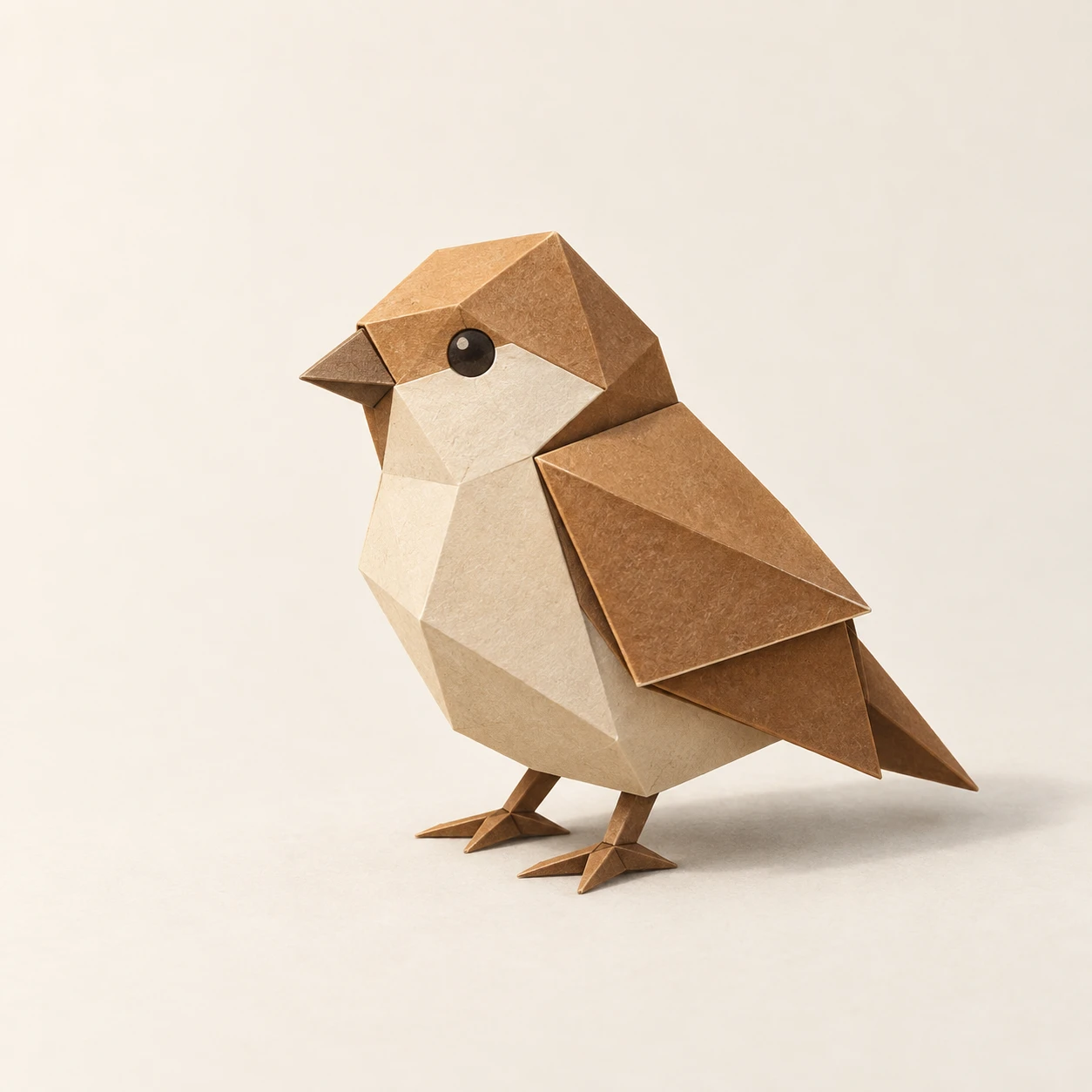
Paper Sparrow Friend · Fold-Plane Shading
Give each folded paper plane a consistent value to reveal the angular volume of a small sparrow character.
Paper Sparrow Friend · Fold-Plane Shading
- Shape & line
- Build the head, breast, and wings from a few broad polygonal planes; use straight outer edges and selective sharp crease lines, allowing each crease to terminate at a visible fold junction instead of drawing a decorative grid.
- Color & light
- Use warm ochre paper and a pale cream breast, lit from the upper image-left. Make planes facing that light pale, viewer-facing planes midtone, and image-right planes dark; hold each plane at a mostly uniform value with clear changes at folds, and cast a short shadow toward image-right.
- Texture & material
- Render matte paper with subtle broad grain and thin exposed edges at the wing tips and beak. Add a narrow dark seam where each folded wing meets the body, keeping the paper surface quiet enough for the large facet values to dominate.
- Composition
- Place the sparrow slightly right of center on a plain pale background, leaving open space in front of its image-left beak. Keep both paper feet visible beneath the body and their contact shadows attached to the ground; separate the near wing from the breast through its angular boundary and darker value.
Priority
Prioritize readable folded volume through broad, consistent plane values.
What to avoid & what to check
Avoid rounded shading that erases folds or dense crease patterns that obscure the character.
Check that value changes follow visible folds and that the feet meet their ground shadows.
Exact prompt for this example
SUBJECT
One original folded-paper sparrow character with a compact angular body, a small triangular beak, two folded wings resting against its sides, and two short paper feet touching the ground. A simple dark eye on the visible side gives it a curious expression.

COMPOSITION
Show the entire character in a three-quarter view, with its beak pointing toward image-left and its visible flank facing the viewer. Use an eye-level viewpoint and generous empty space so the head, wing folds, feet, and short ground shadow remain readable.

STYLE GUIDE
1. Shape & line
Build the head, breast, and wings from a few broad polygonal planes; use straight outer edges and selective sharp crease lines, allowing each crease to terminate at a visible fold junction instead of drawing a decorative grid.

2. Color & light
Use warm ochre paper and a pale cream breast, lit from the upper image-left. Make planes facing that light pale, viewer-facing planes midtone, and image-right planes dark; hold each plane at a mostly uniform value with clear changes at folds, and cast a short shadow toward image-right.

3. Texture & material
Render matte paper with subtle broad grain and thin exposed edges at the wing tips and beak. Add a narrow dark seam where each folded wing meets the body, keeping the paper surface quiet enough for the large facet values to dominate.

4. Composition
Place the sparrow slightly right of center on a plain pale background, leaving open space in front of its image-left beak. Keep both paper feet visible beneath the body and their contact shadows attached to the ground; separate the near wing from the breast through its angular boundary and darker value.

PRIORITY
Preserve the requested identity, count, action, composition and output settings. Apply the style rules within those constraints; a style reference must not replace the subject or layout. Within the style: Prioritize readable folded volume through broad, consistent plane values.

AVOID
Avoid rounded shading that erases folds or dense crease patterns that obscure the character.

OUTPUT
Create one square image of a finished character illustration, with no text, labels, logos, or watermark.

SELF-CHECK
Check that value changes follow visible folds and that the feet meet their ground shadows.
Model information comes from image provenance. The same prompt may produce a different result.