Text to imageIllustrationStyle guide
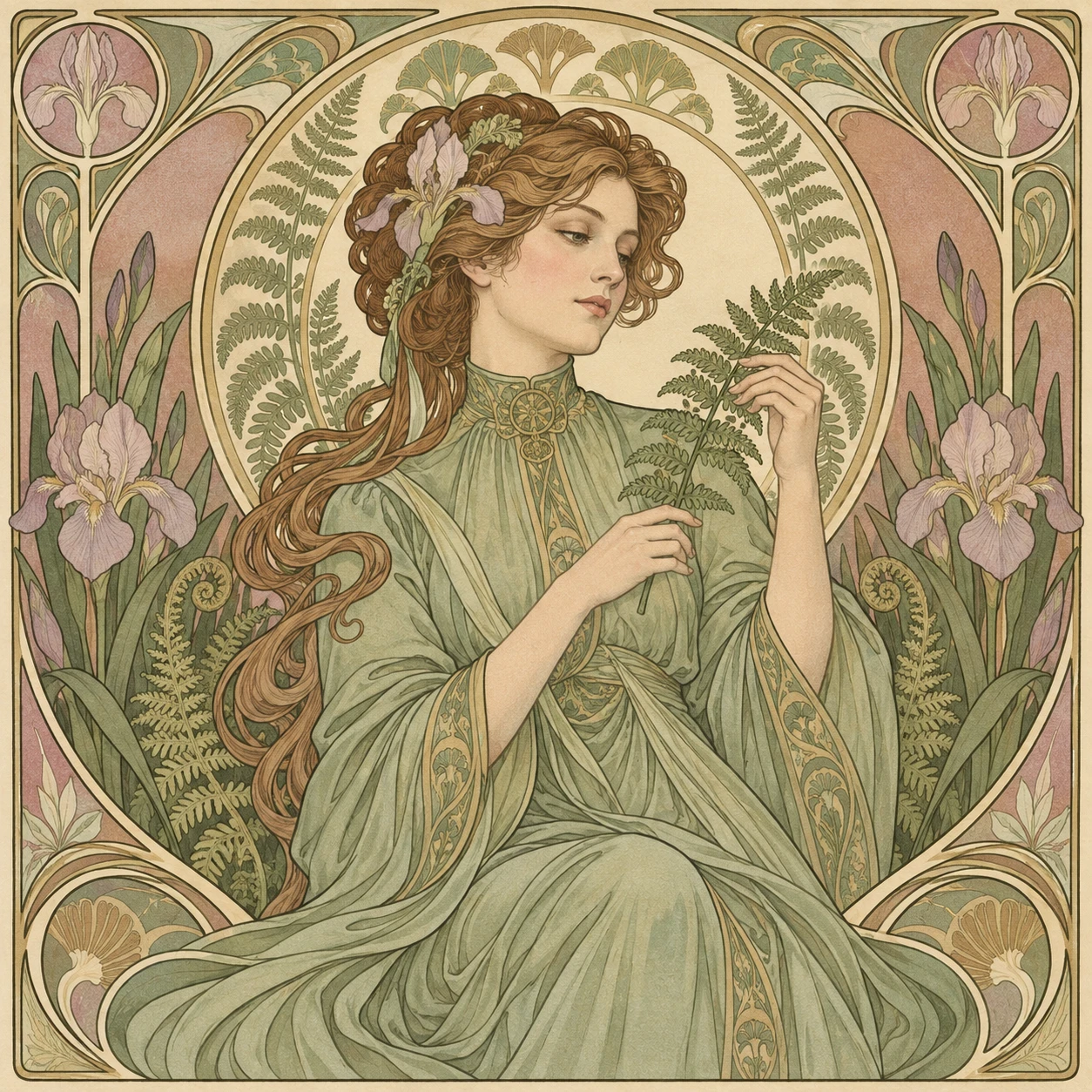
Art Nouveau botanist panel
Ornamental frames around the figure, with flowing curves in plants and hair.
Remix this referenceArt Nouveau botanist panel
- Shape & line
- Use graceful continuous hair and fabric curves with fine dark-olive outlines and botanical ornament.
- Color & light
- Use flat cream, sage, dusty rose and muted gold color areas with restrained contrast.
- Texture & material
- Maintain delicate lithographic grain and flat printed surfaces instead of glossy dimensional rendering.
- Composition
- Balance one botanist within a complete ornamental frame and circular botanical halo adapted to the square.
Priority
Preserve the distinctive construction and medium first, readable spatial hierarchy second, subtle surface details third.
What to avoid & what to check
Avoid extra subjects, inconsistent repeated geometry, hidden key details, crowded overlaps, unwanted text and watermarks.
Check each style rule against the finished image: visible shape construction, color and light, material treatment, and composition. Preserve the exact subject count and scene requirements.
Exact prompt for this example
SUBJECT
Create a polished reference illustration of an original decorative Art Nouveau panel inspired by Alphonse Mucha, featuring an adult botanist in a flowing high-neck sage robe holding a small fern specimen, surrounded by iris flowers and unfurling fern fronds. Build a balanced ornamental frame and circular botanical halo, use graceful continuous hair and fabric curves, fine dark olive outlines, flat cream sage dusty rose and muted gold color areas, and delicate lithographic texture. A full decorative composition adapted to a square frame; no text, titles, signatures or logos. Preserve the described medium and visual language. Square image. No watermark.

COMPOSITION
One adult botanist holding small fern, flowing high-neck sage robe, balanced ornamental botanical frame and circular halo, iris flowers and fern fronds. Entire square panel visible.

STYLE GUIDE
1. Shape & line
Use graceful continuous hair and fabric curves with fine dark-olive outlines and botanical ornament.

2. Color & light
Use flat cream, sage, dusty rose and muted gold color areas with restrained contrast.

3. Texture & material
Maintain delicate lithographic grain and flat printed surfaces instead of glossy dimensional rendering.

4. Composition
Balance one botanist within a complete ornamental frame and circular botanical halo adapted to the square.

PRIORITY
Preserve the requested identity, count, action, composition and output settings. Apply the style rules within those constraints; a style reference must not replace the subject or layout. Within the style: Preserve the distinctive construction and medium first, readable spatial hierarchy second, subtle surface details third.

AVOID
Avoid extra subjects, inconsistent repeated geometry, hidden key details, crowded overlaps, unwanted text and watermarks.

OUTPUT
One finished square image. Fully opaque background across the entire canvas, no transparent pixels. No lettering, logo, watermark, interface or caption.

SELF-CHECK
Check each style rule against the finished image: visible shape construction, color and light, material treatment, and composition. Preserve the exact subject count and scene requirements.
Art direction
Alphonse Mucha ↗- Ornamental frames around the figure
- Flowing curves in plants and hair
- Muted color planes with fine contours
Model information comes from image provenance. The same prompt may produce a different result.