Text to imageArt stylesStyle guide
One Plum · Side-Stroke Soft Pastel
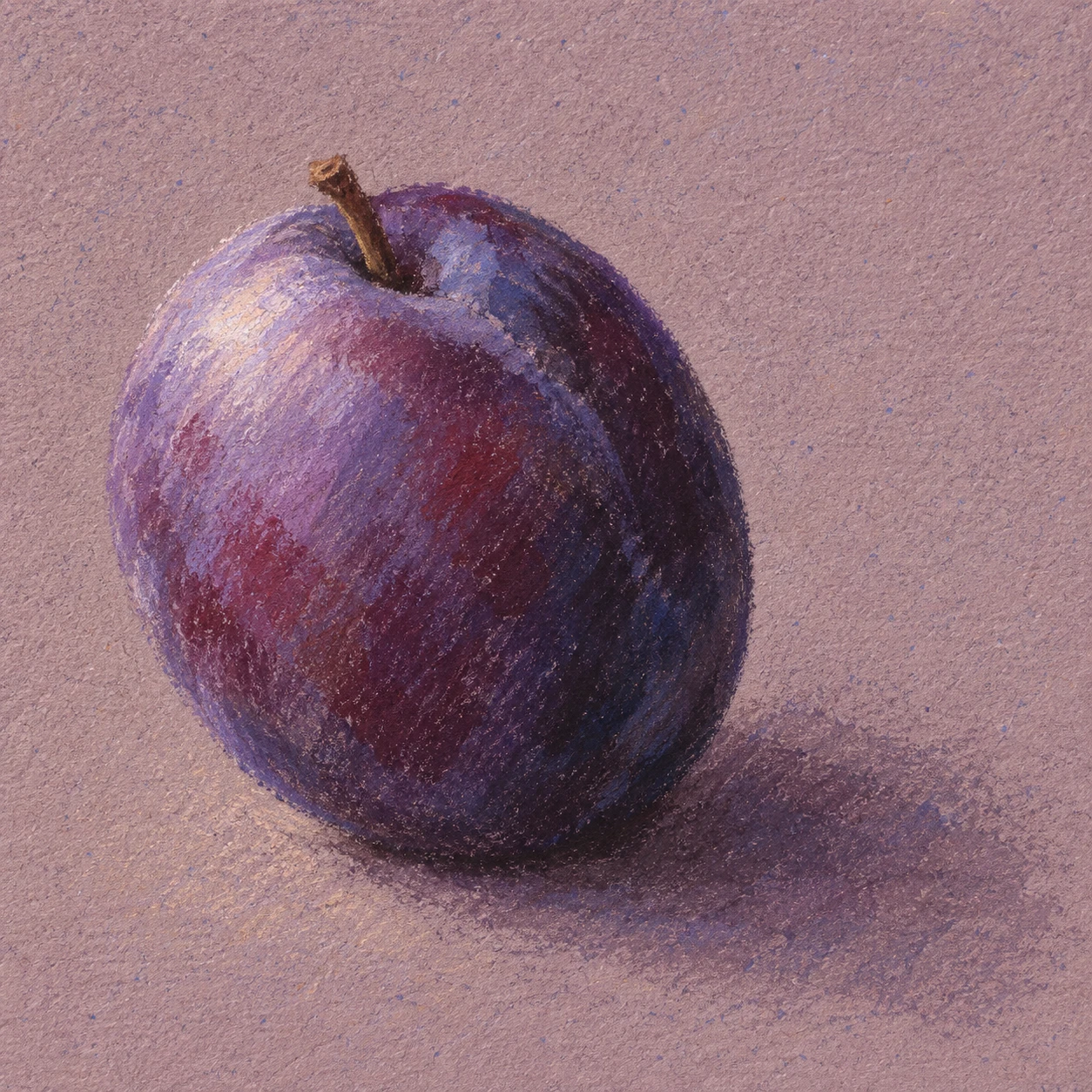
An image reference that builds a plum’s rounded volume with broad pastel side strokes and exposed paper grain.
One Plum · Side-Stroke Soft Pastel
- Shape & line
- Build the slightly asymmetric oval with broad strokes made by the pastel stick’s side. Turn successive strokes around the fruit’s curvature, and define the shallow stem indentation with a short dark crescent rather than outlining the entire silhouette.
- Color & light
- Place the light at image-upper-left: lay pale lavender over the upper-left bulge, retain violet across the middle, and deepen the lower-right flank with plum blue. Add a soft muted-purple cast shadow that starts at the fruit’s contact point and extends toward image-lower-right.
- Texture & material
- Use dusty mauve toothy paper and let its grain remain visible as irregular gaps between pigment deposits. Drag light pastel gently across raised grain on the lit bulge, while pressing more firmly in the shadow mass; preserve separate color flecks instead of blending every passage smooth.
- Composition
- Keep the plum large enough for the broad marks to read clearly, with generous paper margins around it. Make the upper-left contour crisp where light pigment meets bare paper, soften a short lower-right edge into the cast shadow, and keep background marks sparse so the fruit remains the focal point.
Priority
Prioritize broad side strokes and visible paper tooth while keeping the plum’s volume readable.
What to avoid & what to check
Avoid polished gradients, heavy contour outlines, and a glossy painted finish.
Check that curved pastel marks describe the fruit and that the shadow extends from contact toward image-lower-right.
Exact prompt for this example
SUBJECT
Show exactly one ripe purple plum with a short brown stem attached at its upper indentation, resting on a plain surface.

COMPOSITION
Use a close three-quarter view with the entire plum and its cast shadow visible. Place the plum slightly left of center and leave open space to image-right.

STYLE GUIDE
1. Shape & line
Build the slightly asymmetric oval with broad strokes made by the pastel stick’s side. Turn successive strokes around the fruit’s curvature, and define the shallow stem indentation with a short dark crescent rather than outlining the entire silhouette.

2. Color & light
Place the light at image-upper-left: lay pale lavender over the upper-left bulge, retain violet across the middle, and deepen the lower-right flank with plum blue. Add a soft muted-purple cast shadow that starts at the fruit’s contact point and extends toward image-lower-right.

3. Texture & material
Use dusty mauve toothy paper and let its grain remain visible as irregular gaps between pigment deposits. Drag light pastel gently across raised grain on the lit bulge, while pressing more firmly in the shadow mass; preserve separate color flecks instead of blending every passage smooth.

4. Composition
Keep the plum large enough for the broad marks to read clearly, with generous paper margins around it. Make the upper-left contour crisp where light pigment meets bare paper, soften a short lower-right edge into the cast shadow, and keep background marks sparse so the fruit remains the focal point.

PRIORITY
Preserve the requested identity, count, action, composition and output settings. Apply the style rules within those constraints; a style reference must not replace the subject or layout. Within the style: Prioritize broad side strokes and visible paper tooth while keeping the plum’s volume readable.

AVOID
Avoid polished gradients, heavy contour outlines, and a glossy painted finish.

OUTPUT
Create one square image with no lettering, labels, signature, or watermark.

SELF-CHECK
Check that curved pastel marks describe the fruit and that the shadow extends from contact toward image-lower-right.
Model information comes from image provenance. The same prompt may produce a different result.