Text to imageCharacterStyle guide
Little Sparrow Friend · Shingled Wing Feathers
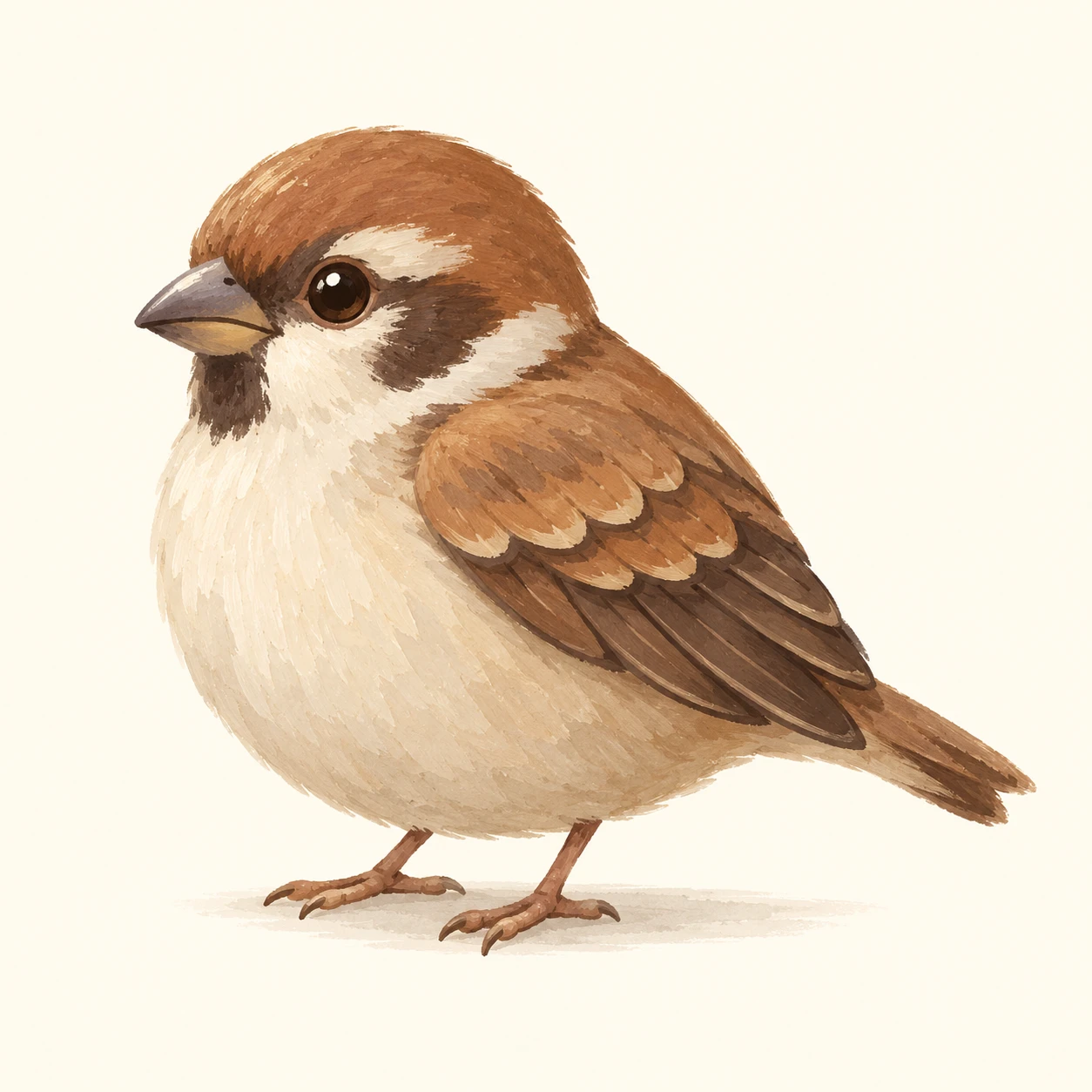
A character brief that reveals folded-wing structure by letting short upper feathers cover the roots of longer lower feathers.
Little Sparrow Friend · Shingled Wing Feathers
- Shape & line
- Build the body from a rounded pear shape and the folded wing from a tapered teardrop. Within the wing, draw two staggered rows of broad, rounded feather ends above several longer tapered feathers; interrupt each lower feather's root contour where an upper feather covers it.
- Color & light
- Use warm brown for the back and wing, pale cream for the belly, and a darker brown for the long lower feathers. Light from image-upper-left and place slim soft shadows immediately beneath the overlapping upper feather edges so the layers read as shallow relief.
- Texture & material
- Render the character in matte gouache with opaque fills and lightly broken brush edges. Keep each feather a broad painted mass, adding only a few short strokes toward its tip; preserve clear overlap boundaries instead of covering the wing with fine barbs.
- Composition
- Center the sparrow with generous empty space and keep both feet visible above a small ground shadow. Arrange the wing layers diagonally from image-upper-left toward image-lower-right, with the longest feather tips pointing toward the image-right tail and remaining inside the wing silhouette.
Priority
Make the upper feathers visibly cover the roots of the lower feathers.
What to avoid & what to check
Avoid a flat scallop pattern with continuous lines through every overlap.
Check that interrupted root contours and edge shadows make the feather stacking readable.
Exact prompt for this example
SUBJECT
One original little sparrow character with a round body, a short beak, two small feet, and a folded wing visible on its image-right flank. Short upper wing feathers overlap the roots of longer lower feathers, which extend toward the tail.

COMPOSITION
Show the entire standing sparrow in a three-quarter side view, with its head toward image-left and its tail toward image-right. Keep the visible folded wing unobstructed and large enough to read its overlapping feather groups.

STYLE GUIDE
1. Shape & line
Build the body from a rounded pear shape and the folded wing from a tapered teardrop. Within the wing, draw two staggered rows of broad, rounded feather ends above several longer tapered feathers; interrupt each lower feather's root contour where an upper feather covers it.

2. Color & light
Use warm brown for the back and wing, pale cream for the belly, and a darker brown for the long lower feathers. Light from image-upper-left and place slim soft shadows immediately beneath the overlapping upper feather edges so the layers read as shallow relief.

3. Texture & material
Render the character in matte gouache with opaque fills and lightly broken brush edges. Keep each feather a broad painted mass, adding only a few short strokes toward its tip; preserve clear overlap boundaries instead of covering the wing with fine barbs.

4. Composition
Center the sparrow with generous empty space and keep both feet visible above a small ground shadow. Arrange the wing layers diagonally from image-upper-left toward image-lower-right, with the longest feather tips pointing toward the image-right tail and remaining inside the wing silhouette.

PRIORITY
Preserve the requested identity, count, action, composition and output settings. Apply the style rules within those constraints; a style reference must not replace the subject or layout. Within the style: Make the upper feathers visibly cover the roots of the lower feathers.

AVOID
Avoid a flat scallop pattern with continuous lines through every overlap.

OUTPUT
One square character illustration on a plain warm ivory background, with no text, lettering, logo, or watermark.

SELF-CHECK
Check that interrupted root contours and edge shadows make the feather stacking readable.
Model information comes from image provenance. The same prompt may produce a different result.