Text to imageArt stylesStyle guide
One Sailboat · Stepped Tapestry Weaving
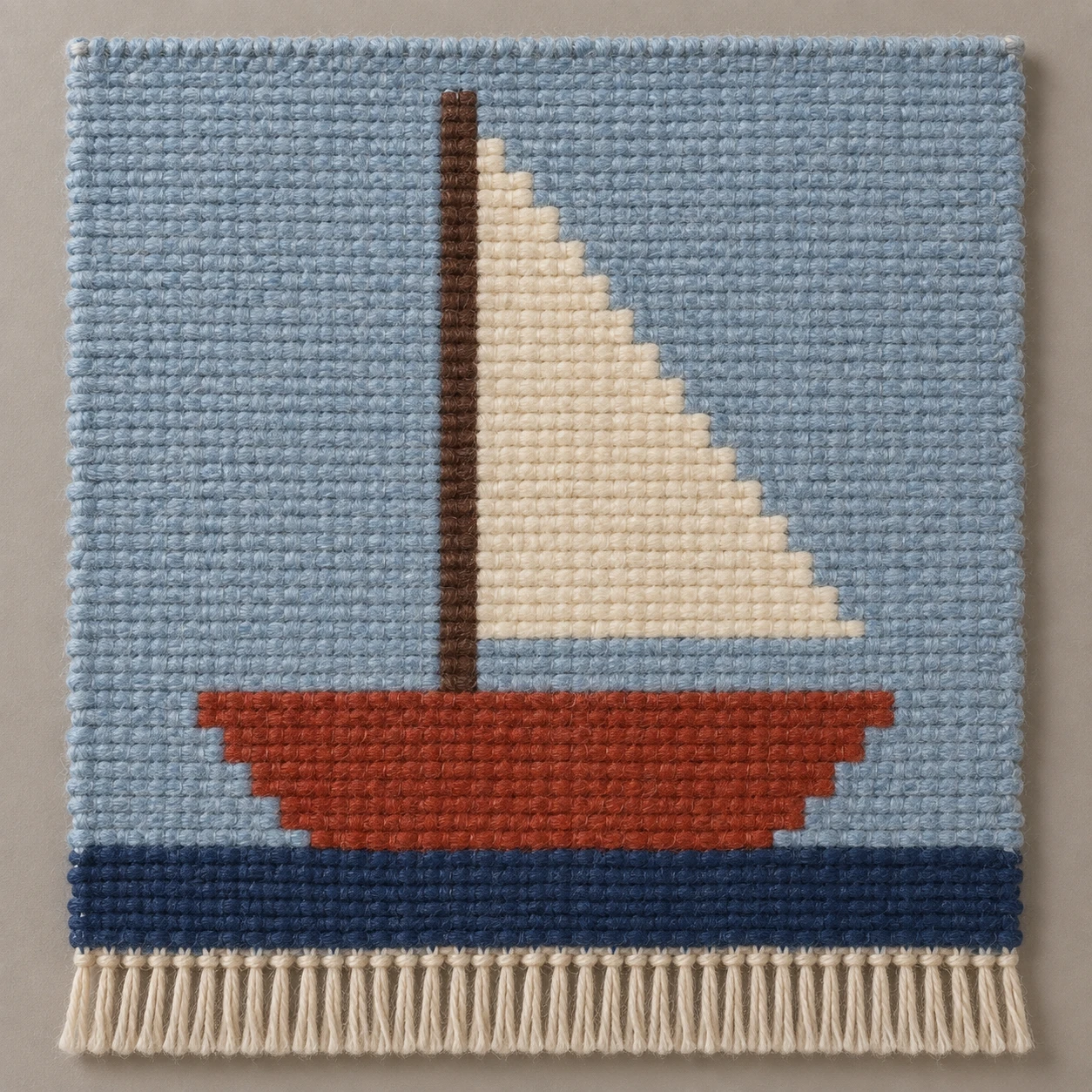
A woven image of a sailboat that translates its triangular sail and curved hull into stepped boundaries, demonstrating how a textile grid shapes an image.
One Sailboat · Stepped Tapestry Weaving
- Shape & line
- Build the sail, mast, and hull from blocks aligned to the weave grid. Turn the sail's diagonal edge and the hull's curved underside into readable stair steps; keep the mast vertical and preserve a clear pale-blue gap between the sail's lower edge and the hull.
- Color & light
- Use ivory for the sail, rust red for the hull, dark brown for the mast, and pale blue for the surrounding field. Place a narrow navy water strip directly below the hull. Light the textile softly from the upper-left image side so raised yarn catches gentle highlights and casts small shadows toward the lower right.
- Texture & material
- Show matte wool weft running horizontally over a visible vertical warp rhythm. Let adjacent yarn rows remain distinguishable, with slight thickness variation and a soft fiber halo; at color boundaries, interlock neighboring yarn sections so the stepped shapes read as woven construction.
- Composition
- Keep the textile face parallel to the image plane and show a short warp fringe along its bottom edge. Make the boat large enough to reveal the stepped contours while retaining an even border of woven background; keep the background outside the tapestry quiet so the weave remains easy to inspect.
Priority
Prioritize the visible weave grid and the stepped translation of diagonal and curved shapes.
What to avoid & what to check
Avoid smooth printed contours, glossy yarn, and perspective that hides the weave.
Confirm that one boat reads clearly and that its stepped boundaries follow the visible yarn rows.
Exact prompt for this example
SUBJECT
Show exactly one sailboat woven into a flat tapestry: one ivory triangular sail attached to a vertical mast above one rust-red hull, with a narrow navy water strip beneath the hull.

COMPOSITION
Present the rectangular tapestry straight on, with its full edges visible against a plain warm-gray background. Center the boat within the woven field and leave generous pale-blue space around its silhouette.

STYLE GUIDE
1. Shape & line
Build the sail, mast, and hull from blocks aligned to the weave grid. Turn the sail's diagonal edge and the hull's curved underside into readable stair steps; keep the mast vertical and preserve a clear pale-blue gap between the sail's lower edge and the hull.

2. Color & light
Use ivory for the sail, rust red for the hull, dark brown for the mast, and pale blue for the surrounding field. Place a narrow navy water strip directly below the hull. Light the textile softly from the upper-left image side so raised yarn catches gentle highlights and casts small shadows toward the lower right.

3. Texture & material
Show matte wool weft running horizontally over a visible vertical warp rhythm. Let adjacent yarn rows remain distinguishable, with slight thickness variation and a soft fiber halo; at color boundaries, interlock neighboring yarn sections so the stepped shapes read as woven construction.

4. Composition
Keep the textile face parallel to the image plane and show a short warp fringe along its bottom edge. Make the boat large enough to reveal the stepped contours while retaining an even border of woven background; keep the background outside the tapestry quiet so the weave remains easy to inspect.

PRIORITY
Preserve the requested identity, count, action, composition and output settings. Apply the style rules within those constraints; a style reference must not replace the subject or layout. Within the style: Prioritize the visible weave grid and the stepped translation of diagonal and curved shapes.

AVOID
Avoid smooth printed contours, glossy yarn, and perspective that hides the weave.

OUTPUT
Create one square image showing the finished woven tapestry. Include no lettering, labels, signatures, or watermark.

SELF-CHECK
Confirm that one boat reads clearly and that its stepped boundaries follow the visible yarn rows.
Model information comes from image provenance. The same prompt may produce a different result.