Text to imageSpace & architectureStyle guide
Small Sunroom · Interior–Exterior Value Balance
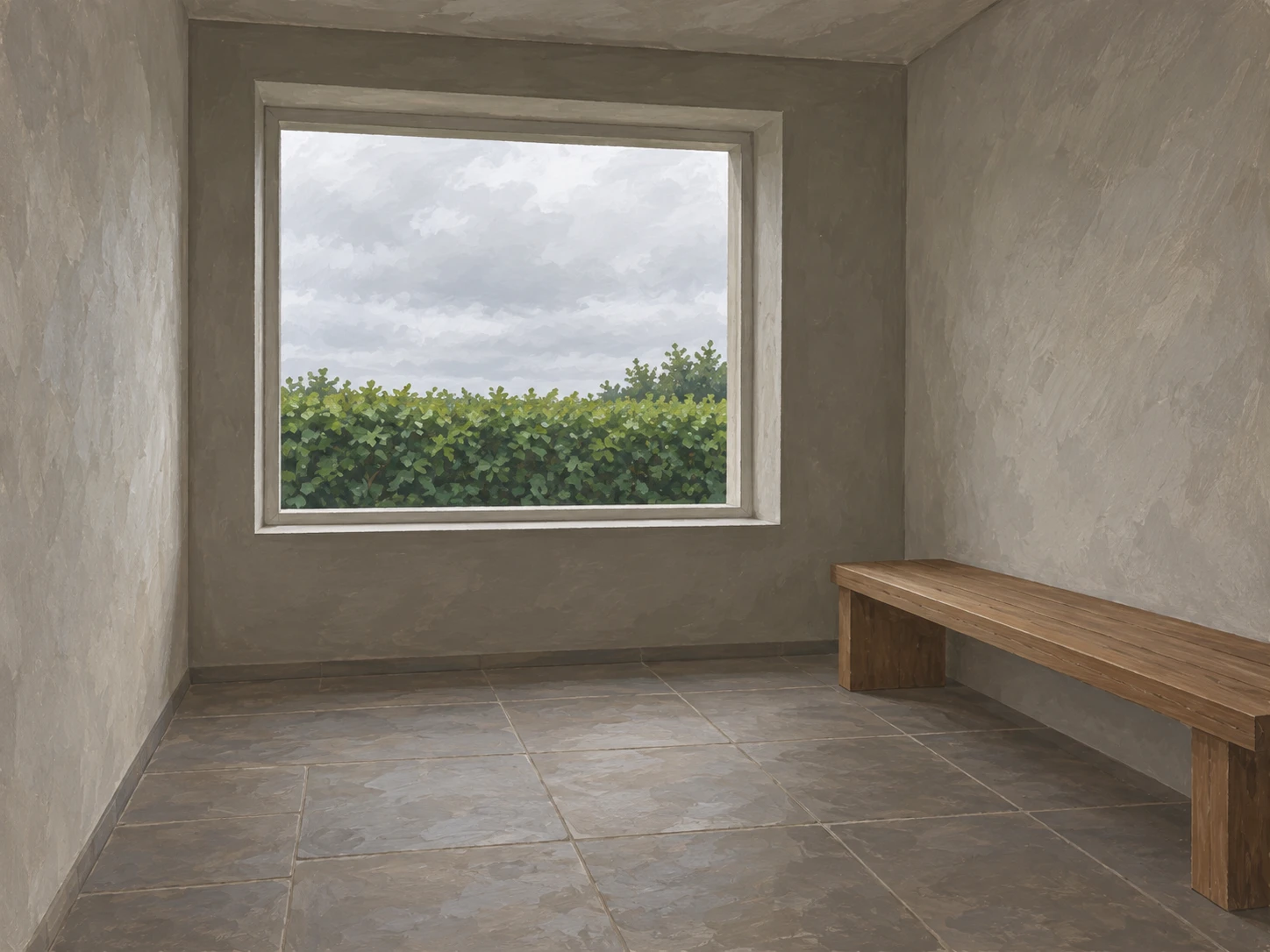
Keep the bright sky outside and shaded interior planes readable together to reveal the depth of a small windowed space.
Small Sunroom · Interior–Exterior Value Balance
- Shape & line
- Construct the room from broad, straight-edged planes; keep window jambs vertical and direct the receding bench and floor edges toward consistent vanishing points. Give the window frame visible thickness so the opening reads as a passage through the wall.
- Color & light
- Make the exterior sky the lightest broad area while retaining a pale gray tone; place the hedge below it in a distinct middle value. Use darker warm gray interior planes, lifting the rear wall immediately around the window with soft daylight so both sides of the opening retain readable detail.
- Texture & material
- Lay down opaque matte gouache in broad strokes, with slight brush variation inside the plaster walls. Render the bench with a few lengthwise wood strokes and keep the sky smooth, allowing material differences to remain visible without competing with the value structure.
- Composition
- Place the window slightly left of image center and the bench in the lower-right quadrant. Preserve a continuous dark-to-middle-value interior border around the bright opening, and keep the hedge entirely inside that opening so the exterior reads as a separate depth layer.
Priority
Prioritize readable values on both sides of the window over decorative detail.
What to avoid & what to check
Avoid a blank white window, crushed interior shadows, and hard sunbeams under the overcast sky.
Check that the sky, hedge, window frame, and interior walls remain distinct at thumbnail size.
Exact prompt for this example
SUBJECT
Show one small rectangular sunroom with one broad window in its rear wall and one low wooden bench against the image-right wall. Through the window, show a simple garden hedge beneath an overcast sky. The window frame separates the exterior view from the interior.

COMPOSITION
View from inside the entrance at seated eye level, looking diagonally toward the rear window. Include the image-left wall, rear wall, image-right bench, and enough floor to establish room depth. Keep the complete window opening visible with generous wall area around it.

STYLE GUIDE
1. Shape & line
Construct the room from broad, straight-edged planes; keep window jambs vertical and direct the receding bench and floor edges toward consistent vanishing points. Give the window frame visible thickness so the opening reads as a passage through the wall.

2. Color & light
Make the exterior sky the lightest broad area while retaining a pale gray tone; place the hedge below it in a distinct middle value. Use darker warm gray interior planes, lifting the rear wall immediately around the window with soft daylight so both sides of the opening retain readable detail.

3. Texture & material
Lay down opaque matte gouache in broad strokes, with slight brush variation inside the plaster walls. Render the bench with a few lengthwise wood strokes and keep the sky smooth, allowing material differences to remain visible without competing with the value structure.

4. Composition
Place the window slightly left of image center and the bench in the lower-right quadrant. Preserve a continuous dark-to-middle-value interior border around the bright opening, and keep the hedge entirely inside that opening so the exterior reads as a separate depth layer.

PRIORITY
Preserve the requested identity, count, action, composition and output settings. Apply the style rules within those constraints; a style reference must not replace the subject or layout. Within the style: Prioritize readable values on both sides of the window over decorative detail.

AVOID
Avoid a blank white window, crushed interior shadows, and hard sunbeams under the overcast sky.

OUTPUT
Create one landscape 4:3 architectural gouache illustration with no lettering, labels, logos, or watermark.

SELF-CHECK
Check that the sky, hedge, window frame, and interior walls remain distinct at thumbnail size.
Model information comes from image provenance. The same prompt may produce a different result.