Text to imageLandscapeStyle guide
Lakeside Willow · Ripple-Broken Reflection
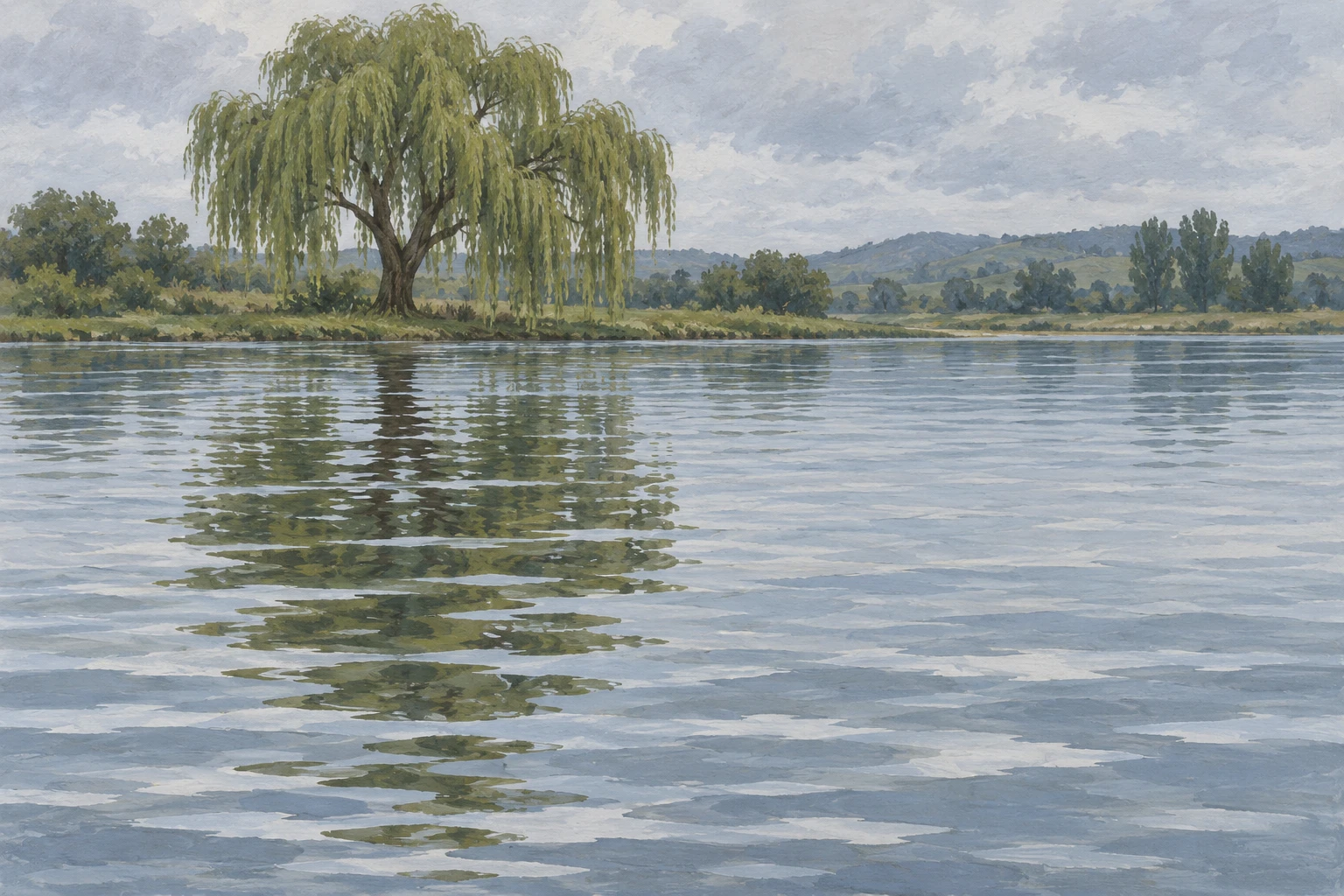
A small lake scene where horizontal ripples divide a willow’s reflection into sideways-shifted fragments.
Lakeside Willow · Ripple-Broken Reflection
- Shape & line
- Draw the upright trunk and drooping canopy as a clear, continuous silhouette above the bank. Below the shoreline, repeat their inverted overall shape, but break its contours into horizontal fragments that shift alternately toward image-left and image-right.
- Color & light
- Use soft overcast light, muted olive foliage, and pale blue-gray water. Keep the reflected greens slightly less contrasted than the tree, and insert narrow strips of sky-colored water between the darker reflection fragments.
- Texture & material
- Render the scene as a matte gouache painting with broad foliage masses and restrained paper grain. Paint the water with shallow horizontal strokes; where these strokes cross the reflection, visibly interrupt and laterally stretch the reflected trunk and leaves.
- Composition
- Keep the reflection vertically aligned beneath the tree despite its local sideways shifts. Make ripple gaps broader and more separated near the bottom edge, finer toward the far bank, and leave open water on image-right to clarify the horizontal rhythm.
Priority
Prioritize a recognizable inverted tree shape visibly disrupted by horizontal ripples.
What to avoid & what to check
Avoid a perfectly mirrored tree or uniform blur that hides the separate reflection fragments.
Check that sky-colored ripple gaps cross the reflection and that its fragments remain aligned beneath the tree.
Exact prompt for this example
SUBJECT
One willow tree rooted on the far bank of a small lake, with its reflected trunk and canopy extending downward into the water directly beneath it. Gentle ripples interrupt the reflection.

COMPOSITION
Use a wide, eye-level view. Place the tree slightly left of center and the far shoreline across the upper third; let the lake fill the lower two thirds so the entire reflection remains visible.

STYLE GUIDE
1. Shape & line
Draw the upright trunk and drooping canopy as a clear, continuous silhouette above the bank. Below the shoreline, repeat their inverted overall shape, but break its contours into horizontal fragments that shift alternately toward image-left and image-right.

2. Color & light
Use soft overcast light, muted olive foliage, and pale blue-gray water. Keep the reflected greens slightly less contrasted than the tree, and insert narrow strips of sky-colored water between the darker reflection fragments.

3. Texture & material
Render the scene as a matte gouache painting with broad foliage masses and restrained paper grain. Paint the water with shallow horizontal strokes; where these strokes cross the reflection, visibly interrupt and laterally stretch the reflected trunk and leaves.

4. Composition
Keep the reflection vertically aligned beneath the tree despite its local sideways shifts. Make ripple gaps broader and more separated near the bottom edge, finer toward the far bank, and leave open water on image-right to clarify the horizontal rhythm.

PRIORITY
Preserve the requested identity, count, action, composition and output settings. Apply the style rules within those constraints; a style reference must not replace the subject or layout. Within the style: Prioritize a recognizable inverted tree shape visibly disrupted by horizontal ripples.

AVOID
Avoid a perfectly mirrored tree or uniform blur that hides the separate reflection fragments.

OUTPUT
Create one landscape image in a 3:2 aspect ratio, with no text, labels, border, or watermark.

SELF-CHECK
Check that sky-colored ripple gaps cross the reflection and that its fragments remain aligned beneath the tree.
Model information comes from image provenance. The same prompt may produce a different result.