Text to imageLandscapeStyle guide
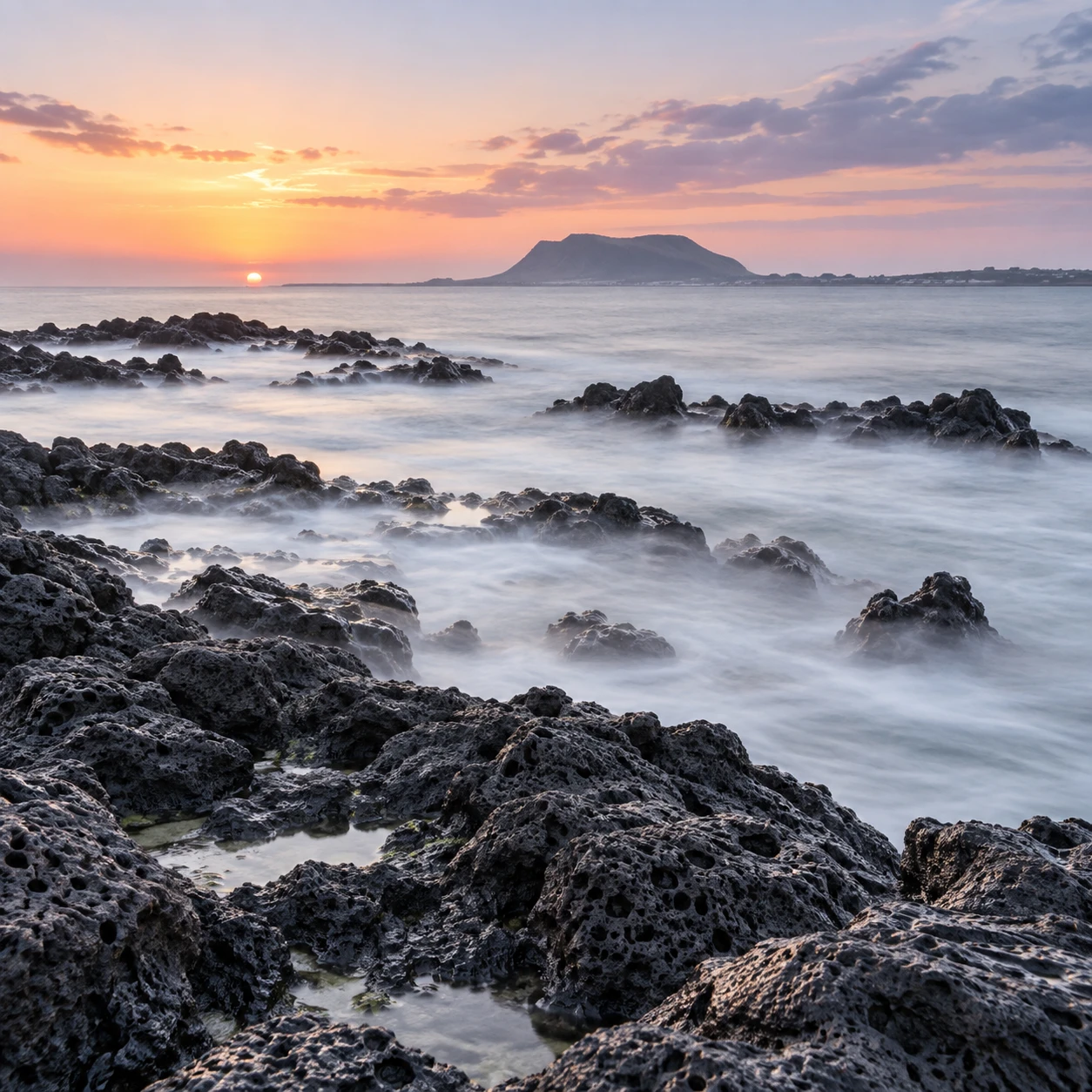
Jeju coast at dawn · Layered depth
Jeju coast at dawn with distinct foreground, middle ground and background layers.
Remix this referenceJeju coast at dawn · Layered depth
- Shape & line
- Use irregular recognizable volcanic rock silhouettes and a level distant coastal horizon.
- Color & light
- Use pale natural dawn colors and restrained contrast between dark rocks and bright sea.
- Texture & material
- Keep porous rock detail crisp while long-exposure water becomes smooth and softly flowing.
- Composition
- Separate detailed foreground rocks, pale middle sea and distant coastline into deep spatial layers.
Priority
Preserve the distinctive construction and medium first, readable spatial hierarchy second, subtle surface details third.
What to avoid & what to check
Avoid extra subjects, inconsistent repeated geometry, hidden key details, crowded overlaps, unwanted text and watermarks.
Check each style rule against the finished image: visible shape construction, color and light, material treatment, and composition. Preserve the exact subject count and scene requirements.
Exact prompt for this example
SUBJECT
Create an original reference image of a wide coastal vista of dark Jeju volcanic rocks and pale dawn sea, long-exposure landscape photography, natural weather and deep spatial layers. Composition: distinct foreground, middle ground and background layers. Preserve the specified medium, mark-making and visual language; adapt the composition naturally to the subject. No watermark, logos or extra lettering. Square image.

COMPOSITION
Square broad Jeju coast vista: crisp dark volcanic foreground rocks, pale flowing long-exposure sea middle ground, distant coastal horizon at dawn under natural sky.

STYLE GUIDE
1. Shape & line
Use irregular recognizable volcanic rock silhouettes and a level distant coastal horizon.

2. Color & light
Use pale natural dawn colors and restrained contrast between dark rocks and bright sea.

3. Texture & material
Keep porous rock detail crisp while long-exposure water becomes smooth and softly flowing.

4. Composition
Separate detailed foreground rocks, pale middle sea and distant coastline into deep spatial layers.

PRIORITY
Preserve the requested identity, count, action, composition and output settings. Apply the style rules within those constraints; a style reference must not replace the subject or layout. Within the style: Preserve the distinctive construction and medium first, readable spatial hierarchy second, subtle surface details third.

AVOID
Avoid extra subjects, inconsistent repeated geometry, hidden key details, crowded overlaps, unwanted text and watermarks.

OUTPUT
One finished square image. Fully opaque background across the entire canvas, no transparent pixels. No lettering, logo, watermark, interface or caption.

SELF-CHECK
Check each style rule against the finished image: visible shape construction, color and light, material treatment, and composition. Preserve the exact subject count and scene requirements.
Model information comes from image provenance. The same prompt may produce a different result.