Text to imageProductStyle guide
Clear Ribbed Glass · Refraction-Bent Color Bands
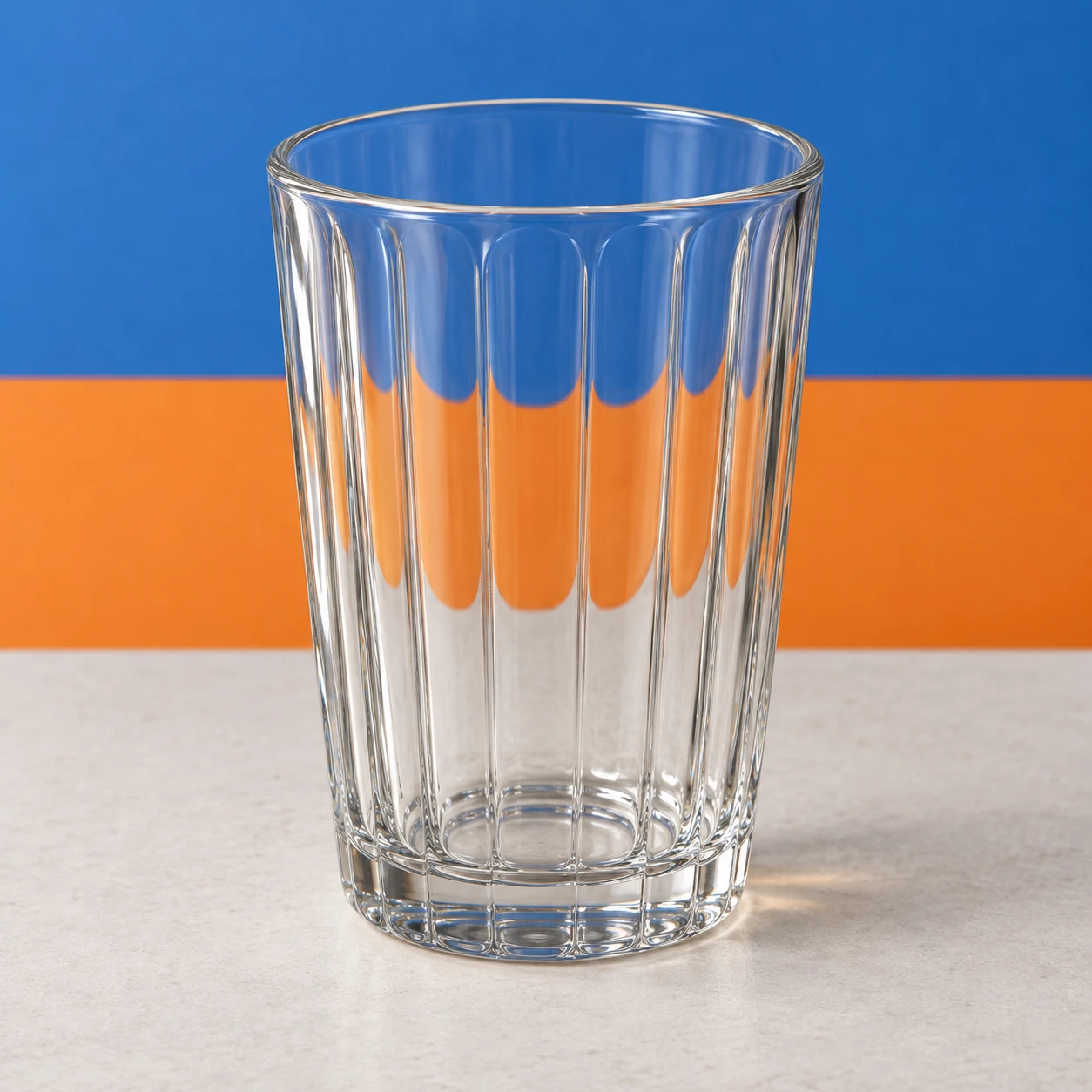
Show refraction through a clear, vertically ribbed drinking glass by squeezing and bending background color bands sideways.
Clear Ribbed Glass · Refraction-Bent Color Bands
- Shape & line
- Build a gently tapering glass with an elliptical opening and rounded vertical ribs running from below the rim to the base; keep the rim continuous and use slim bright and dark edges to separate adjacent ribs.
- Color & light
- Light the glass with a large soft source on image-left, producing narrow white highlights along the left-facing rib edges. Keep the blue and orange backdrop bands straight outside the silhouette, but visibly squeeze and bend their boundaries sideways as they pass through successive ribs.
- Texture & material
- Render smooth, polished, transparent glass with clear spaces between restrained reflections. Let the background remain recognizable through the body, while the rounded ribs locally stretch or compress it; retain a clean empty interior without cloudy surface grain.
- Composition
- Place the glass on a pale matte tabletop with generous space on both image sides. Position the blue–orange boundary across the middle of the body, leaving long straight segments visible on either side, and ground the base with a small soft contact shadow.
Priority
Make the rib-by-rib distortion of the background bands the clearest material cue.
What to avoid & what to check
Avoid painted stripes on the glass or reflections that conceal the transmitted bands.
Check that straight exterior bands visibly bend through the ribs while the glass remains clear and empty.
Exact prompt for this example
SUBJECT
One empty, colorless drinking glass with rounded vertical ribs, standing upright in front of a backdrop with one broad blue horizontal band above one broad orange horizontal band. Both bands remain visible beside the glass and through its walls.

COMPOSITION
Use a slightly elevated three-quarter product view with the entire glass centered and its opening visible. Extend the backdrop bands across the frame so their straight paths outside the glass can be compared with their distorted paths inside it.

STYLE GUIDE
1. Shape & line
Build a gently tapering glass with an elliptical opening and rounded vertical ribs running from below the rim to the base; keep the rim continuous and use slim bright and dark edges to separate adjacent ribs.

2. Color & light
Light the glass with a large soft source on image-left, producing narrow white highlights along the left-facing rib edges. Keep the blue and orange backdrop bands straight outside the silhouette, but visibly squeeze and bend their boundaries sideways as they pass through successive ribs.

3. Texture & material
Render smooth, polished, transparent glass with clear spaces between restrained reflections. Let the background remain recognizable through the body, while the rounded ribs locally stretch or compress it; retain a clean empty interior without cloudy surface grain.

4. Composition
Place the glass on a pale matte tabletop with generous space on both image sides. Position the blue–orange boundary across the middle of the body, leaving long straight segments visible on either side, and ground the base with a small soft contact shadow.

PRIORITY
Preserve the requested identity, count, action, composition and output settings. Apply the style rules within those constraints; a style reference must not replace the subject or layout. Within the style: Make the rib-by-rib distortion of the background bands the clearest material cue.

AVOID
Avoid painted stripes on the glass or reflections that conceal the transmitted bands.

OUTPUT
Create one photorealistic product image in a square aspect ratio, without lettering, logos, captions, or watermarks.

SELF-CHECK
Check that straight exterior bands visibly bend through the ribs while the glass remains clear and empty.
Model information comes from image provenance. The same prompt may produce a different result.