Text to imageProductStyle guide
Steel Measuring Spoon · Curvature Through Reflected Bands
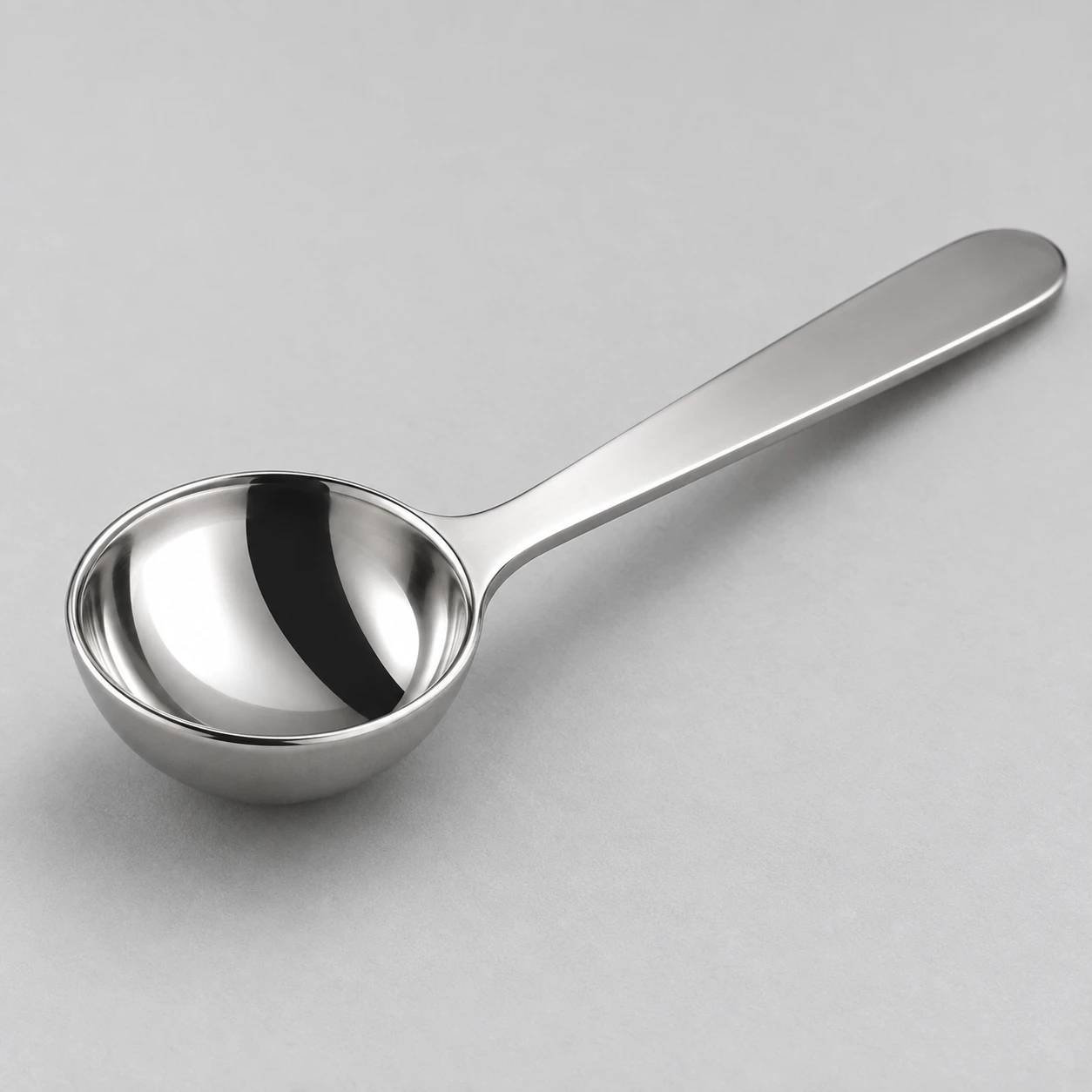
A product image that uses bending bright and dark reflections to distinguish a polished measuring spoon’s concave bowl and rounded rim.
Steel Measuring Spoon · Curvature Through Reflected Bands
- Shape & line
- Give the bowl a continuous elliptical rim and a visibly concave interior; extend the handle from the rim toward the upper-right without a break, and keep its edges gently rounded.
- Color & light
- Use a broad white reflection source above image-left and a tall black card outside the frame on image-right. Show the black card as a curved dark band inside the bowl, bordered by broad pale reflections; let the band bend and change width across the concavity, then narrow where it crosses the rounded rim.
- Texture & material
- Render the steel as smooth and polished, with crisp boundaries between reflected tones and only a few faint handling scratches. Keep bright reflections below featureless white so the rim remains readable, and make the gray support matte with a soft contact shadow beneath the bowl.
- Composition
- Keep the bowl on image-left as the main focal area and the handle pointing toward image-right. Leave clear background around the complete silhouette, maintain sharp focus across the spoon, and keep the dark reflected band visibly inside the metal rather than continuing onto the support surface.
Priority
Prioritize the reflected band’s visible bending across the concave bowl and rounded rim.
What to avoid & what to check
Avoid painted stripes, uniformly black metal, and blown highlights that erase the rim.
Check that the dark band reads as a reflection shaped by the spoon’s curvature.
Exact prompt for this example
SUBJECT
One polished stainless-steel measuring spoon with a shallow round bowl and a straight integral handle, resting on a pale gray surface. The bowl sits on image-left and the handle extends toward image-right.

COMPOSITION
Use an elevated three-quarter view so the bowl interior, rounded rim, and handle are clearly visible. Place the entire spoon diagonally across a quiet square frame with generous margins.

STYLE GUIDE
1. Shape & line
Give the bowl a continuous elliptical rim and a visibly concave interior; extend the handle from the rim toward the upper-right without a break, and keep its edges gently rounded.

2. Color & light
Use a broad white reflection source above image-left and a tall black card outside the frame on image-right. Show the black card as a curved dark band inside the bowl, bordered by broad pale reflections; let the band bend and change width across the concavity, then narrow where it crosses the rounded rim.

3. Texture & material
Render the steel as smooth and polished, with crisp boundaries between reflected tones and only a few faint handling scratches. Keep bright reflections below featureless white so the rim remains readable, and make the gray support matte with a soft contact shadow beneath the bowl.

4. Composition
Keep the bowl on image-left as the main focal area and the handle pointing toward image-right. Leave clear background around the complete silhouette, maintain sharp focus across the spoon, and keep the dark reflected band visibly inside the metal rather than continuing onto the support surface.

PRIORITY
Preserve the requested identity, count, action, composition and output settings. Apply the style rules within those constraints; a style reference must not replace the subject or layout. Within the style: Prioritize the reflected band’s visible bending across the concave bowl and rounded rim.

AVOID
Avoid painted stripes, uniformly black metal, and blown highlights that erase the rim.

OUTPUT
Create one square product photograph with no lettering, measurement markings, logos, captions, or watermark.

SELF-CHECK
Check that the dark band reads as a reflection shaped by the spoon’s curvature.
Model information comes from image provenance. The same prompt may produce a different result.