Text to imageArt stylesStyle guide
One Carrot · Paper Quilling
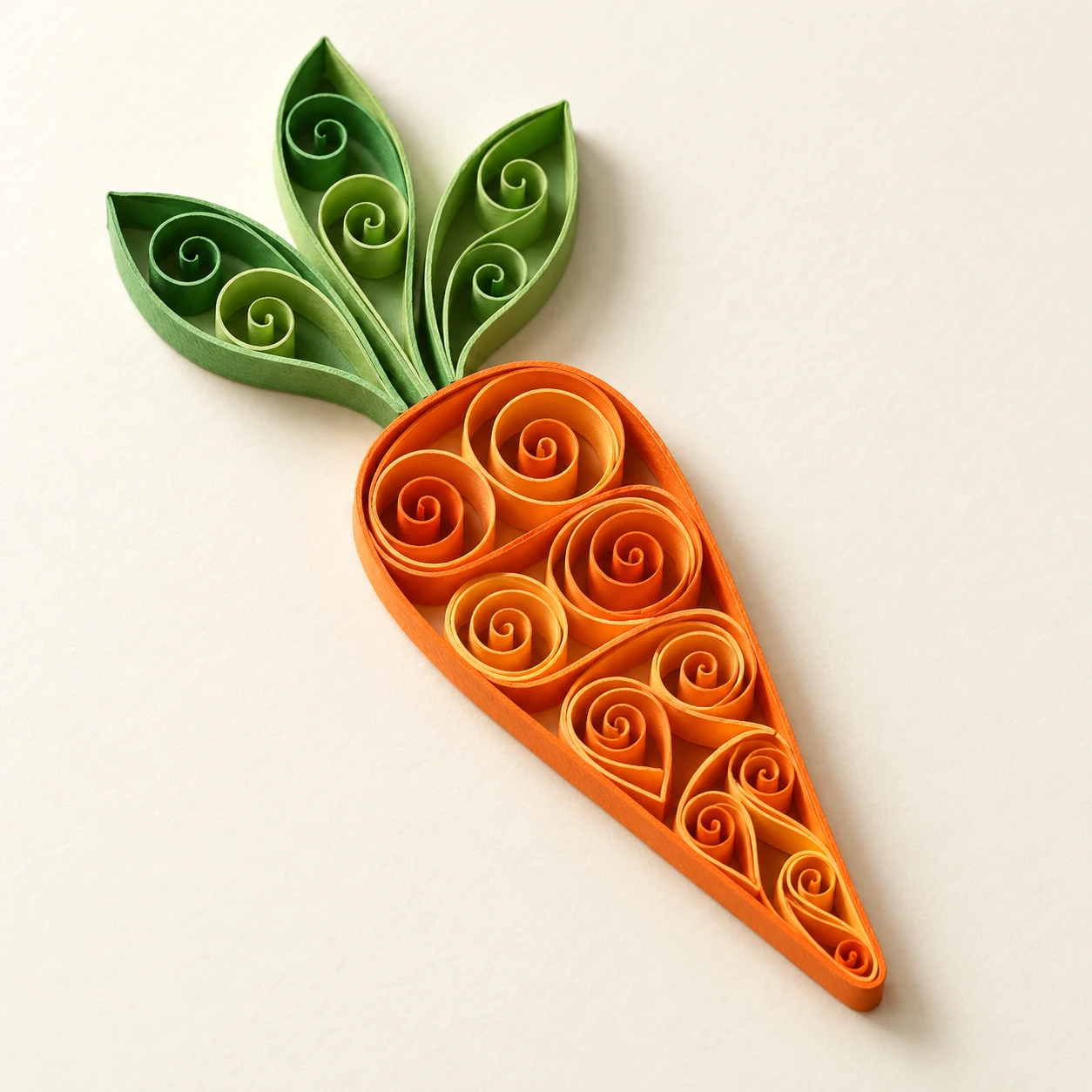
A paper-quilling reference using upright paper strips and rolled coils to build a tapered carrot and its leaves.
One Carrot · Paper Quilling
- Shape & line
- Build the root outline from a continuous upright orange paper strip that curves around broad shoulders and narrows to a rounded point. Fill it with rolled spiral coils, using larger round coils near the shoulders and smaller pinched teardrop coils near the tip; shape the three leaves as elongated green loops with curled interiors.
- Color & light
- Use warm orange and amber strips for the root and two related greens for the leaves, keeping the ivory backing light and quiet. Illuminate from the upper-left image side so the raised strip edges catch light there and cast short, soft shadows onto the backing and adjacent coils toward the lower-right.
- Texture & material
- Make the paper matte, with broad strip faces and narrow exposed top edges visibly distinct. Preserve open spaces between successive spiral turns so the backing and shaded paper interiors remain visible; allow slight irregularity in the curls while keeping every coil recognizably made from a continuous strip.
- Composition
- Keep the root as the dominant compact mass and spread the three leaves apart at its upper-left end so their silhouettes remain separate. Arrange the internal coils to follow the root's narrowing direction, and leave clear backing around the artwork so its raised edges and lower-right shadows are easy to read.
Priority
Prioritize readable upright paper edges, open spiral turns, and a clearly tapered carrot silhouette.
What to avoid & what to check
Avoid flat printed spirals, solid clay-like coils, and glossy plastic surfaces.
Check that one carrot is visible and that the upper-left light creates readable lower-right shadows beneath raised strips.
Exact prompt for this example
SUBJECT
Show exactly one carrot made from paper quilling: one tapered orange root with three green leaf shapes attached together at its broad top. Construct the root and leaves from visibly upright, curled paper strips mounted on an ivory backing.

COMPOSITION
Use a close, nearly overhead view with a slight angle that reveals the height of the paper strips. Place the carrot diagonally, with its leafy top toward the upper-left image corner and its pointed root toward the lower-right. Keep the entire silhouette visible with generous clear margins.

STYLE GUIDE
1. Shape & line
Build the root outline from a continuous upright orange paper strip that curves around broad shoulders and narrows to a rounded point. Fill it with rolled spiral coils, using larger round coils near the shoulders and smaller pinched teardrop coils near the tip; shape the three leaves as elongated green loops with curled interiors.

2. Color & light
Use warm orange and amber strips for the root and two related greens for the leaves, keeping the ivory backing light and quiet. Illuminate from the upper-left image side so the raised strip edges catch light there and cast short, soft shadows onto the backing and adjacent coils toward the lower-right.

3. Texture & material
Make the paper matte, with broad strip faces and narrow exposed top edges visibly distinct. Preserve open spaces between successive spiral turns so the backing and shaded paper interiors remain visible; allow slight irregularity in the curls while keeping every coil recognizably made from a continuous strip.

4. Composition
Keep the root as the dominant compact mass and spread the three leaves apart at its upper-left end so their silhouettes remain separate. Arrange the internal coils to follow the root's narrowing direction, and leave clear backing around the artwork so its raised edges and lower-right shadows are easy to read.

PRIORITY
Preserve the requested identity, count, action, composition and output settings. Apply the style rules within those constraints; a style reference must not replace the subject or layout. Within the style: Prioritize readable upright paper edges, open spiral turns, and a clearly tapered carrot silhouette.

AVOID
Avoid flat printed spirals, solid clay-like coils, and glossy plastic surfaces.

OUTPUT
Produce one square image of the finished paper artwork, without text, labels, borders, or watermarks.

SELF-CHECK
Check that one carrot is visible and that the upper-left light creates readable lower-right shadows beneath raised strips.
Model information comes from image provenance. The same prompt may produce a different result.