Text to imageArt stylesStyle guide
One Dragonfly · Stained-Glass Leading
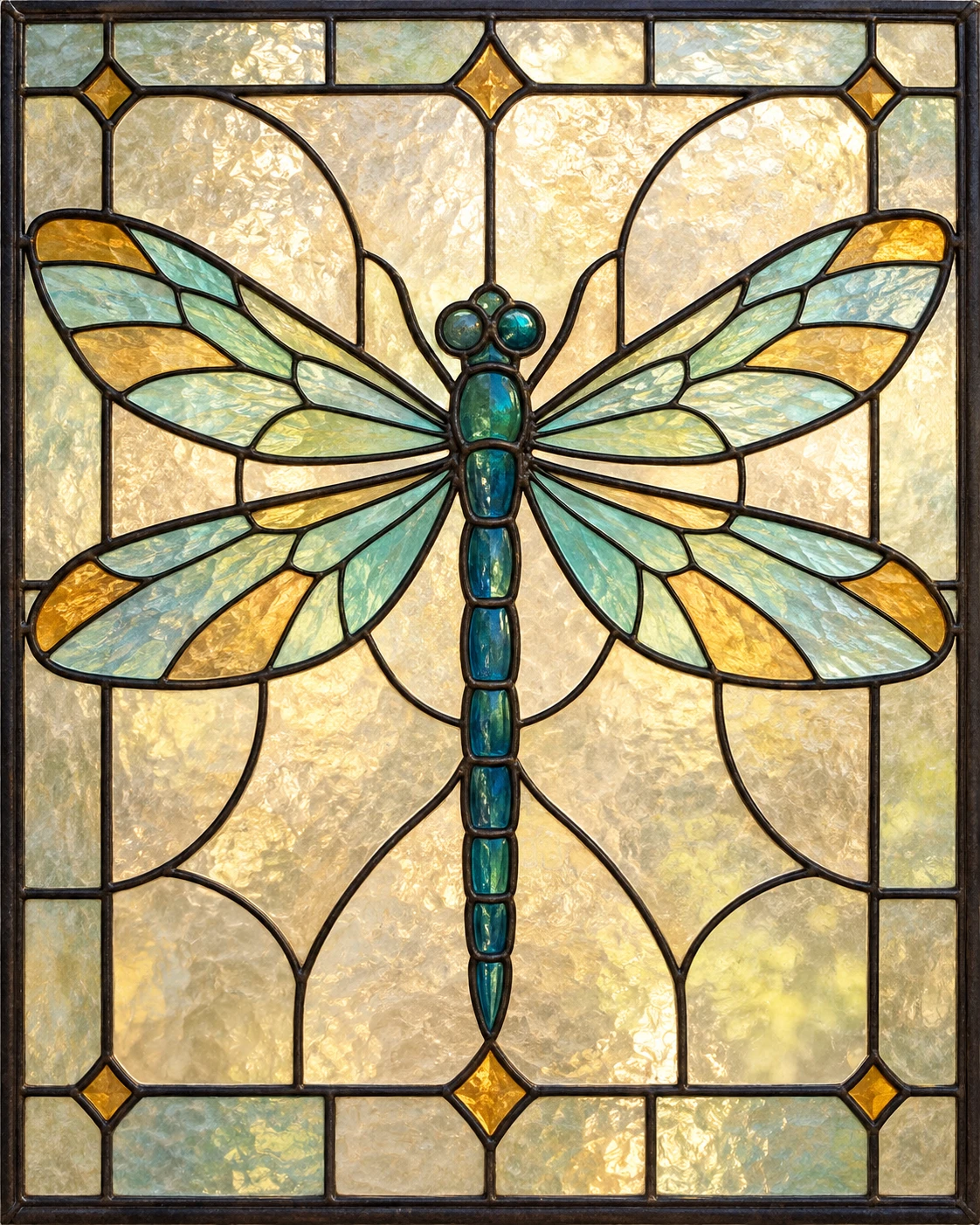
Divide a dragonfly’s wings into colored glass pieces, using continuous dark leading and transmitted light to demonstrate stained glass.
One Dragonfly · Stained-Glass Leading
- Shape & line
- Build each wing from a few elongated, closed glass cells that fan outward from its attachment to the body. Outline every cell with continuous dark leading, joining internal seams to the outer contours so the dragonfly reads as one assembled panel.
- Color & light
- Use pale aqua and muted amber for the wings, deeper teal for the body, and warm clear glass around them. Let diffuse light pass through the panel from behind, making the glass luminous while the leading remains dark and opaque.
- Texture & material
- Give individual glass pieces gentle ripples and uneven translucent color, with slight changes in brightness inside each cell. Add restrained highlights along the rounded leading, keeping its raised surface visibly distinct from the light passing through the glass.
- Composition
- Spread the wings diagonally toward the upper-left, upper-right, lower-left, and lower-right of the image. Surround their silhouette with larger, quieter background cells and a simple dark perimeter frame, preserving clear gaps between the wings.
Priority
Prioritize readable wing divisions and luminous glass bounded by continuous dark leading.
What to avoid & what to check
Avoid painted-on outlines, opaque plastic surfaces, and fragmented seams that leave glass cells open.
Check that four distinct wings connect to one body and every glass cell has a closed boundary.
Exact prompt for this example
SUBJECT
One dragonfly depicted within a flat stained-glass panel, viewed from above with four outstretched wings attached to one slender body and a tapered abdomen extending downward. The dragonfly and surrounding background are assembled from glass pieces joined by dark leading.

COMPOSITION
Show the entire rectangular panel straight on, with the dragonfly centered, its head toward the top and abdomen toward the bottom. Keep all four wing tips inside the frame with generous surrounding glass.

STYLE GUIDE
1. Shape & line
Build each wing from a few elongated, closed glass cells that fan outward from its attachment to the body. Outline every cell with continuous dark leading, joining internal seams to the outer contours so the dragonfly reads as one assembled panel.

2. Color & light
Use pale aqua and muted amber for the wings, deeper teal for the body, and warm clear glass around them. Let diffuse light pass through the panel from behind, making the glass luminous while the leading remains dark and opaque.

3. Texture & material
Give individual glass pieces gentle ripples and uneven translucent color, with slight changes in brightness inside each cell. Add restrained highlights along the rounded leading, keeping its raised surface visibly distinct from the light passing through the glass.

4. Composition
Spread the wings diagonally toward the upper-left, upper-right, lower-left, and lower-right of the image. Surround their silhouette with larger, quieter background cells and a simple dark perimeter frame, preserving clear gaps between the wings.

PRIORITY
Preserve the requested identity, count, action, composition and output settings. Apply the style rules within those constraints; a style reference must not replace the subject or layout. Within the style: Prioritize readable wing divisions and luminous glass bounded by continuous dark leading.

AVOID
Avoid painted-on outlines, opaque plastic surfaces, and fragmented seams that leave glass cells open.

OUTPUT
One image in a 4:5 portrait aspect ratio, with no lettering, labels, signature, or watermark.

SELF-CHECK
Check that four distinct wings connect to one body and every glass cell has a closed boundary.
Model information comes from image provenance. The same prompt may produce a different result.