Text to imageCharacterStyle guide
Clay Friend Holding a Cup · Opposed Thumb Grip
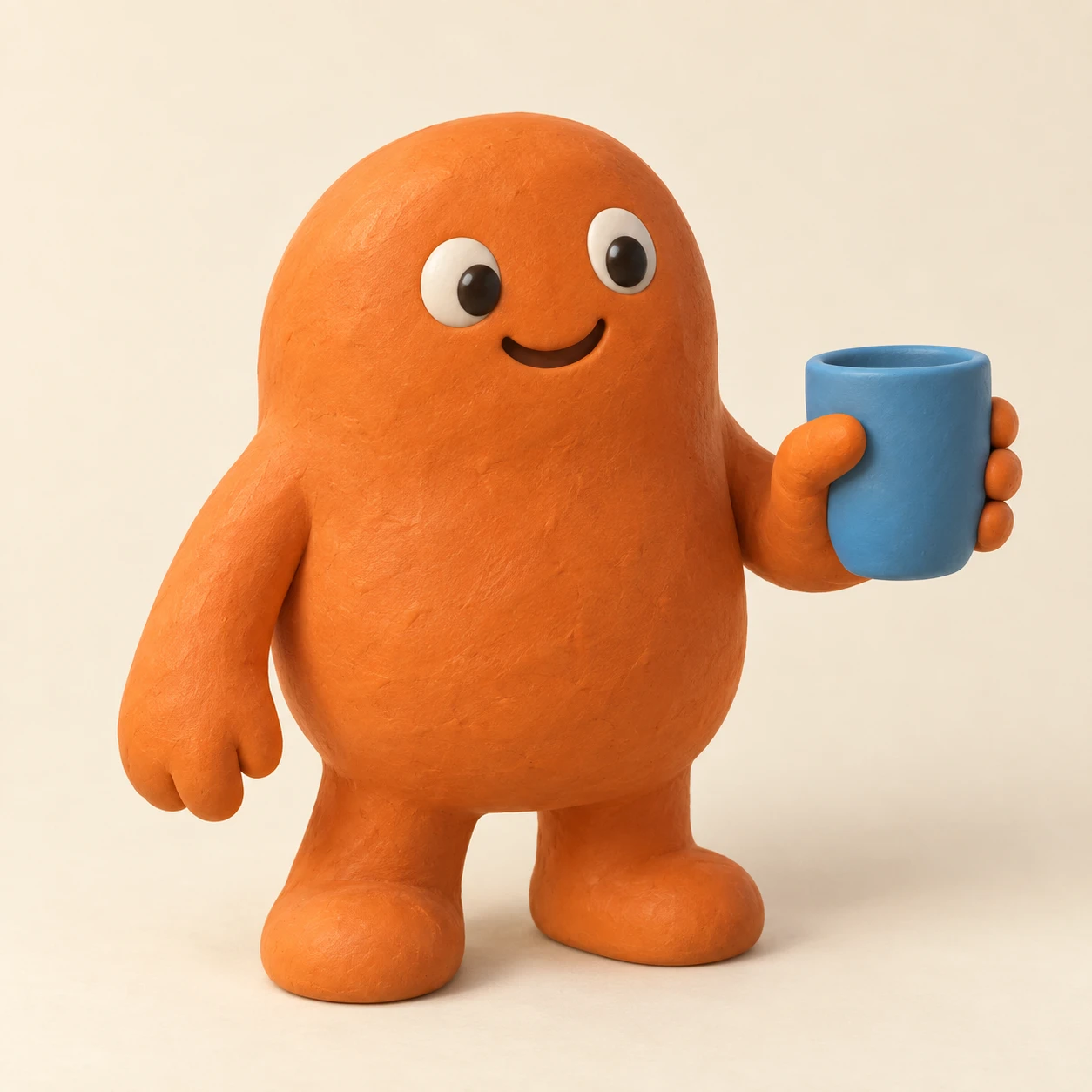
A small clay character grips a handleless cup. A thumb pressing its front and fingers wrapping the opposite side make the grasp clearly readable.
Clay Friend Holding a Cup · Opposed Thumb Grip
- Shape & line
- Build the creature from rounded clay masses and give the gripping hand a distinct thumb and three short fingers. On image-right, curve the thumb across the cup's camera-facing surface while the fingers curl around its far side, with their tips appearing at the outer image-right edge; let the cup contour disappear beneath each contacting digit.
- Color & light
- Separate the orange hand from the muted blue cup with broad, quiet color areas. Light both from upper image-left, placing soft highlights on their upper-left curves and small dark contact shadows directly beneath the thumb and visible fingertips where they touch the cup.
- Texture & material
- Keep the creature matte and softly handmade, with a few shallow smoothing marks across its broad surfaces. Make the cup smoother but still matte, and slightly flatten the finger pads against its wall so the grip feels firm without denting the cup.
- Composition
- Keep the cup upright on image-right and show its opening as a shallow ellipse. Angle the gripping wrist toward the cup, preserve a background gap beneath the raised forearm, and keep the face and lowered hand clear of the grip so the thumb–finger opposition remains the focal detail.
Priority
Prioritize a visible opposing grip with believable contact and clear cup contours.
What to avoid & what to check
Avoid floating fingers, a pasted-on thumb, or a cup hidden inside the hand.
Check that the thumb crosses the visible front while the fingers wrap the far side and reappear at the image-right edge.
Exact prompt for this example
SUBJECT
One original orange clay creature with a rounded body, two short arms, two stubby legs, and a simple friendly face. Its hand on image-right holds one small blue handleless cup upright beside its chest; its other arm hangs loosely.

COMPOSITION
Show the entire character in a three-quarter view at chest height, centered against a plain warm cream background. Place the cup on image-right with a clear gap between the cup and torso, and make the gripping hand large enough to read.

STYLE GUIDE
1. Shape & line
Build the creature from rounded clay masses and give the gripping hand a distinct thumb and three short fingers. On image-right, curve the thumb across the cup's camera-facing surface while the fingers curl around its far side, with their tips appearing at the outer image-right edge; let the cup contour disappear beneath each contacting digit.

2. Color & light
Separate the orange hand from the muted blue cup with broad, quiet color areas. Light both from upper image-left, placing soft highlights on their upper-left curves and small dark contact shadows directly beneath the thumb and visible fingertips where they touch the cup.

3. Texture & material
Keep the creature matte and softly handmade, with a few shallow smoothing marks across its broad surfaces. Make the cup smoother but still matte, and slightly flatten the finger pads against its wall so the grip feels firm without denting the cup.

4. Composition
Keep the cup upright on image-right and show its opening as a shallow ellipse. Angle the gripping wrist toward the cup, preserve a background gap beneath the raised forearm, and keep the face and lowered hand clear of the grip so the thumb–finger opposition remains the focal detail.

PRIORITY
Preserve the requested identity, count, action, composition and output settings. Apply the style rules within those constraints; a style reference must not replace the subject or layout. Within the style: Prioritize a visible opposing grip with believable contact and clear cup contours.

AVOID
Avoid floating fingers, a pasted-on thumb, or a cup hidden inside the hand.

OUTPUT
Create one square image as a softly lit clay character illustration, with no lettering, captions, logos, or watermarks.

SELF-CHECK
Check that the thumb crosses the visible front while the fingers wrap the far side and reappear at the image-right edge.
Model information comes from image provenance. The same prompt may produce a different result.