Text to imageArt stylesStyle guide
Retro cartoon city · Geometric color planes
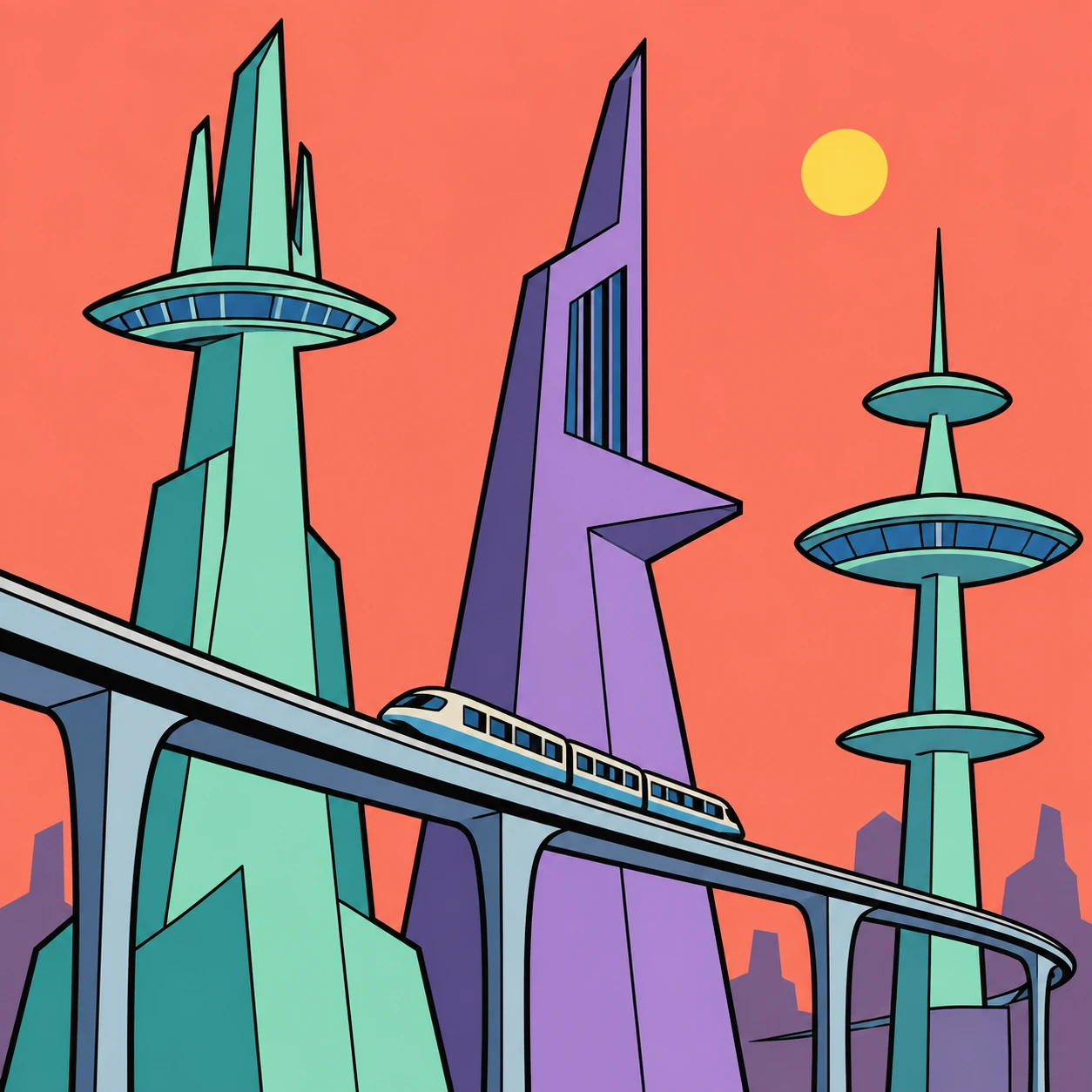
A retro cartoon city built from geometric architecture and vivid color planes.
Remix this referenceRetro cartoon city · Geometric color planes
- Shape & line
- Use very thick clean black outlines and bold geometric angular skyscraper silhouettes.
- Color & light
- Use broad flat coral, mint and violet color planes. Keep tonal variation minimal and separate objects with color boundaries rather than modeled lighting.
- Texture & material
- Use crisp 2D cel-animation shapes and smooth untextured surfaces, with almost no shading and no modeled 3D volume.
- Composition
- Use dramatic asymmetry, three focal towers, one diagonal rail and generous open sky inside the square.
Priority
Prioritize oversized geometric cartoon silhouettes and clear bold contours, then a flat saturated palette, then uncluttered composition. Keep shading minimal.
What to avoid & what to check
Avoid extra subjects, inconsistent repeated geometry, hidden key details, crowded overlaps, unwanted text and watermarks.
Check each style rule against the finished image: visible shape construction, color and light, material treatment, and composition. Preserve the exact subject count and scene requirements.
Exact prompt for this example
SUBJECT
A flat vector cartoon background of a retro-futuristic city: three differently shaped angular towers, a diagonal elevated curved railway with one small train, and a tiny round sun. No people. Early television limited-animation background design with bold black geometric contours.

COMPOSITION
Square image. Three contrasting tower silhouettes form an asymmetric focal cluster. A single diagonal curved elevated railway crosses the lower half. Generous coral sky surrounds a small yellow sun. Define each surface with a broad simple color plane and thick black outlines.

STYLE GUIDE
1. Shape & line
Use very thick clean black outlines and bold geometric angular skyscraper silhouettes.

2. Color & light
Use broad flat coral, mint and violet color planes. Keep tonal variation minimal and separate objects with color boundaries rather than modeled lighting.

3. Texture & material
Use crisp 2D cel-animation shapes and smooth untextured surfaces, with almost no shading and no modeled 3D volume.

4. Composition
Use dramatic asymmetry, three focal towers, one diagonal rail and generous open sky inside the square.

PRIORITY
Preserve the requested identity, count, action, composition and output settings. Apply the style rules within those constraints; a style reference must not replace the subject or layout. Within the style: Prioritize oversized geometric cartoon silhouettes and clear bold contours, then a flat saturated palette, then uncluttered composition. Keep shading minimal.

AVOID
Avoid extra subjects, inconsistent repeated geometry, hidden key details, crowded overlaps, unwanted text and watermarks.

OUTPUT
One finished square 2D cartoon illustration. Broad smooth graphic color fills with almost no shading. Fully opaque canvas. No rendered 3D lighting, cast shadows, glossy highlights, fabric texture, grain, lettering, logo, watermark or interface.

SELF-CHECK
Check each style rule against the finished image: visible shape construction, color and light, material treatment, and composition. Preserve the exact subject count and scene requirements.
Model information comes from image provenance. The same prompt may produce a different result.