Text to imageCharacterStyle guide
Plush Hippo · Contact Compression
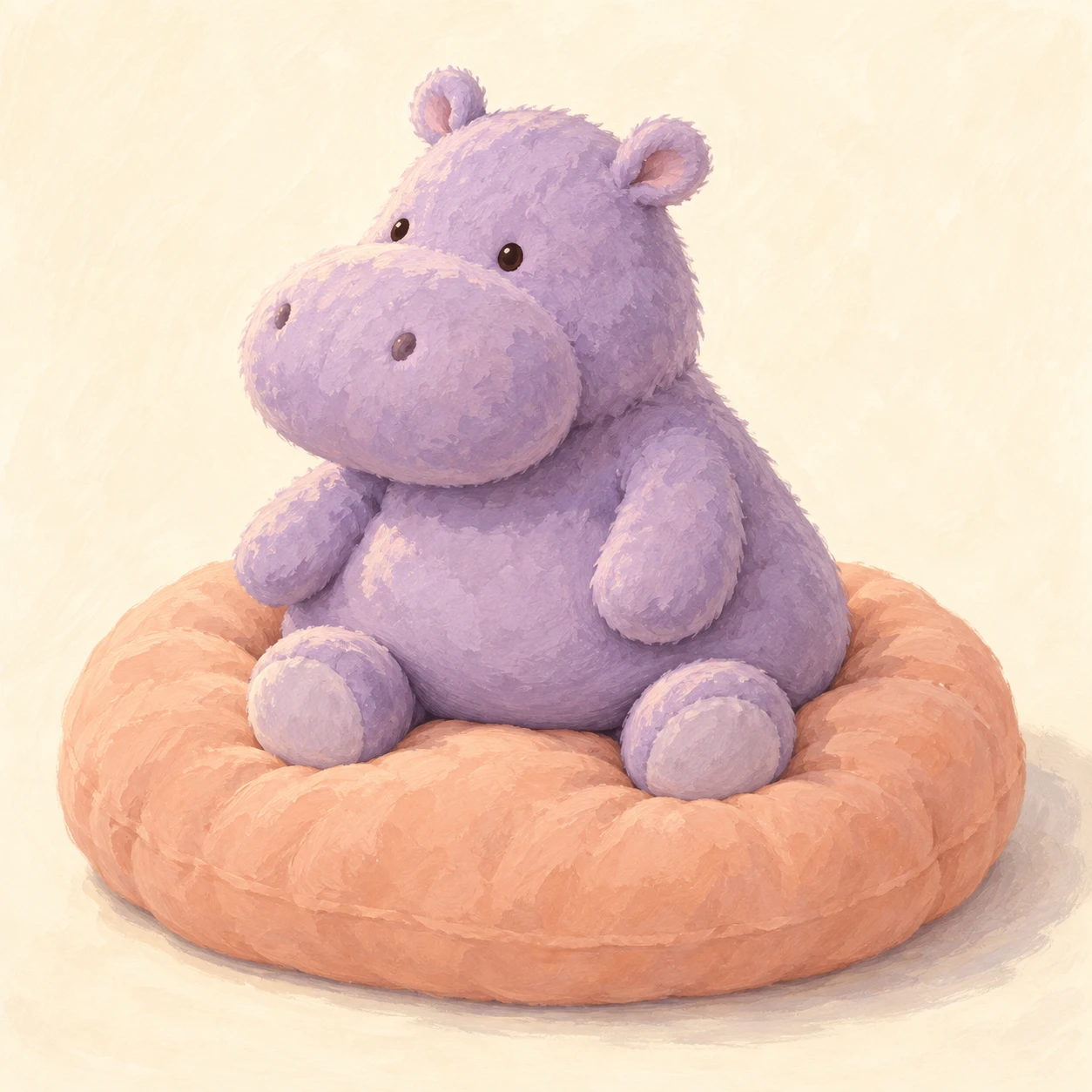
Show soft stuffing compressing through a seated plush hippo’s flattened underside and sideways bulge against a cushion.
Plush Hippo · Contact Compression
- Shape & line
- Draw the hippo with rounded, gently irregular contours, then flatten its lower body along the cushion contact and widen the hips just above that flattened edge. Make the cushion dip beneath the hippo and rise into shallow shoulders on either side, so the two contours visibly respond to the same pressure.
- Color & light
- Use lavender for the hippo, muted peach for the cushion, and warm ivory for the background. Light both forms from upper image-left; place a narrow, soft violet shadow in their contact crease and a broader gentle shadow toward image-right, keeping the crease darker than the surrounding body shading.
- Texture & material
- Build the plush surface with matte gouache patches and sparse short fuzzy strokes along the exposed cheeks, ears, and upper body. Reduce those strokes at the pressed underside and use smoother paint there, letting the change from airy edges to compact contact suggest compressed fabric and stuffing.
- Composition
- Keep the short feet resting separately on the cushion in front of the body, leaving the central body-to-cushion crease visible between them. Show a strip of peach cushion on both image-left and image-right of the hips, and use a plain background so the flattened base, lateral bulge, and cushion depression read together.
Priority
Make the shared deformation of the hippo and cushion the clearest visual feature.
What to avoid & what to check
Avoid a rigid round underside or a cushion that stays flat beneath the hippo.
Check that the flattened body, widened hips, and depressed cushion visibly meet at one continuous contact.
Exact prompt for this example
SUBJECT
One lavender plush hippo with small rounded ears, a broad muzzle, dot eyes, and short limbs sits on one muted peach cushion. Its lower body presses into the cushion, making both soft forms visibly deform at their shared contact.

COMPOSITION
Use a full-body, slightly elevated three-quarter view, with the hippo facing image-left. Center the hippo and cushion together; keep the entire cushion outline visible and leave enough space beside the hips to read their outward bulge.

STYLE GUIDE
1. Shape & line
Draw the hippo with rounded, gently irregular contours, then flatten its lower body along the cushion contact and widen the hips just above that flattened edge. Make the cushion dip beneath the hippo and rise into shallow shoulders on either side, so the two contours visibly respond to the same pressure.

2. Color & light
Use lavender for the hippo, muted peach for the cushion, and warm ivory for the background. Light both forms from upper image-left; place a narrow, soft violet shadow in their contact crease and a broader gentle shadow toward image-right, keeping the crease darker than the surrounding body shading.

3. Texture & material
Build the plush surface with matte gouache patches and sparse short fuzzy strokes along the exposed cheeks, ears, and upper body. Reduce those strokes at the pressed underside and use smoother paint there, letting the change from airy edges to compact contact suggest compressed fabric and stuffing.

4. Composition
Keep the short feet resting separately on the cushion in front of the body, leaving the central body-to-cushion crease visible between them. Show a strip of peach cushion on both image-left and image-right of the hips, and use a plain background so the flattened base, lateral bulge, and cushion depression read together.

PRIORITY
Preserve the requested identity, count, action, composition and output settings. Apply the style rules within those constraints; a style reference must not replace the subject or layout. Within the style: Make the shared deformation of the hippo and cushion the clearest visual feature.

AVOID
Avoid a rigid round underside or a cushion that stays flat beneath the hippo.

OUTPUT
Create one square image in a soft gouache illustration medium, with no lettering, captions, logos, or watermark.

SELF-CHECK
Check that the flattened body, widened hips, and depressed cushion visibly meet at one continuous contact.
Model information comes from image provenance. The same prompt may produce a different result.