Text to imageArt stylesStyle guide
One Iris · Wet-on-Wet Watercolor Feathering
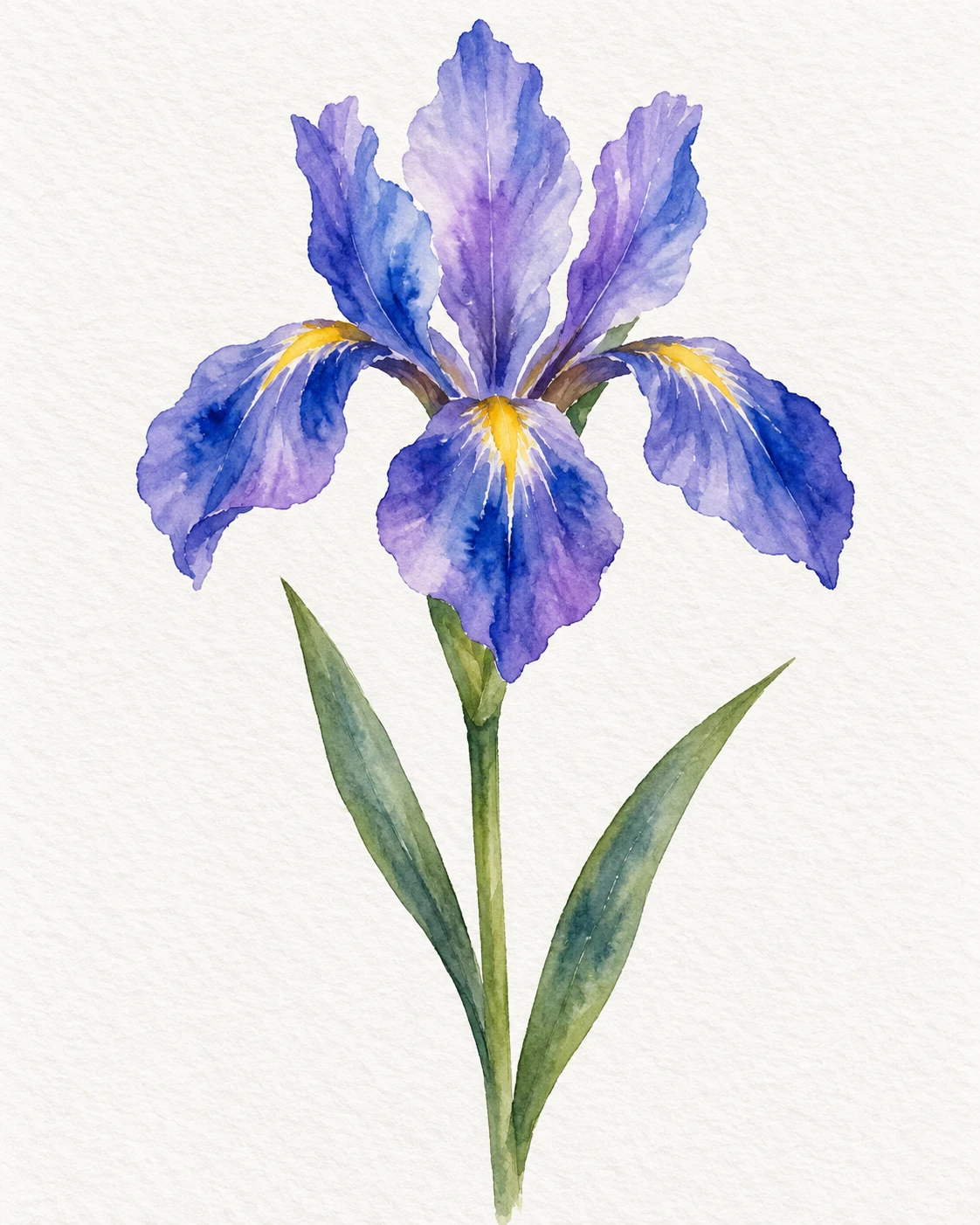
A watercolor study of one iris, showing violet and blue feathering through damp petal interiors against selectively crisp, dry edges.
One Iris · Wet-on-Wet Watercolor Feathering
- Shape & line
- Build the petals from broad, irregular wash shapes without enclosing ink outlines. Keep the outer edge of the image-right drooping petal crisp where paint meets dry paper, while softening selected interior boundaries so adjoining violet and blue washes feather into each other.
- Color & light
- Lay pale violet washes into damp petal interiors, then touch deeper blue into their lower folds while those washes remain wet. Let blue spread outward with soft, branching margins; preserve paper-white slivers along upper folds and keep the yellow accents small and distinct.
- Texture & material
- Show lightly textured watercolor paper through transparent pigment. Make wet passages visibly diffuse, with uneven pigment concentrations and a few soft pooling marks inside the petals; keep the surrounding paper clean so the texture comes from the painted washes and paper surface.
- Composition
- Concentrate the richest wet blending within the upper-central bloom and use simpler, quieter washes for the stem and leaves. Separate the drooping petals with narrow white gaps, and leave the lower half spacious so the feathered flower remains the clear focal point.
Priority
Prioritize visible wet pigment feathering inside a clearly readable iris silhouette.
What to avoid & what to check
Avoid uniformly blurred contours, opaque paint buildup, and digital gradient smoothing.
Check that the blue visibly feathers into violet and that a crisp outer petal edge contrasts with the soft interior washes.
Exact prompt for this example
SUBJECT
Paint one open blue-violet iris flower on a single green stem, with two slender leaves attached below the bloom. Show three upright petals and three drooping petals, with a small yellow accent at each drooping petal's base.

COMPOSITION
Use a portrait framing with the entire flower, stem, and both leaves visible. Place the bloom above the center, let one drooping petal extend toward image-left and another toward image-right, and leave generous unpainted paper around the silhouette.

STYLE GUIDE
1. Shape & line
Build the petals from broad, irregular wash shapes without enclosing ink outlines. Keep the outer edge of the image-right drooping petal crisp where paint meets dry paper, while softening selected interior boundaries so adjoining violet and blue washes feather into each other.

2. Color & light
Lay pale violet washes into damp petal interiors, then touch deeper blue into their lower folds while those washes remain wet. Let blue spread outward with soft, branching margins; preserve paper-white slivers along upper folds and keep the yellow accents small and distinct.

3. Texture & material
Show lightly textured watercolor paper through transparent pigment. Make wet passages visibly diffuse, with uneven pigment concentrations and a few soft pooling marks inside the petals; keep the surrounding paper clean so the texture comes from the painted washes and paper surface.

4. Composition
Concentrate the richest wet blending within the upper-central bloom and use simpler, quieter washes for the stem and leaves. Separate the drooping petals with narrow white gaps, and leave the lower half spacious so the feathered flower remains the clear focal point.

PRIORITY
Preserve the requested identity, count, action, composition and output settings. Apply the style rules within those constraints; a style reference must not replace the subject or layout. Within the style: Prioritize visible wet pigment feathering inside a clearly readable iris silhouette.

AVOID
Avoid uniformly blurred contours, opaque paint buildup, and digital gradient smoothing.

OUTPUT
Create one image in a 4:5 portrait aspect ratio, without lettering, captions, signatures, or watermarks.

SELF-CHECK
Check that the blue visibly feathers into violet and that a crisp outer petal edge contrasts with the soft interior washes.
Model information comes from image provenance. The same prompt may produce a different result.