Text to imageIllustrationStyle guide
One Teapot · Light Through Broken Contours
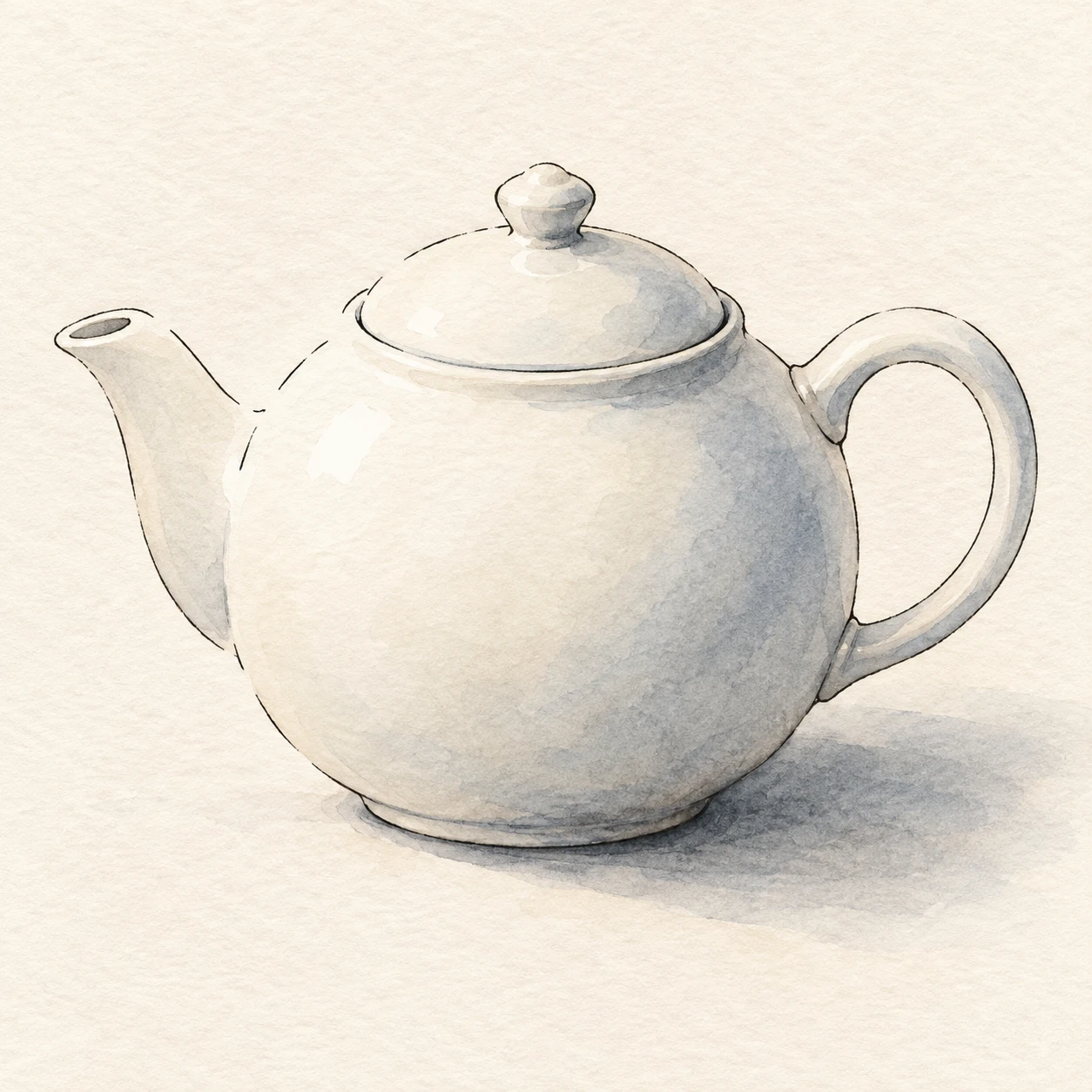
Selective contour breaks on the lit side and connected lines on the shaded side reveal a teapot’s rounded volume in pen and watercolor.
One Teapot · Light Through Broken Contours
- Shape & line
- Draw fine, gently irregular ink contours, connecting the body’s image-right shaded edge and underside. Break the contour into a few separated strokes along the image-left shoulder and upper lid where the light strikes; keep enough turning points to preserve the silhouette and keep both handle attachments legible.
- Color & light
- Place soft light above image-left, leaving the upper-left ceramic almost paper-white. Sweep a diluted blue-gray wash across the lower-right body and beneath the lid lip, then place a soft cast shadow on the tabletop extending toward image-right from the base.
- Texture & material
- Suggest smooth glazed ceramic with broad transparent washes and a small reserved white highlight on the left shoulder. Let subtle paper grain show through the pale pigment, while keeping ink strokes crisp and avoiding dense surface marks that would make the vessel look rough.
- Composition
- Keep the background a uniform warm off-white so the lit contour gaps merge visibly into it. Balance the left-projecting spout with the open handle on the right, and concentrate the darkest ink beneath the body so the base anchors the otherwise airy drawing.
Priority
Make the light-facing contour breaks the clearest visual device while preserving the teapot’s identity.
What to avoid & what to check
Avoid evenly dashed outlines, heavy black borders, and decorative ceramic patterns.
Confirm that contour gaps cluster on image-left and continuous shaded contours anchor image-right and the base.
Exact prompt for this example
SUBJECT
Depict one plain ivory ceramic teapot with a closed lid, a spout extending toward image-left, and a loop handle on image-right. The lid sits securely on the rounded body; the handle joins the body at two clearly readable points.

COMPOSITION
Use a slightly elevated three-quarter view, showing the lid top and the rounded body. Center the complete teapot on a pale tabletop with generous clear margins; keep the spout tip, handle opening, and base fully visible.

STYLE GUIDE
1. Shape & line
Draw fine, gently irregular ink contours, connecting the body’s image-right shaded edge and underside. Break the contour into a few separated strokes along the image-left shoulder and upper lid where the light strikes; keep enough turning points to preserve the silhouette and keep both handle attachments legible.

2. Color & light
Place soft light above image-left, leaving the upper-left ceramic almost paper-white. Sweep a diluted blue-gray wash across the lower-right body and beneath the lid lip, then place a soft cast shadow on the tabletop extending toward image-right from the base.

3. Texture & material
Suggest smooth glazed ceramic with broad transparent washes and a small reserved white highlight on the left shoulder. Let subtle paper grain show through the pale pigment, while keeping ink strokes crisp and avoiding dense surface marks that would make the vessel look rough.

4. Composition
Keep the background a uniform warm off-white so the lit contour gaps merge visibly into it. Balance the left-projecting spout with the open handle on the right, and concentrate the darkest ink beneath the body so the base anchors the otherwise airy drawing.

PRIORITY
Preserve the requested identity, count, action, composition and output settings. Apply the style rules within those constraints; a style reference must not replace the subject or layout. Within the style: Make the light-facing contour breaks the clearest visual device while preserving the teapot’s identity.

AVOID
Avoid evenly dashed outlines, heavy black borders, and decorative ceramic patterns.

OUTPUT
Create one square illustration in pen and watercolor, with no lettering, labels, signature, or watermark.

SELF-CHECK
Confirm that contour gaps cluster on image-left and continuous shaded contours anchor image-right and the base.
Model information comes from image provenance. The same prompt may produce a different result.