Text to imageIllustrationStyle guide
One Paper Arch · Height-Dependent Shadow Softness
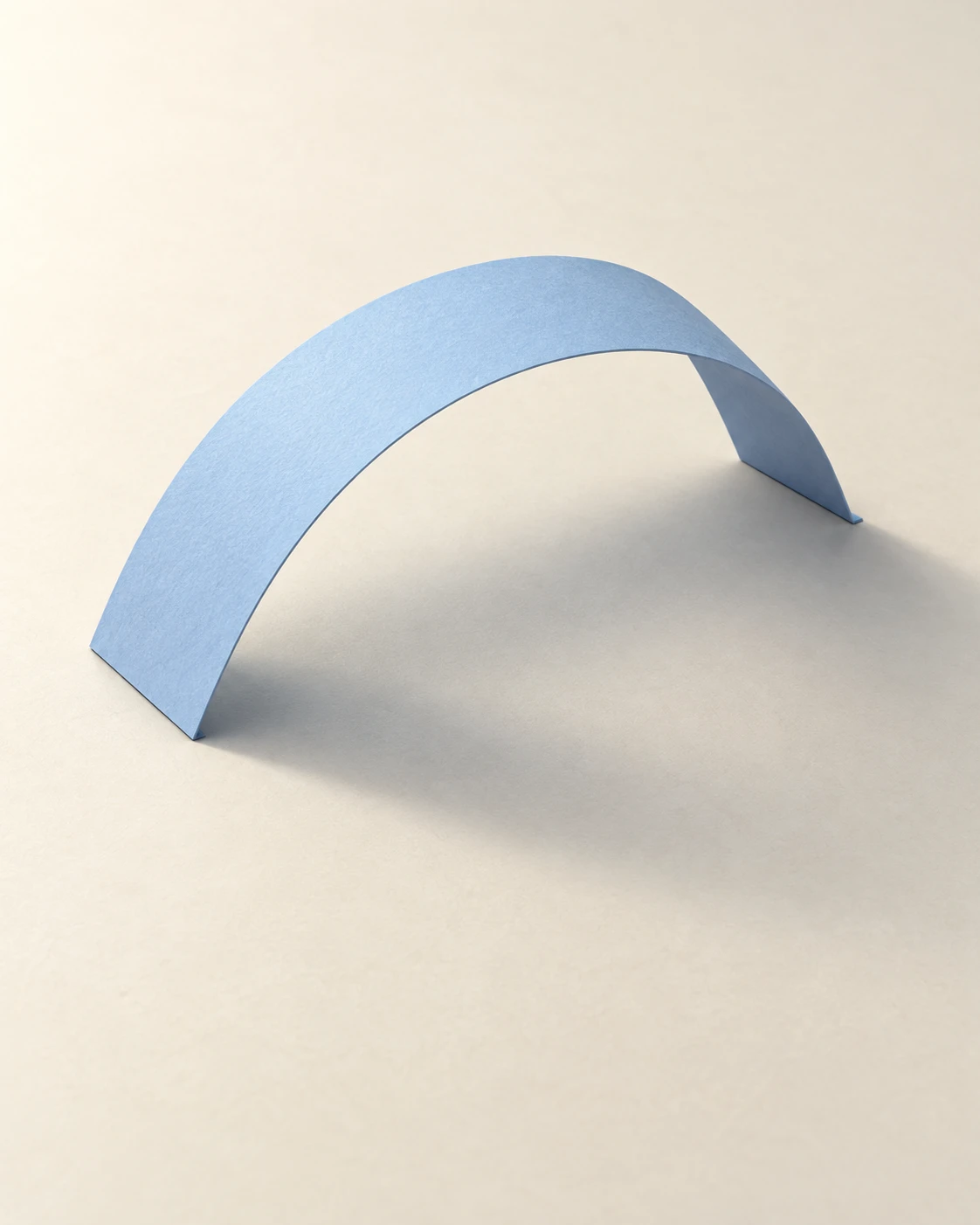
An illustration comparing crisp shadows at a paper arch’s grounded ends with the softer shadow beneath its raised center.
One Paper Arch · Height-Dependent Shadow Softness
- Shape & line
- Draw the strip as a continuous broad curve with two parallel long edges and a slim visible paper thickness; flatten each short end against the tabletop so the central lift reads as a smooth arch rather than a sharp fold.
- Color & light
- Place a broad soft light at image-upper-left, keeping the pale-blue upper surface light and the underside darker. Cast one muted blue-gray shadow toward image-lower-right; make its edges crisp at both grounded ends and progressively softer beneath the raised middle.
- Texture & material
- Render the paper with matte opaque color and faint broad grain, keeping the tabletop smoother. Blend the elevated shadow into the tabletop while retaining small dark contact accents exactly where the two paper ends meet the surface.
- Composition
- Center the arch slightly above the image midpoint and leave extra room at image-lower-right for its shadow. Keep both contact points and the shadow’s soft central region unobstructed so their edge differences can be compared in one glance.
Priority
Make the change from crisp contact shadows to soft elevated shadows the clearest visual feature.
What to avoid & what to check
Avoid uniformly sharp shadows, floating endpoints, and glossy paper highlights.
Confirm that both ends touch the tabletop and that the shadow becomes visibly softer beneath the lifted center.
Exact prompt for this example
SUBJECT
One wide pale-blue paper strip bent into a low arch on a warm ivory tabletop, with both short ends touching the surface and the middle lifted above it.

COMPOSITION
Use an elevated three-quarter view with the arch spanning image-left to image-right. Show its curved top, both grounded ends, and the continuous cast shadow extending toward image-lower-right, with generous empty tabletop around them.

STYLE GUIDE
1. Shape & line
Draw the strip as a continuous broad curve with two parallel long edges and a slim visible paper thickness; flatten each short end against the tabletop so the central lift reads as a smooth arch rather than a sharp fold.

2. Color & light
Place a broad soft light at image-upper-left, keeping the pale-blue upper surface light and the underside darker. Cast one muted blue-gray shadow toward image-lower-right; make its edges crisp at both grounded ends and progressively softer beneath the raised middle.

3. Texture & material
Render the paper with matte opaque color and faint broad grain, keeping the tabletop smoother. Blend the elevated shadow into the tabletop while retaining small dark contact accents exactly where the two paper ends meet the surface.

4. Composition
Center the arch slightly above the image midpoint and leave extra room at image-lower-right for its shadow. Keep both contact points and the shadow’s soft central region unobstructed so their edge differences can be compared in one glance.

PRIORITY
Preserve the requested identity, count, action, composition and output settings. Apply the style rules within those constraints; a style reference must not replace the subject or layout. Within the style: Make the change from crisp contact shadows to soft elevated shadows the clearest visual feature.

AVOID
Avoid uniformly sharp shadows, floating endpoints, and glossy paper highlights.

OUTPUT
One illustration in a 4:5 portrait aspect ratio, without text, labels, borders, or watermarks.

SELF-CHECK
Confirm that both ends touch the tabletop and that the shadow becomes visibly softer beneath the lifted center.
Model information comes from image provenance. The same prompt may produce a different result.