Text to imageProductStyle guide
One Canvas Pencil Case · Form-Following Weave
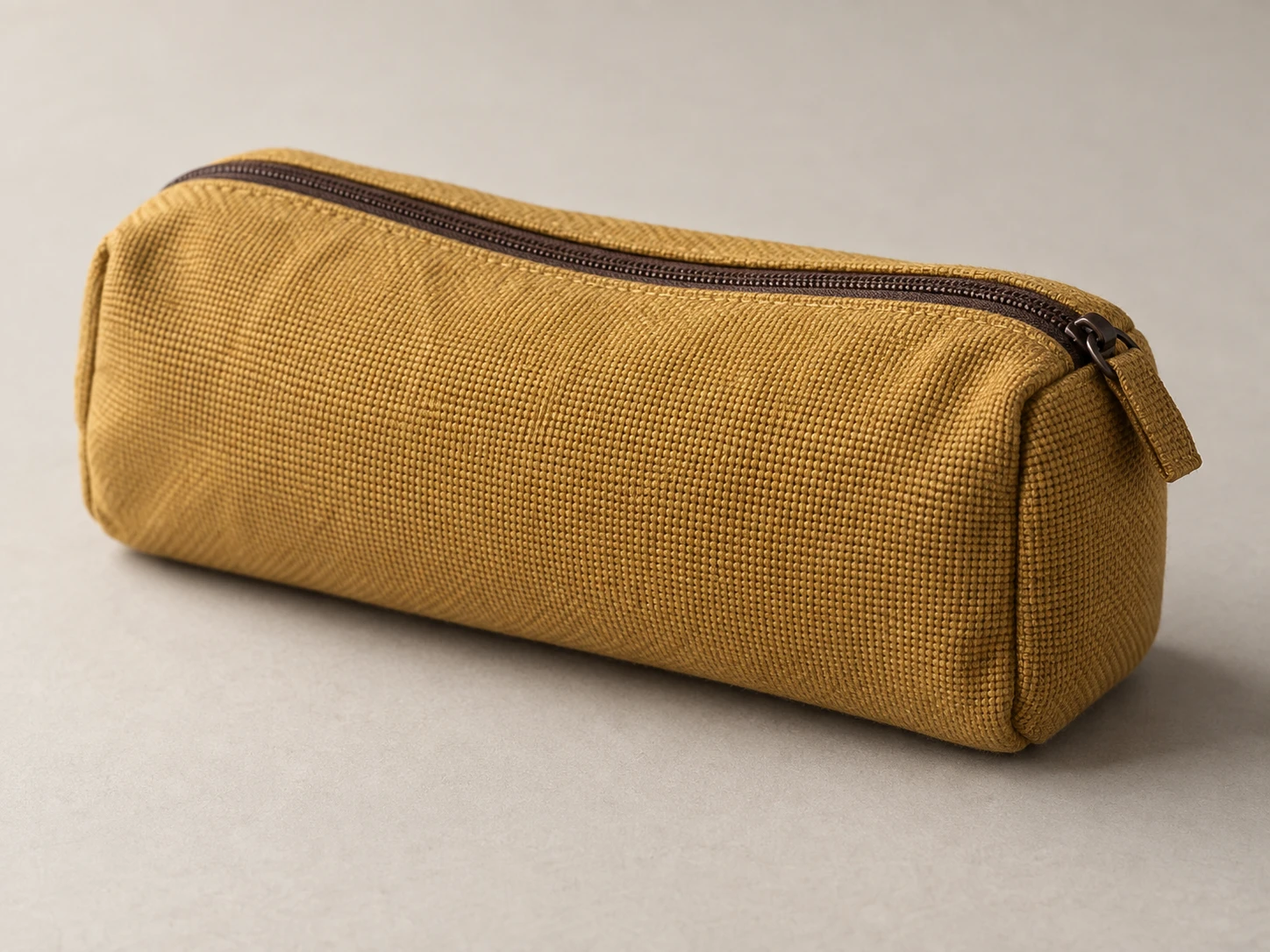
A product study that reveals a rounded canvas pencil case’s volume and folds through changes in weave spacing and direction.
One Canvas Pencil Case · Form-Following Weave
- Shape & line
- Build the body from softly bowed panels with rounded corners and a gently sagging top; let the zipper seam follow that sag, and use only a few shallow folds near the ends so the case remains easy to read.
- Color & light
- Keep the canvas muted ochre and the zipper dark brown. Light from the upper image-left with a broad soft source, making the top and image-left shoulder lighter while the image-right end darkens; cast a soft grounding shadow toward the lower image-right.
- Texture & material
- Show a coarse interlaced weave most clearly on the broad front. Bend both thread directions around the rounded image-right end and compress their apparent spacing as the surface turns away; carry the weave through folds with local bunching in valleys, keeping fibers matte and softly irregular.
- Composition
- Keep the broad front large enough for its open weave to compare visibly with the compressed weave on the image-right end. Hold both areas in focus, use a plain background, and leave clear space around the pull and beneath the contact shadow.
Priority
Prioritize weave that visibly follows the case’s volume and folds.
What to avoid & what to check
Avoid a flat grid pasted across the curved surface or glossy synthetic fabric.
Check that the weave bends and tightens toward the image-right end while remaining continuous through the folds.
Exact prompt for this example
SUBJECT
One closed, ochre canvas pencil case with a softly rounded rectangular body. A dark brown zipper follows its upper seam, with one small fabric pull resting at the image-right end.

COMPOSITION
Use a slightly elevated three-quarter view showing the broad front, top, and image-right end. Place the case horizontally near the center on a pale warm-gray surface, with generous margins and the whole silhouette visible.

STYLE GUIDE
1. Shape & line
Build the body from softly bowed panels with rounded corners and a gently sagging top; let the zipper seam follow that sag, and use only a few shallow folds near the ends so the case remains easy to read.

2. Color & light
Keep the canvas muted ochre and the zipper dark brown. Light from the upper image-left with a broad soft source, making the top and image-left shoulder lighter while the image-right end darkens; cast a soft grounding shadow toward the lower image-right.

3. Texture & material
Show a coarse interlaced weave most clearly on the broad front. Bend both thread directions around the rounded image-right end and compress their apparent spacing as the surface turns away; carry the weave through folds with local bunching in valleys, keeping fibers matte and softly irregular.

4. Composition
Keep the broad front large enough for its open weave to compare visibly with the compressed weave on the image-right end. Hold both areas in focus, use a plain background, and leave clear space around the pull and beneath the contact shadow.

PRIORITY
Preserve the requested identity, count, action, composition and output settings. Apply the style rules within those constraints; a style reference must not replace the subject or layout. Within the style: Prioritize weave that visibly follows the case’s volume and folds.

AVOID
Avoid a flat grid pasted across the curved surface or glossy synthetic fabric.

OUTPUT
Create one realistic product photograph in a 4:3 landscape aspect ratio, without lettering, logos, labels, or watermarks.

SELF-CHECK
Check that the weave bends and tightens toward the image-right end while remaining continuous through the folds.
Model information comes from image provenance. The same prompt may produce a different result.