Text to imageArt stylesStyle guide
One Chestnut · Ink Stippling
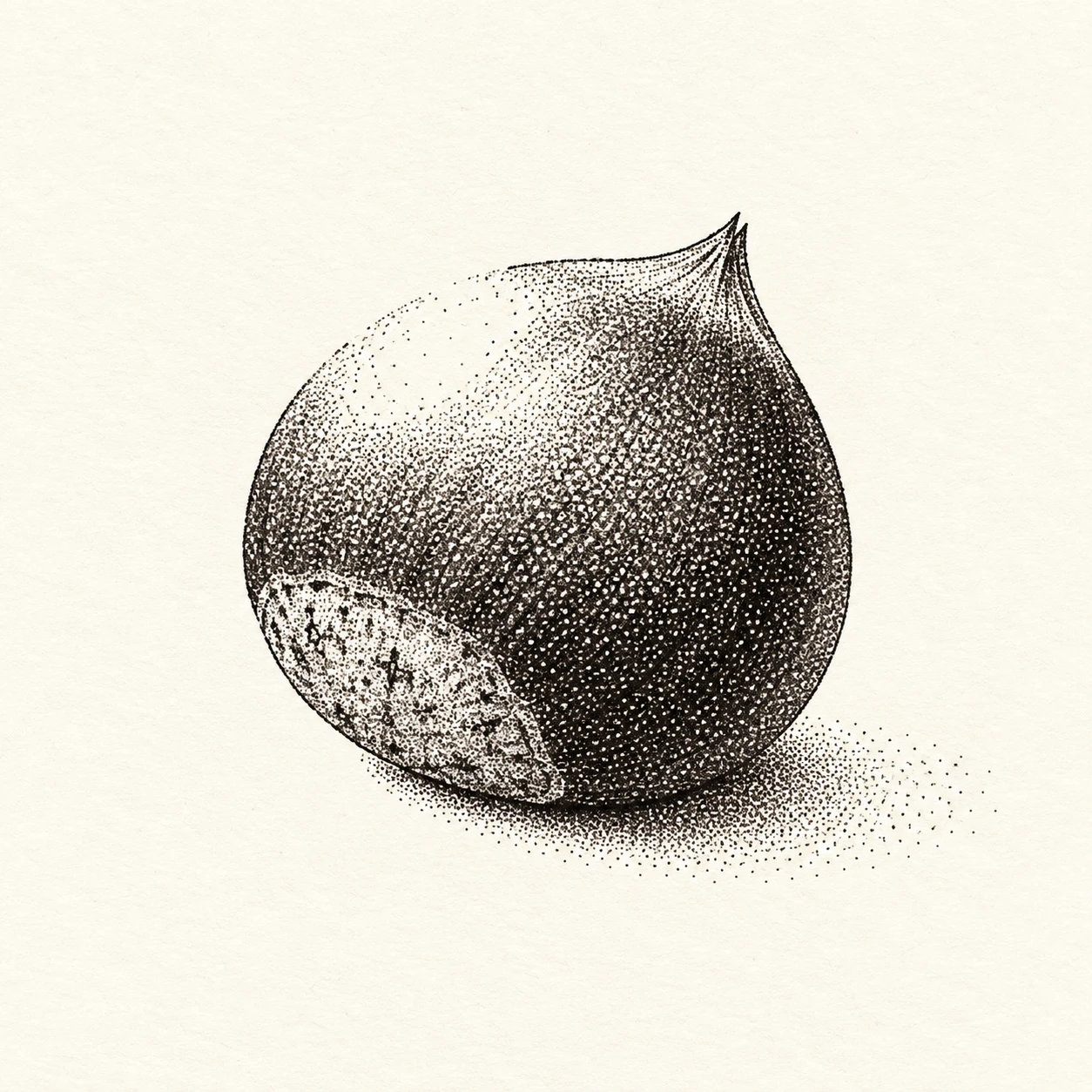
A monochrome drawing that uses black ink dot density to describe a chestnut’s rounded shell and rough basal patch.
One Chestnut · Ink Stippling
- Shape & line
- Build the chestnut’s gently bulging silhouette with a thin, slightly irregular ink contour; soften the image upper-left edge by interrupting that contour, and describe the pointed tip with a few short converging marks.
- Color & light
- Use only black ink and ivory paper. Establish light from image upper-left by leaving that shell area mostly bare, then increase dot density across the rounded body toward image lower-right; retain small paper gaps even in the darkest region.
- Texture & material
- Render shell shading with separate small ink dots rather than blended gray or hatching. Keep the shell’s dots relatively even in size, while using irregular clusters and a few short broken marks on the basal patch so its rough texture remains visibly distinct.
- Composition
- Place the chestnut slightly above center and let it occupy about half the image width. Add a compact stippled shadow touching its bottom edge and extending toward image lower-right, with denser dots at contact and progressively wider spacing outward.
Priority
Make the change in dot density clearly explain the chestnut’s rounded volume.
What to avoid & what to check
Avoid smooth gray fills, colored dots, and uniformly dense stippling.
Check that individual dots remain visible and the rough basal patch separates clearly from the shell.
Exact prompt for this example
SUBJECT
Show exactly one chestnut with a rounded shell, a small pointed tip, and a pale rough basal patch facing partly toward the viewer.

COMPOSITION
Use a close three-quarter view on plain ivory paper, with the tip angled toward image upper-right and the basal patch visible at image lower-left. Keep the entire chestnut readable with generous surrounding space.

STYLE GUIDE
1. Shape & line
Build the chestnut’s gently bulging silhouette with a thin, slightly irregular ink contour; soften the image upper-left edge by interrupting that contour, and describe the pointed tip with a few short converging marks.

2. Color & light
Use only black ink and ivory paper. Establish light from image upper-left by leaving that shell area mostly bare, then increase dot density across the rounded body toward image lower-right; retain small paper gaps even in the darkest region.

3. Texture & material
Render shell shading with separate small ink dots rather than blended gray or hatching. Keep the shell’s dots relatively even in size, while using irregular clusters and a few short broken marks on the basal patch so its rough texture remains visibly distinct.

4. Composition
Place the chestnut slightly above center and let it occupy about half the image width. Add a compact stippled shadow touching its bottom edge and extending toward image lower-right, with denser dots at contact and progressively wider spacing outward.

PRIORITY
Preserve the requested identity, count, action, composition and output settings. Apply the style rules within those constraints; a style reference must not replace the subject or layout. Within the style: Make the change in dot density clearly explain the chestnut’s rounded volume.

AVOID
Avoid smooth gray fills, colored dots, and uniformly dense stippling.

OUTPUT
Create one square image with no text, lettering, labels, or watermark.

SELF-CHECK
Check that individual dots remain visible and the rough basal patch separates clearly from the shell.
Model information comes from image provenance. The same prompt may produce a different result.