Text to imageCharacterStyle guide
Little Duck Friend · Fan-Shaped Webbed Feet
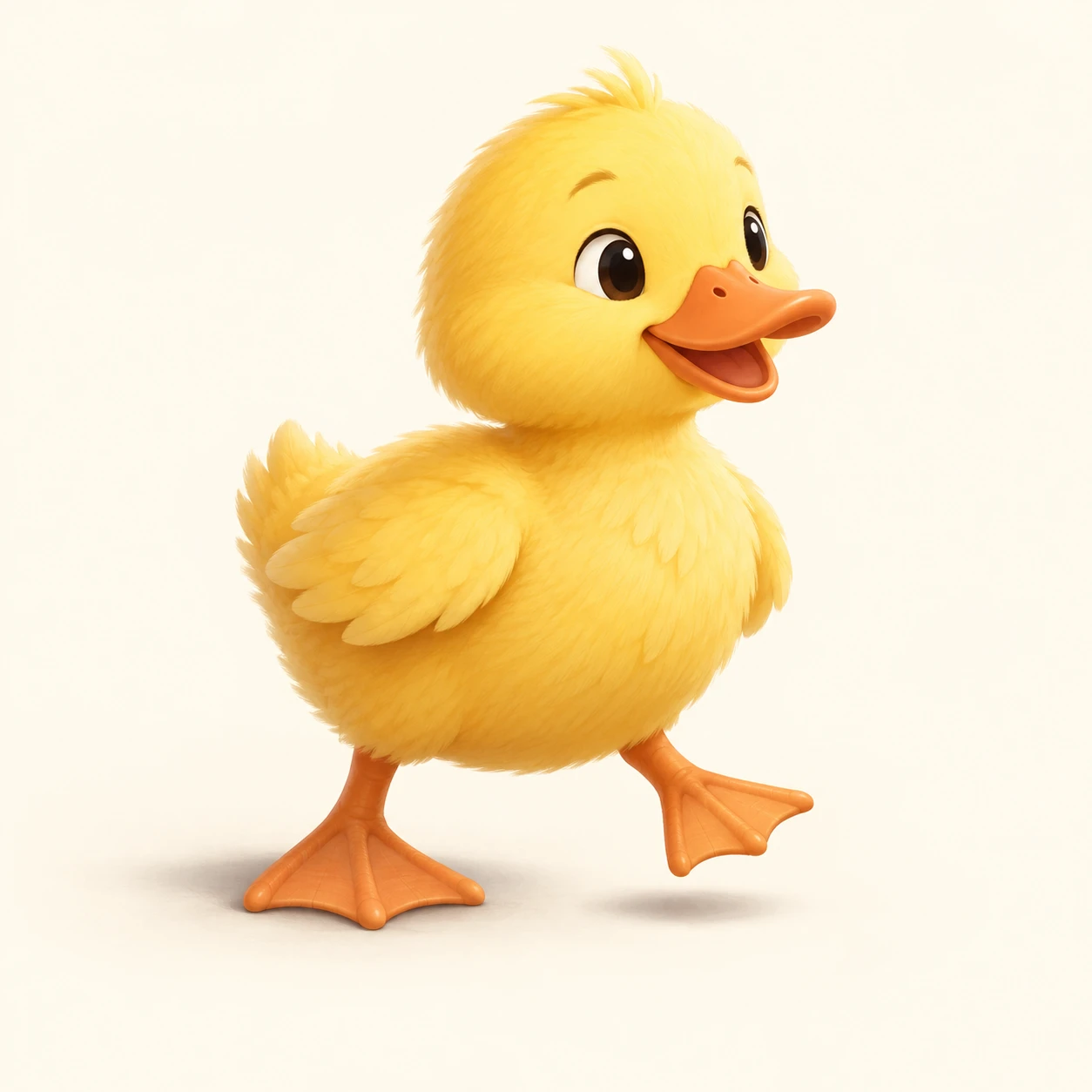
A character reference that connects three toes with shallow membrane curves and gives a walking pose life through contrasting spread and relaxed webbed feet.
Little Duck Friend · Fan-Shaped Webbed Feet
- Shape & line
- Build each foot from three forward-pointing toe rays that diverge from one heel, then connect adjacent rays with shallow concave membrane edges to form one continuous fan. Spread the planted image-left foot broadly and draw the lifted image-right foot as a narrower fan; keep the toe tips rounded and use smooth, clean outlines.
- Color & light
- Use warm yellow for the body and muted orange for the bill and feet, with a pale cream background. Light from the upper image-left so the upper-left body planes stay bright and the lower-right planes receive soft amber shading; place a compact contact shadow directly beneath the planted foot and a separated soft shadow beneath the lifted foot.
- Texture & material
- Render the body as soft matte down with a few short feather marks along the chest and wing edges. Keep the webbing smooth, using a faint darker crease from the heel toward each gap between toes to suggest a thin flexible membrane without dividing the foot into separate strips.
- Composition
- Keep the walking silhouette readable by leaving a clear background gap between the two feet and exposing both membrane edges below the belly. Make the planted foot the wider, lower shape and the lifted foot the narrower, higher shape, while keeping the small wings close to the body so attention settles on the contrasting foot fans.
Priority
Prioritize continuous webbing and the visible spread difference between the two feet.
What to avoid & what to check
Avoid disconnected toes, mitten-shaped feet, and belly overlap that conceals the webbing.
Check that both feet have three connected forward toes and that the image-left foot clearly bears the step.
Exact prompt for this example
SUBJECT
One original little duck character taking a gentle step, with a rounded yellow body, a short orange bill, two small wings, and exactly two orange webbed feet. The foot on image-left is planted and spread; the foot on image-right is lifted slightly forward with its toes closer together.

COMPOSITION
Show the entire duck in a low three-quarter view, facing image-right, with enough visible top surface on both feet to read their webbing. Keep the feet below and clear of the belly, and leave generous empty space around the character.

STYLE GUIDE
1. Shape & line
Build each foot from three forward-pointing toe rays that diverge from one heel, then connect adjacent rays with shallow concave membrane edges to form one continuous fan. Spread the planted image-left foot broadly and draw the lifted image-right foot as a narrower fan; keep the toe tips rounded and use smooth, clean outlines.

2. Color & light
Use warm yellow for the body and muted orange for the bill and feet, with a pale cream background. Light from the upper image-left so the upper-left body planes stay bright and the lower-right planes receive soft amber shading; place a compact contact shadow directly beneath the planted foot and a separated soft shadow beneath the lifted foot.

3. Texture & material
Render the body as soft matte down with a few short feather marks along the chest and wing edges. Keep the webbing smooth, using a faint darker crease from the heel toward each gap between toes to suggest a thin flexible membrane without dividing the foot into separate strips.

4. Composition
Keep the walking silhouette readable by leaving a clear background gap between the two feet and exposing both membrane edges below the belly. Make the planted foot the wider, lower shape and the lifted foot the narrower, higher shape, while keeping the small wings close to the body so attention settles on the contrasting foot fans.

PRIORITY
Preserve the requested identity, count, action, composition and output settings. Apply the style rules within those constraints; a style reference must not replace the subject or layout. Within the style: Prioritize continuous webbing and the visible spread difference between the two feet.

AVOID
Avoid disconnected toes, mitten-shaped feet, and belly overlap that conceals the webbing.

OUTPUT
Create one square character illustration with no lettering, labels, logos, or watermark.

SELF-CHECK
Check that both feet have three connected forward toes and that the image-left foot clearly bears the step.
Model information comes from image provenance. The same prompt may produce a different result.