Text to imageSpace & architectureStyle guide
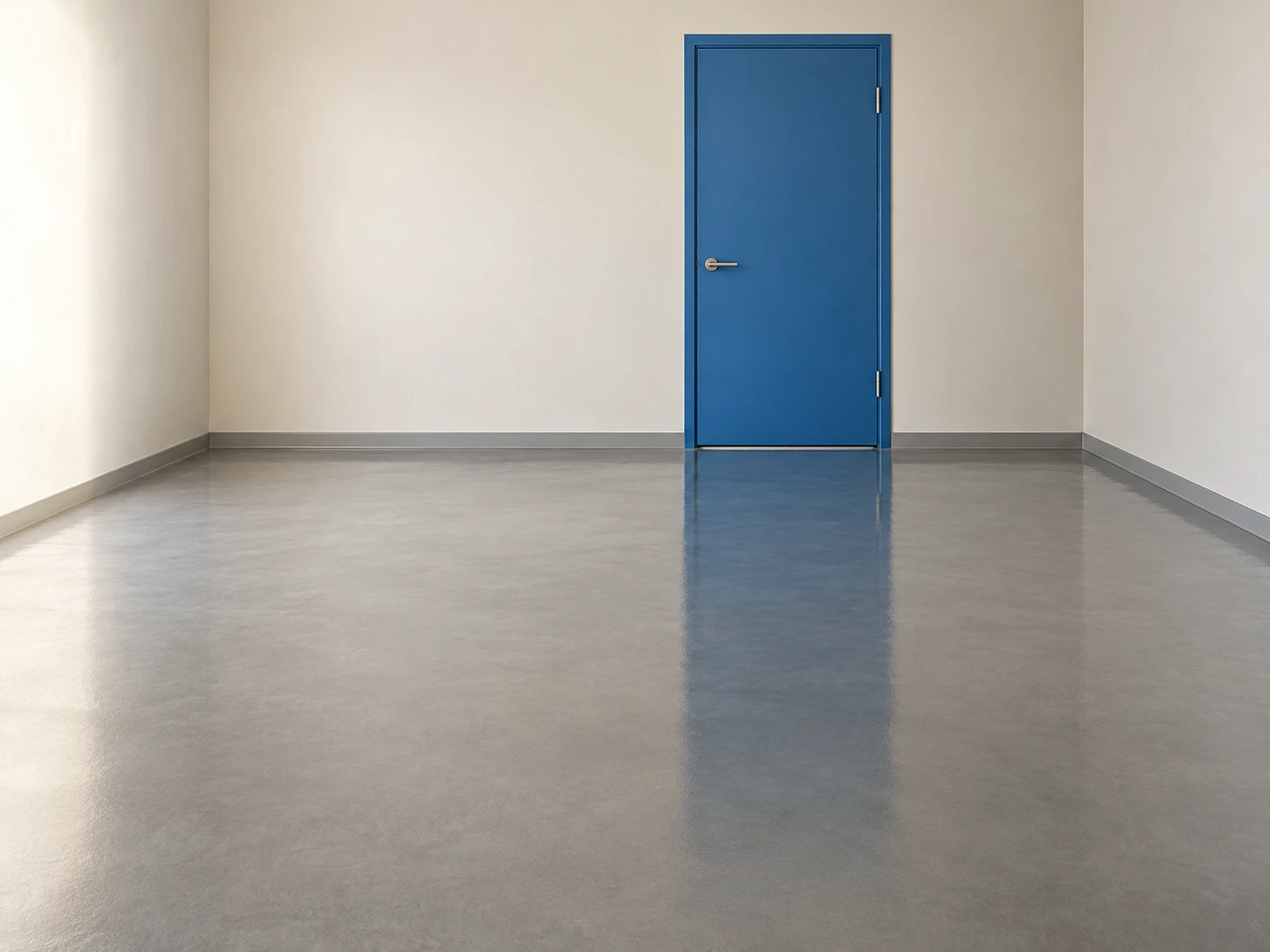
Small Empty Room · Vertically Aligned Floor Reflection
A spatial reference showing reflection alignment and changing clarity through a blue door reflected in a glossy floor.
Small Empty Room · Vertically Aligned Floor Reflection
- Shape & line
- Construct the room with straight vertical wall corners and floor edges converging toward a shared horizon. Draw the door as a plain upright rectangle, then place its inverted reflection directly below it so corresponding door corners align vertically in the image and meet at the threshold.
- Color & light
- Use broad diffuse illumination from image left, keeping the left wall lighter than the right wall. Make the blue door the strongest color accent and repeat a darker, less saturated blue in the floor reflection, allowing the reflected wall tones to remain faintly visible around it.
- Texture & material
- Render the walls and door with quiet matte surfaces and the floor with a continuous polished sheen. Keep the reflection clearest where it touches the threshold, then soften its edges and weaken its contrast progressively toward the bottom of the image, without breaking it into watery ripples.
- Composition
- Keep the complete door and its reflection inside the frame with open floor space on both sides. Let the wall–floor junction pass visibly behind the door base, and preserve the uninterrupted connection between the door and reflection as the main visual path through the otherwise simple room.
Priority
Prioritize the continuous threshold connection and vertical alignment of the door reflection.
What to avoid & what to check
Avoid a detached blue patch, sideways reflection drift, or a floor that reads as water.
Check that the inverted blue door begins at the threshold and becomes softer toward the foreground.
Exact prompt for this example
SUBJECT
One small empty rectangular room with warm off-white walls, one closed matte blue door in the back wall, and a smooth glossy gray floor. The door meets the floor at a visible threshold, and its blue reflection extends from that threshold toward the viewer.

COMPOSITION
View from inside the room, slightly left of its center, looking gently downward toward the back wall. Place the door just right of image center, show both wall–floor junctions, and give the floor approximately the lower half of the frame so the entire door reflection is readable.

STYLE GUIDE
1. Shape & line
Construct the room with straight vertical wall corners and floor edges converging toward a shared horizon. Draw the door as a plain upright rectangle, then place its inverted reflection directly below it so corresponding door corners align vertically in the image and meet at the threshold.

2. Color & light
Use broad diffuse illumination from image left, keeping the left wall lighter than the right wall. Make the blue door the strongest color accent and repeat a darker, less saturated blue in the floor reflection, allowing the reflected wall tones to remain faintly visible around it.

3. Texture & material
Render the walls and door with quiet matte surfaces and the floor with a continuous polished sheen. Keep the reflection clearest where it touches the threshold, then soften its edges and weaken its contrast progressively toward the bottom of the image, without breaking it into watery ripples.

4. Composition
Keep the complete door and its reflection inside the frame with open floor space on both sides. Let the wall–floor junction pass visibly behind the door base, and preserve the uninterrupted connection between the door and reflection as the main visual path through the otherwise simple room.

PRIORITY
Preserve the requested identity, count, action, composition and output settings. Apply the style rules within those constraints; a style reference must not replace the subject or layout. Within the style: Prioritize the continuous threshold connection and vertical alignment of the door reflection.

AVOID
Avoid a detached blue patch, sideways reflection drift, or a floor that reads as water.

OUTPUT
One architectural reference illustration in a 4:3 landscape aspect ratio, with no text, labels, borders, or watermark.

SELF-CHECK
Check that the inverted blue door begins at the threshold and becomes softer toward the foreground.
Model information comes from image provenance. The same prompt may produce a different result.