Text to imageArt stylesStyle guide
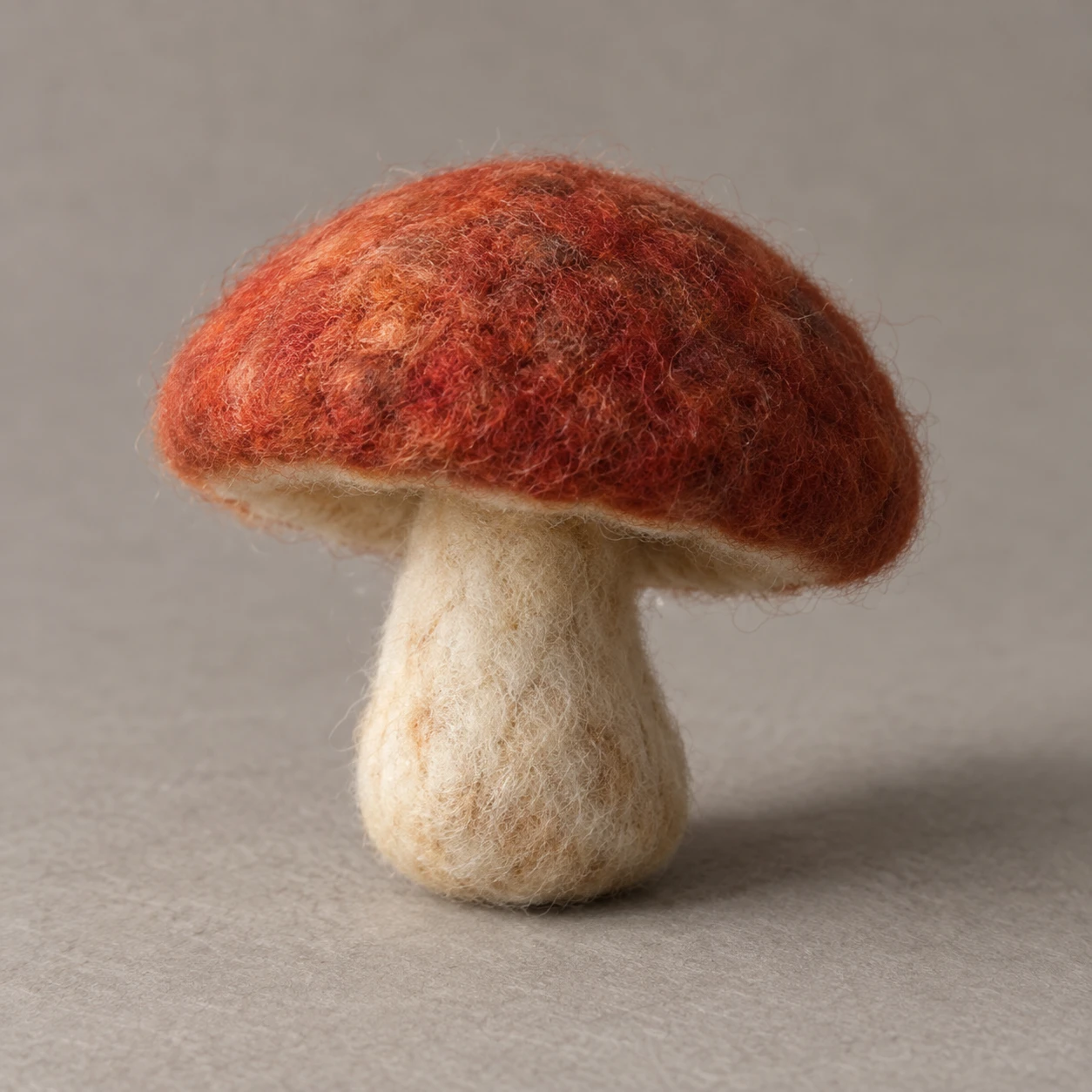
One Mushroom · Needle-Felted Wool
A needle-felted style reference that builds a mushroom from rounded masses and short wool fibers.
One Mushroom · Needle-Felted Wool
- Shape & line
- Build the cap as a low, rounded dome with a thick, gently uneven rim, and make the stem slightly tapered with a subtle bend. Keep their junction visibly connected; soften the silhouette with a few short projecting fibers rather than drawing an outline.
- Color & light
- Use muted rust red for the cap and warm ivory for the stem, blending small patches of neighboring wool colors into each mass. Light from the upper image-left so the cap is brightest there, its image-right side darkens gradually, and a soft shadow extends toward the lower image-right.
- Texture & material
- Render densely interlocked, matte wool fibers with shallow irregular dimples across the surface. Let fiber directions vary in small patches and retain a sparse fuzzy fringe at the rim; the body should read as firmly felted wool, with broad soft highlights and no shiny coating.
- Composition
- Keep the entire mushroom and its cast shadow inside the frame, with the mushroom occupying roughly the central half to two-thirds of the image height. Leave the background quiet and softly blurred while keeping the cap rim and front of the stem clear enough to show the felted construction.
Priority
Make the compact felted body and short wool fibers the defining visual features.
What to avoid & what to check
Avoid glossy plastic surfaces, knitted loops, and long fur that obscures the mushroom shape.
Confirm that one connected mushroom reads clearly and its matte surface visibly consists of felted wool.
Exact prompt for this example
SUBJECT
Show exactly one handmade needle-felted wool mushroom: a broad rust-red cap attached directly to a short ivory stem. The stem supports the cap at its center and ends in a softly rounded base. Keep the mushroom recognizable through these two simple connected masses.

COMPOSITION
Use a square frame and a slightly elevated three-quarter view that reveals the cap's rounded top, a small portion of its underside, and the full stem. Place the mushroom near the center on a plain warm-gray surface, with generous breathing room around its complete silhouette.

STYLE GUIDE
1. Shape & line
Build the cap as a low, rounded dome with a thick, gently uneven rim, and make the stem slightly tapered with a subtle bend. Keep their junction visibly connected; soften the silhouette with a few short projecting fibers rather than drawing an outline.

2. Color & light
Use muted rust red for the cap and warm ivory for the stem, blending small patches of neighboring wool colors into each mass. Light from the upper image-left so the cap is brightest there, its image-right side darkens gradually, and a soft shadow extends toward the lower image-right.

3. Texture & material
Render densely interlocked, matte wool fibers with shallow irregular dimples across the surface. Let fiber directions vary in small patches and retain a sparse fuzzy fringe at the rim; the body should read as firmly felted wool, with broad soft highlights and no shiny coating.

4. Composition
Keep the entire mushroom and its cast shadow inside the frame, with the mushroom occupying roughly the central half to two-thirds of the image height. Leave the background quiet and softly blurred while keeping the cap rim and front of the stem clear enough to show the felted construction.

PRIORITY
Preserve the requested identity, count, action, composition and output settings. Apply the style rules within those constraints; a style reference must not replace the subject or layout. Within the style: Make the compact felted body and short wool fibers the defining visual features.

AVOID
Avoid glossy plastic surfaces, knitted loops, and long fur that obscures the mushroom shape.

OUTPUT
Create one square image of a small wool sculpture, with no text, labels, logos, or watermark.

SELF-CHECK
Confirm that one connected mushroom reads clearly and its matte surface visibly consists of felted wool.
Model information comes from image provenance. The same prompt may produce a different result.