Text to imageIllustrationStyle guide
One Hanging Handkerchief · Support-Radiating Folds
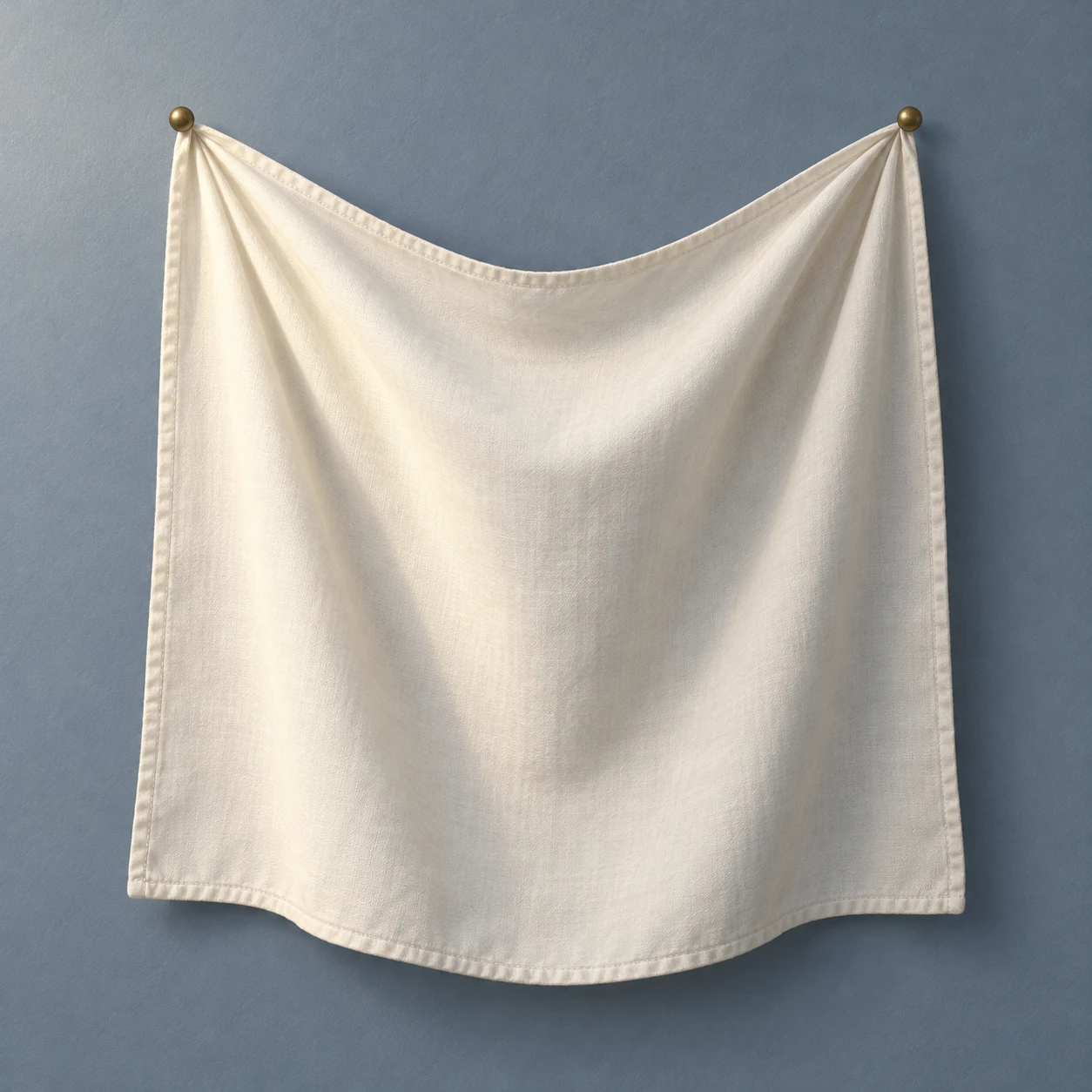
An illustration of a handkerchief suspended by two corners, showing how folds radiate from supports and the fabric sags between them.
One Hanging Handkerchief · Support-Radiating Folds
- Shape & line
- Draw the cloth with a restrained outer contour and a few curved fold lines that fan downward and inward from each pinned upper corner. Let the unsupported upper edge dip in a shallow U, and let the central hanging folds descend more vertically as they move away from the pins.
- Color & light
- Place a broad soft light above image-left. Paint the fold ridges facing that side in warm ivory and their image-right-facing recesses in cooler gray, using gradual transitions so alternating light and shade describe rounded folds rather than sharp pleats.
- Texture & material
- Render the cotton as matte fabric with softly brushed color and sparse, faint grain visible mainly in the broad light areas. Add a narrow stitched hem that follows the sagging edges and bends with the folds, keeping its detail subordinate to the fabric's larger shape.
- Composition
- Keep the two pins clearly separated across the upper part of the image and leave the cloth's center unobstructed. Arrange the strongest fold accents close to the pins, then reduce their contrast toward the lower center so the eye can trace each support into the freely hanging fabric.
Priority
Prioritize a readable connection between the two fixed corners and the sagging folds.
What to avoid & what to check
Avoid evenly spaced rigid pleats or fold lines that end without a visible change in the cloth's form.
Check that both upper corners visibly meet their pins and that the folds fan from those supports before descending.
Exact prompt for this example
SUBJECT
Show exactly one plain ivory square cotton handkerchief hanging vertically from two small pins securing its upper corners. The image-left and image-right pins sit at the same height; the unsupported fabric sags between them and hangs freely below.

COMPOSITION
Use a nearly frontal view with the entire cloth and both pins visible against a muted blue-gray background. Center the cloth with generous surrounding space, keeping its upper sag, lower edge, and both support points easy to read.

STYLE GUIDE
1. Shape & line
Draw the cloth with a restrained outer contour and a few curved fold lines that fan downward and inward from each pinned upper corner. Let the unsupported upper edge dip in a shallow U, and let the central hanging folds descend more vertically as they move away from the pins.

2. Color & light
Place a broad soft light above image-left. Paint the fold ridges facing that side in warm ivory and their image-right-facing recesses in cooler gray, using gradual transitions so alternating light and shade describe rounded folds rather than sharp pleats.

3. Texture & material
Render the cotton as matte fabric with softly brushed color and sparse, faint grain visible mainly in the broad light areas. Add a narrow stitched hem that follows the sagging edges and bends with the folds, keeping its detail subordinate to the fabric's larger shape.

4. Composition
Keep the two pins clearly separated across the upper part of the image and leave the cloth's center unobstructed. Arrange the strongest fold accents close to the pins, then reduce their contrast toward the lower center so the eye can trace each support into the freely hanging fabric.

PRIORITY
Preserve the requested identity, count, action, composition and output settings. Apply the style rules within those constraints; a style reference must not replace the subject or layout. Within the style: Prioritize a readable connection between the two fixed corners and the sagging folds.

AVOID
Avoid evenly spaced rigid pleats or fold lines that end without a visible change in the cloth's form.

OUTPUT
Create one finished illustration in a square aspect ratio, with no lettering, labels, signatures, or watermark.

SELF-CHECK
Check that both upper corners visibly meet their pins and that the folds fan from those supports before descending.
Model information comes from image provenance. The same prompt may produce a different result.