Text to imageCharacterStyle guide
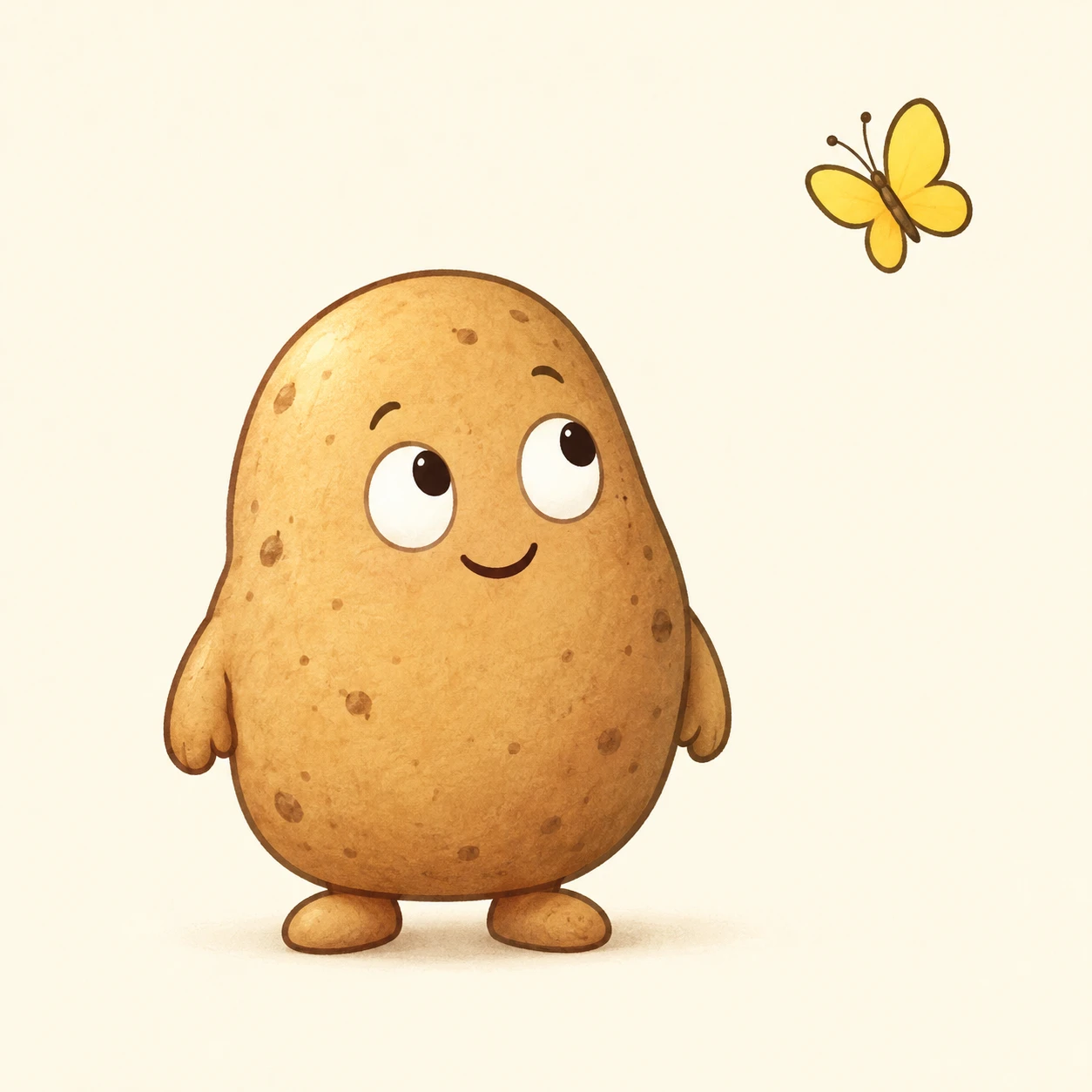
Potato Friend Watching a Butterfly · Target-Aligned Gaze
Keep the face frontal and direct both pupils toward a butterfly at the upper right, making the character’s attention immediately readable.
Potato Friend Watching a Butterfly · Target-Aligned Gaze
- Shape & line
- Draw a softly irregular potato silhouette with clean rounded contours and two clearly separated oval eye whites. Keep the eye outlines frontal, but shift both dark pupils toward the upper-right portions of their whites so they visibly attend to the butterfly; retain a slim white gap around each pupil.
- Color & light
- Use muted ochre for the body, dark brown for contours and pupils, and clear yellow for the butterfly. Light the body gently from the image upper-left, with a broad lighter area there and a restrained darker patch along the lower-right curve; keep the eye whites bright enough to reveal pupil placement.
- Texture & material
- Render the potato skin as matte with a few soft brown speckles of varied size, leaving the eye area uncluttered. Apply a faint paper grain to the colored fills, while keeping pupil edges and the butterfly’s simple paired wings crisp.
- Composition
- Keep the character’s arms relaxed beside its body so the eyes carry the gesture. Place the butterfly beyond the upper-right edge of the head rather than between the eyes, and preserve an empty diagonal corridor from the face to the butterfly so their visual relationship reads at thumbnail size.
Priority
Prioritize a clear shared gaze toward the upper-right butterfly.
What to avoid & what to check
Avoid centered pupils, inward-crossed eyes and a head turn that conceals either eye.
Check that both pupils point toward the butterfly and remain readable inside separate eye whites.
Exact prompt for this example
SUBJECT
One original potato character with a rounded, slightly uneven body, two white eyes, a small smile, short arms and feet; one small yellow butterfly hovers above and to the image-right of its face. The character watches the butterfly with both eyes while keeping its face frontal.

COMPOSITION
Use a square, full-body frontal view. Place the potato slightly left of center and the butterfly in the upper-right area, with a clear diagonal gap between the eyes and butterfly. Keep both eyes unobstructed and leave comfortable margins around the feet and butterfly.

STYLE GUIDE
1. Shape & line
Draw a softly irregular potato silhouette with clean rounded contours and two clearly separated oval eye whites. Keep the eye outlines frontal, but shift both dark pupils toward the upper-right portions of their whites so they visibly attend to the butterfly; retain a slim white gap around each pupil.

2. Color & light
Use muted ochre for the body, dark brown for contours and pupils, and clear yellow for the butterfly. Light the body gently from the image upper-left, with a broad lighter area there and a restrained darker patch along the lower-right curve; keep the eye whites bright enough to reveal pupil placement.

3. Texture & material
Render the potato skin as matte with a few soft brown speckles of varied size, leaving the eye area uncluttered. Apply a faint paper grain to the colored fills, while keeping pupil edges and the butterfly’s simple paired wings crisp.

4. Composition
Keep the character’s arms relaxed beside its body so the eyes carry the gesture. Place the butterfly beyond the upper-right edge of the head rather than between the eyes, and preserve an empty diagonal corridor from the face to the butterfly so their visual relationship reads at thumbnail size.

PRIORITY
Preserve the requested identity, count, action, composition and output settings. Apply the style rules within those constraints; a style reference must not replace the subject or layout. Within the style: Prioritize a clear shared gaze toward the upper-right butterfly.

AVOID
Avoid centered pupils, inward-crossed eyes and a head turn that conceals either eye.

OUTPUT
One square character illustration with a plain warm cream background; no lettering, captions, logos or watermark.

SELF-CHECK
Check that both pupils point toward the butterfly and remain readable inside separate eye whites.
Model information comes from image provenance. The same prompt may produce a different result.