Text to imageCafe & brandStyle guide
Local Fig Stand · Edge-Cropped Pattern Continuity
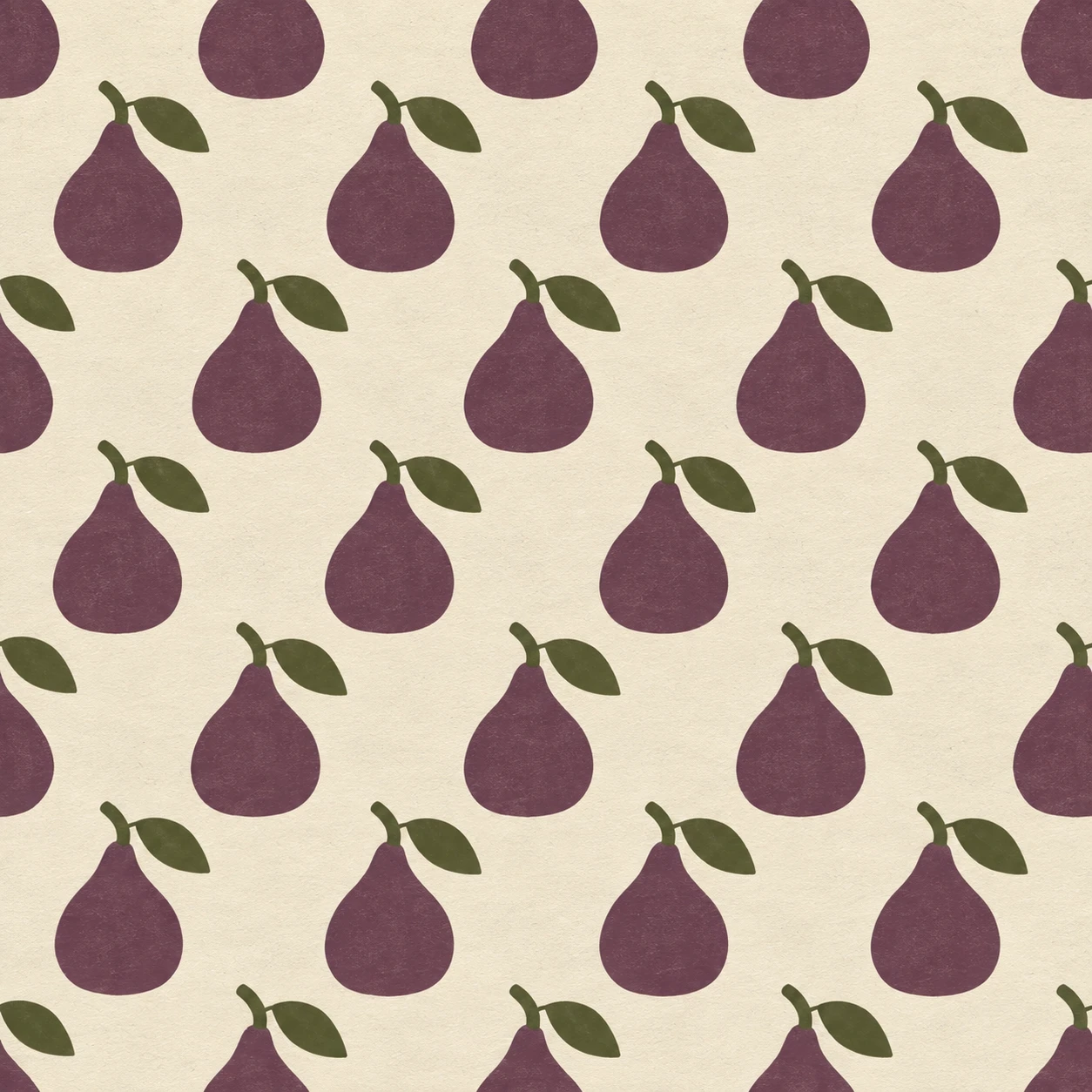
Repeat a fig symbol in staggered rows and crop it at the frame edges to create a brand pattern that appears to continue beyond the wrapping paper.
Local Fig Stand · Edge-Cropped Pattern Continuity
- Shape & line
- Build every fig emblem from the same broad pear-shaped silhouette, a slightly pinched neck, a short curved stem, and one almond-shaped leaf attached beside the stem. Use smooth solid contours and keep the leaf gap open so the small marks remain readable.
- Color & light
- Print the fig bodies in muted plum and their stems and leaves in dark olive on a warm cream ground. Keep each color flat and consistent across the repeat, with enough contrast for the cream gaps to clearly separate neighboring emblems.
- Texture & material
- Give the swatch the matte appearance of ink on uncoated wrapping paper. Show a faint paper grain through the broad printed areas while preserving crisp emblem edges; illuminate the surface evenly so texture stays subtle and the repeat remains dominant.
- Composition
- Offset alternate rows by roughly half the repeat spacing and maintain a steady cream gap between marks. Extend the same arrangement beyond the frame: the image-left and image-right edges cut through fig bodies, while the top and bottom edges cut through different parts of neighboring rows. Keep interior emblems whole and do not shrink or reposition edge marks to make them fit.
Priority
Prioritize a consistent repeat whose cropped edge marks visibly continue the interior pattern.
What to avoid & what to check
Avoid a surrounding border, irregular emblem sizes, glossy shading, and decorative text.
Check that all four edges crop the unchanged repeat and that complete interior figs remain easy to recognize.
Exact prompt for this example
SUBJECT
Create one wrapping-paper pattern design for an original neighborhood fig stand. Repeat the same simple upright fig emblem across the sheet; each emblem consists of one plump fig body with a short bent stem and one small attached leaf.

COMPOSITION
Show the design straight overhead as a flat square swatch filling the entire image. Arrange the fig emblems in evenly spaced staggered rows, with several complete emblems in the interior and partial emblems visibly cut by all four image edges.

STYLE GUIDE
1. Shape & line
Build every fig emblem from the same broad pear-shaped silhouette, a slightly pinched neck, a short curved stem, and one almond-shaped leaf attached beside the stem. Use smooth solid contours and keep the leaf gap open so the small marks remain readable.

2. Color & light
Print the fig bodies in muted plum and their stems and leaves in dark olive on a warm cream ground. Keep each color flat and consistent across the repeat, with enough contrast for the cream gaps to clearly separate neighboring emblems.

3. Texture & material
Give the swatch the matte appearance of ink on uncoated wrapping paper. Show a faint paper grain through the broad printed areas while preserving crisp emblem edges; illuminate the surface evenly so texture stays subtle and the repeat remains dominant.

4. Composition
Offset alternate rows by roughly half the repeat spacing and maintain a steady cream gap between marks. Extend the same arrangement beyond the frame: the image-left and image-right edges cut through fig bodies, while the top and bottom edges cut through different parts of neighboring rows. Keep interior emblems whole and do not shrink or reposition edge marks to make them fit.

PRIORITY
Preserve the requested identity, count, action, composition and output settings. Apply the style rules within those constraints; a style reference must not replace the subject or layout. Within the style: Prioritize a consistent repeat whose cropped edge marks visibly continue the interior pattern.

AVOID
Avoid a surrounding border, irregular emblem sizes, glossy shading, and decorative text.

OUTPUT
Produce one square 1:1 brand reference image with no lettering, numerals, captions, watermark, or additional panels.

SELF-CHECK
Check that all four edges crop the unchanged repeat and that complete interior figs remain easy to recognize.
Model information comes from image provenance. The same prompt may produce a different result.