Text to imagePortraitStyle guide
Silversmith · Strip-Light Reflection Control
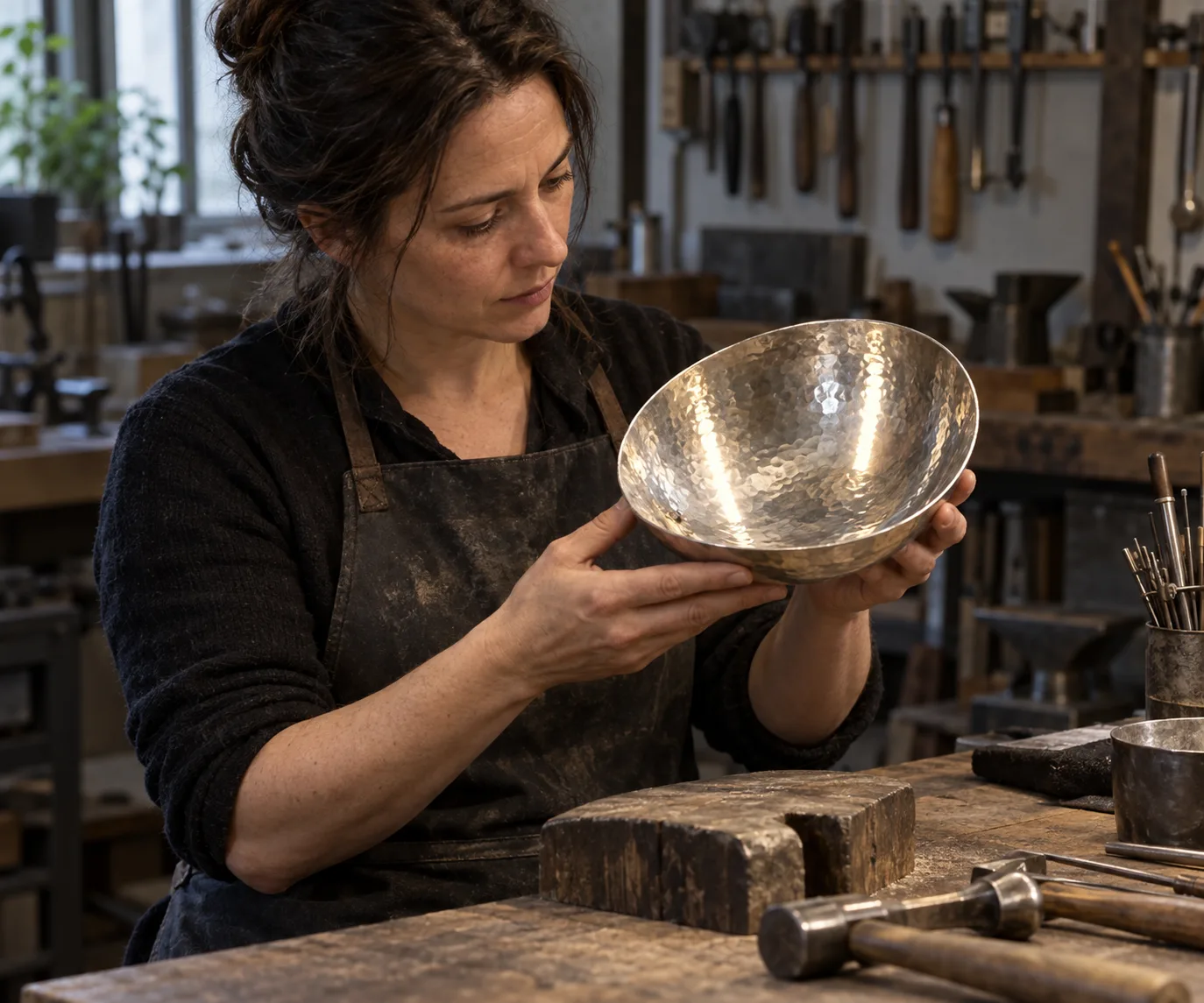
Shape narrow reflections on polished metal while keeping the maker's face and hands legible.
Silversmith · Strip-Light Reflection Control
- 1
- Use narrow light sources to draw deliberate reflection bands across curved reflective surfaces.
- 2
- Preserve darker metal areas with flags so surface form remains visible.
- 3
- Keep the subject's face and working hands within a separate, softer light field.
- 4
- Compose the reflective object and the maker's attention as one connected portrait action.
Priority
Preserve the four style rules when changing subject or composition.
What to avoid & what to check
Avoid unwanted lettering, logos and watermarks.
Check silhouette and composition at thumbnail size.
Build assets in this style
Shared style locked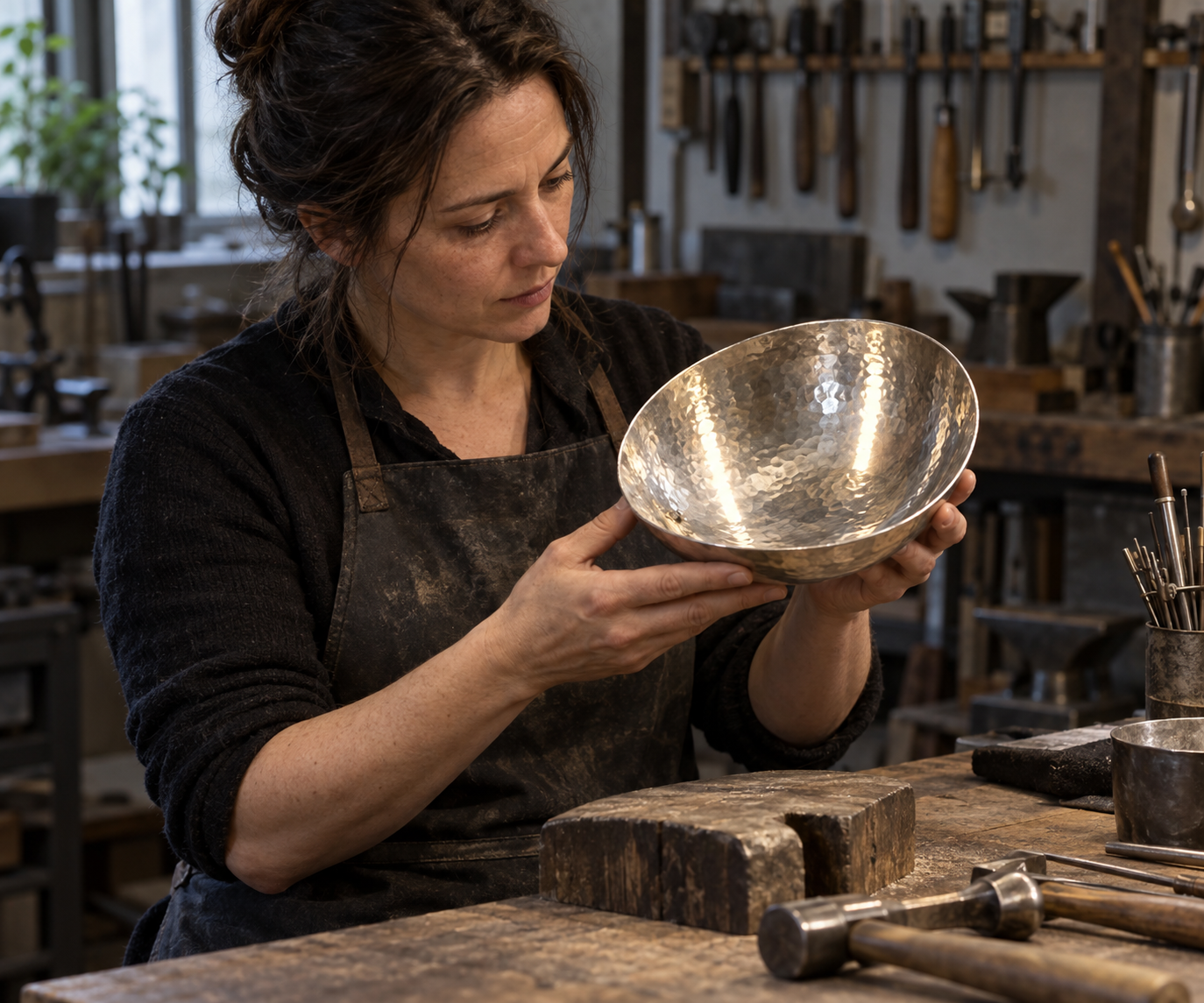
Exact prompt for this example
Exact prompt · Original
Create a photographic environmental portrait of one original silversmith at a workbench, inspecting a shallow hand-hammered silver bowl. Frame the person from the waist up with both hands and the complete bowl visible. A broad soft source illuminates the face, while two narrow vertical strip lights create controlled elongated reflections along the bowl's curved interior; use dark flags to keep the remaining metal from becoming a blank white glare. Let the hammer marks catch small shifts in reflection, and keep workshop tools softly present in the background. The subject looks at the bowl rather than the camera, absorbed in assessing its surface. Natural skin texture, credible metal behavior, no beauty retouching. No lettering, logos, or watermarks.
Model information comes from image provenance. The same prompt may produce a different result.