Text to imageSpace & architectureStyle guide
Small Curtain Room · Layered Transparency
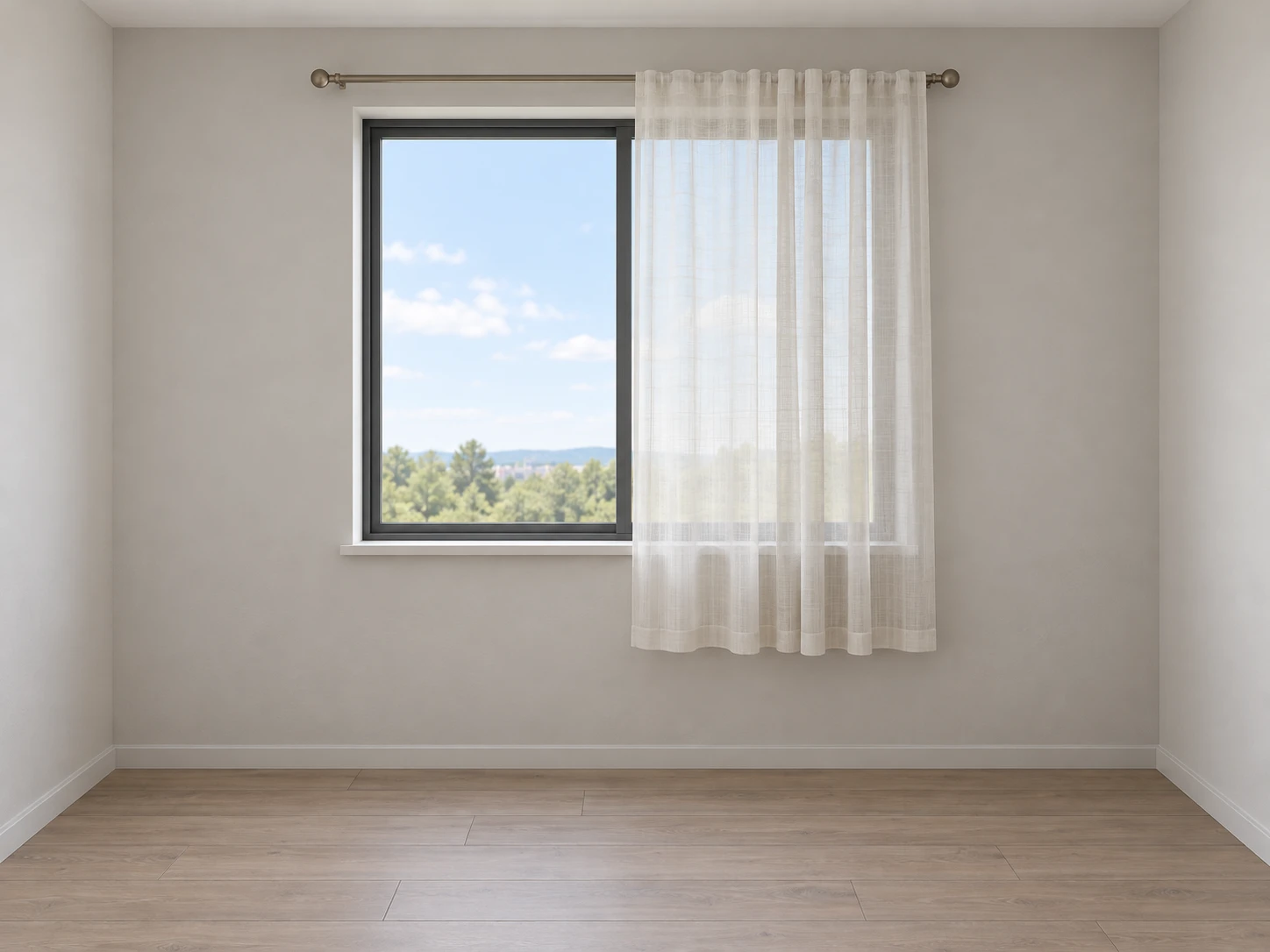
A small room uses a half-covered window and overlapping sheer folds to reveal light transmission and spatial depth.
Small Curtain Room · Layered Transparency
- Shape & line
- Construct the room with straight wall and window edges and restrained perspective. Draw the curtain as a continuous hanging sheet with broad vertical folds; let its curved hem and gently wavering fold edges contrast visibly with the rigid window frame.
- Color & light
- Use pale warm-gray walls, a muted wood floor and cool daylight through the window. On the exposed image-left half, keep the dark frame crisp against the bright sky; behind the image-right curtain, show the same frame through a lighter, softer veil while preserving its alignment.
- Texture & material
- Render the sheer fabric with a fine, understated weave rather than opaque white paint. Make single-layer areas translucent, doubled fold overlaps slightly denser and darker, and the folded hem a more opaque narrow strip; keep the wall matte and the floor grain quiet.
- Composition
- Place the exposed and curtained window halves side by side as the main comparison. Let the image-right hem overlap the wall below the sill, where the loss of bright backlighting makes the fabric less luminous, and retain a small visible gap between the curtain and wall to clarify their separate depths.
Priority
Prioritize the visible difference between exposed glass, one fabric layer and overlapping folds.
What to avoid & what to check
Avoid opaque curtain fills or window-frame lines that shift behind the fabric.
Check that the frame remains aligned through the curtain and overlapping folds visibly reduce transparency.
Exact prompt for this example
SUBJECT
One small empty room with one rectangular window centered on the back wall. One ivory sheer curtain covers the image-right half of the window, leaving the image-left half exposed; its lower hem hangs just below the sill.

COMPOSITION
View the back wall almost frontally from inside the room, including both wall corners and a shallow strip of floor. Keep the entire window, curtain rod, sill and hanging hem visible, with enough surrounding wall to establish the room.

STYLE GUIDE
1. Shape & line
Construct the room with straight wall and window edges and restrained perspective. Draw the curtain as a continuous hanging sheet with broad vertical folds; let its curved hem and gently wavering fold edges contrast visibly with the rigid window frame.

2. Color & light
Use pale warm-gray walls, a muted wood floor and cool daylight through the window. On the exposed image-left half, keep the dark frame crisp against the bright sky; behind the image-right curtain, show the same frame through a lighter, softer veil while preserving its alignment.

3. Texture & material
Render the sheer fabric with a fine, understated weave rather than opaque white paint. Make single-layer areas translucent, doubled fold overlaps slightly denser and darker, and the folded hem a more opaque narrow strip; keep the wall matte and the floor grain quiet.

4. Composition
Place the exposed and curtained window halves side by side as the main comparison. Let the image-right hem overlap the wall below the sill, where the loss of bright backlighting makes the fabric less luminous, and retain a small visible gap between the curtain and wall to clarify their separate depths.

PRIORITY
Preserve the requested identity, count, action, composition and output settings. Apply the style rules within those constraints; a style reference must not replace the subject or layout. Within the style: Prioritize the visible difference between exposed glass, one fabric layer and overlapping folds.

AVOID
Avoid opaque curtain fills or window-frame lines that shift behind the fabric.

OUTPUT
One architectural illustration in a 4:3 landscape aspect ratio, with no lettering, captions, logos or watermark.

SELF-CHECK
Check that the frame remains aligned through the curtain and overlapping folds visibly reduce transparency.
Model information comes from image provenance. The same prompt may produce a different result.