Text to imageCafe & brandStyle guide
Neighborhood Stargazing Club · Occluded-Disc Identity
Build a flexible identity system from a disc partly hidden by simple shapes.
Remix this referenceNeighborhood Stargazing Club · Occluded-Disc Identity
- Shape & line
- Derive all marks from a solid circular disc partly occluded by one rectangular horizon, preserving the same geometry and clear positive-negative relationship.
- Color & light
- Use a restrained high-contrast print palette with softly lit realistic mockups; keep the occluded edge clearly visible.
- Texture & material
- Show distinct enamel, folded paper and woven fabric surfaces with subtle print texture; retain crisp symbol edges on each material.
- Composition
- Compare small single marks with large cropped graphic fields across separated applications, varying scale without changing the core geometry.
Priority
Preserve the distinctive construction and medium first, readable spatial hierarchy second, subtle surface details third.
What to avoid & what to check
Avoid extra subjects, inconsistent repeated geometry, hidden key details, crowded overlaps, unwanted text and watermarks.
Check each style rule against the finished image: visible shape construction, color and light, material treatment, and composition. Preserve the exact subject count and scene requirements.
Exact prompt for this example
SUBJECT
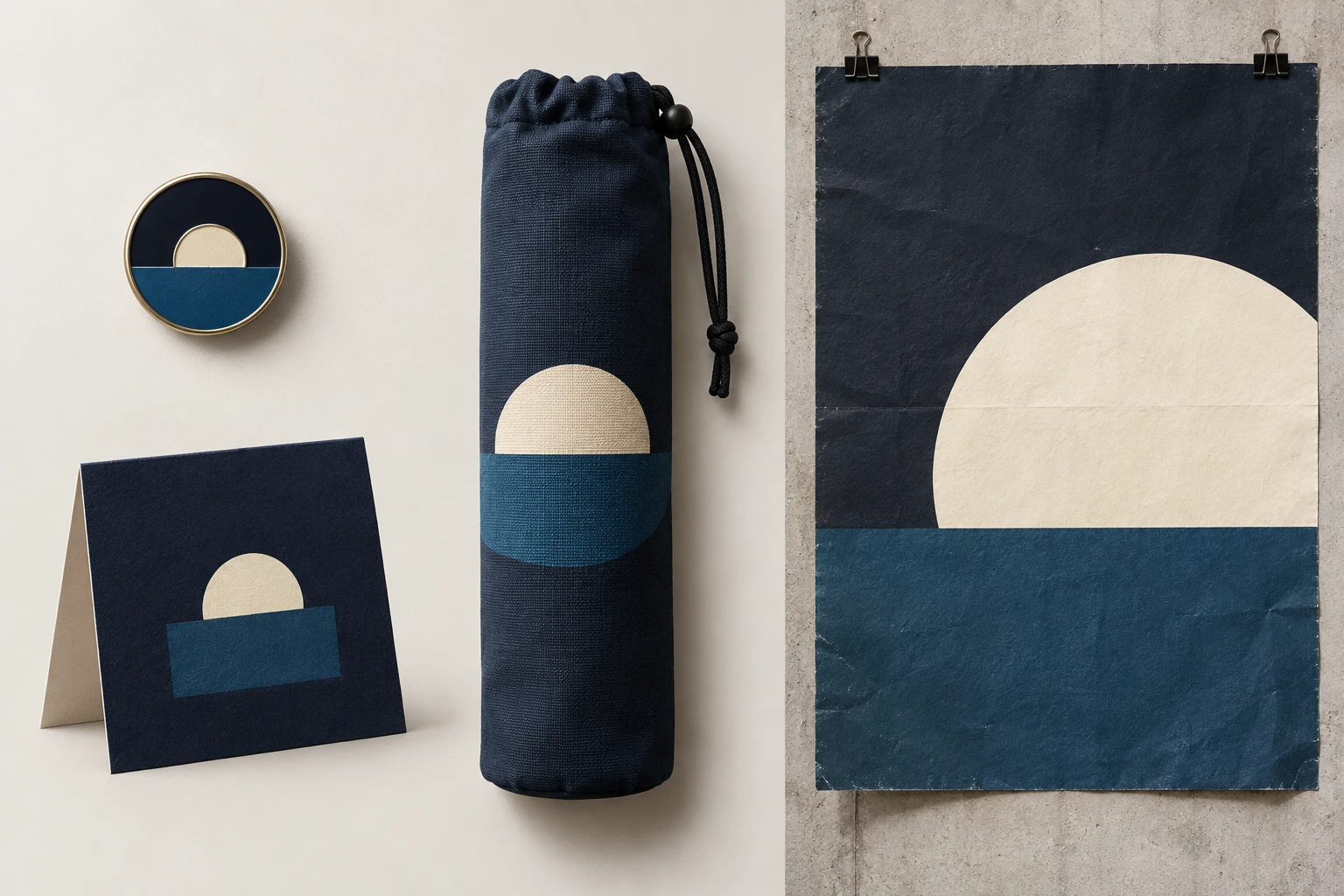
Present an original visual identity for a neighborhood stargazing club on one clean design board. Create a simple primary symbol from a solid disc partly occluded by a rectangular horizon; derive secondary crops by shifting the same horizon across the disc. Apply this geometry consistently to a small enamel pin, a folded event card, a fabric telescope sleeve, and a street poster. Let the motif scale from a tiny single mark to a large cropped field while preserving the same proportions and clear positive-negative relationship. Use restrained print textures and realistic mockup materials, with enough blank space to compare applications. The club identity may have its own original abstract symbol; include no words, letterforms, third-party logos, or watermarks.

COMPOSITION
One clean landscape design board with an enamel pin, folded event card, fabric telescope sleeve and street poster, separated by blank space. Use the same solid disc partly occluded by a rectangular horizon at varied scales; no words.

STYLE GUIDE
1. Shape & line
Derive all marks from a solid circular disc partly occluded by one rectangular horizon, preserving the same geometry and clear positive-negative relationship.

2. Color & light
Use a restrained high-contrast print palette with softly lit realistic mockups; keep the occluded edge clearly visible.

3. Texture & material
Show distinct enamel, folded paper and woven fabric surfaces with subtle print texture; retain crisp symbol edges on each material.

4. Composition
Compare small single marks with large cropped graphic fields across separated applications, varying scale without changing the core geometry.

PRIORITY
Preserve the requested identity, count, action, composition and output settings. Apply the style rules within those constraints; a style reference must not replace the subject or layout. Within the style: Preserve the distinctive construction and medium first, readable spatial hierarchy second, subtle surface details third.

AVOID
Avoid extra subjects, inconsistent repeated geometry, hidden key details, crowded overlaps, unwanted text and watermarks.

OUTPUT
One finished landscape image, aspect ratio 3:2. No lettering, captions, dimensions, unrelated logos, watermark, border or interface.

SELF-CHECK
Check each style rule against the finished image: visible shape construction, color and light, material treatment, and composition. Preserve the exact subject count and scene requirements.
Model information comes from image provenance. The same prompt may produce a different result.