Text to imageCharacterStyle guide
Little Pig · Snout Projection Through Overlap
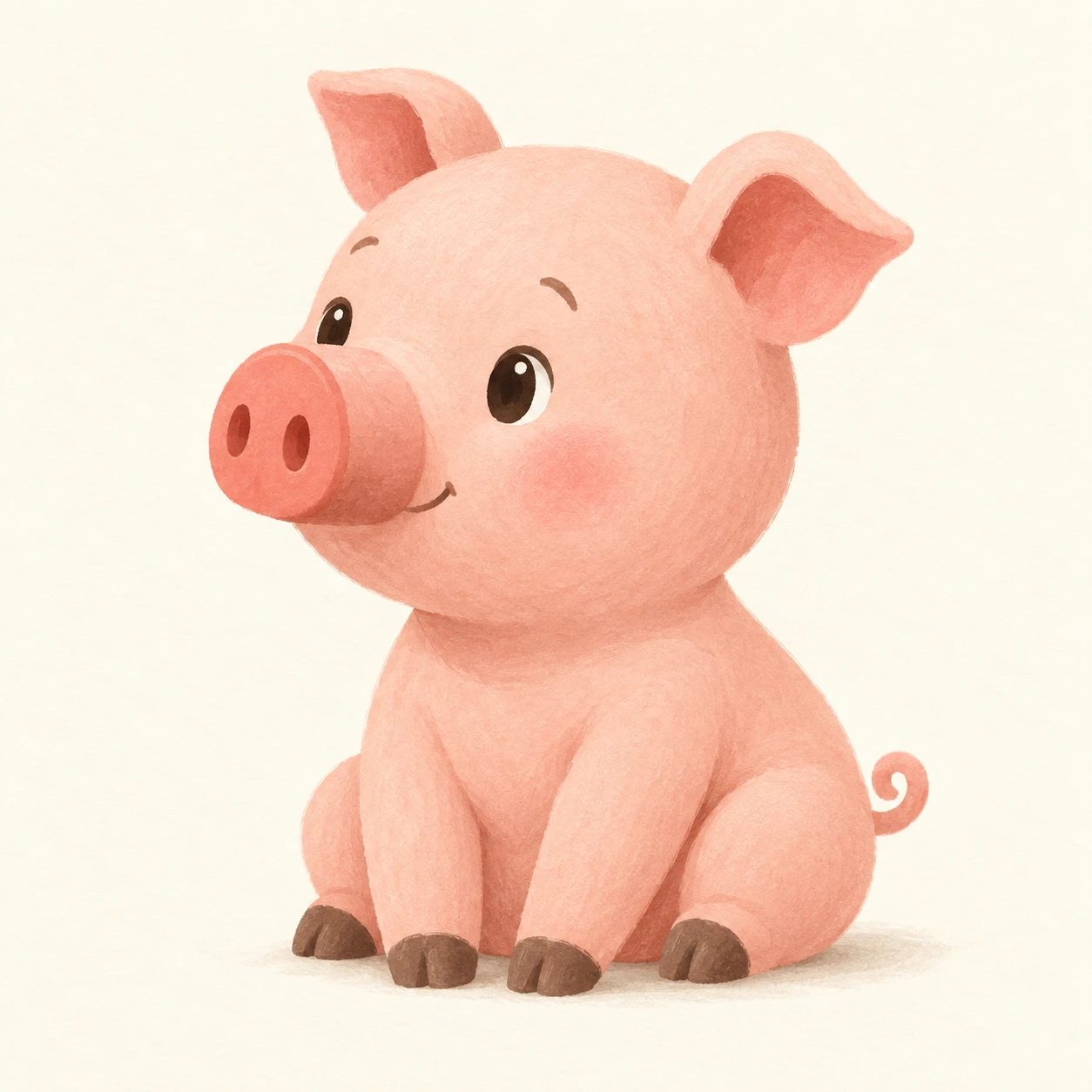
A little pig character whose projecting snout reads clearly through overlapping front and connecting planes.
Little Pig · Snout Projection Through Overlap
- Shape & line
- Build the snout from a rounded front plane at image-left and a short connecting side plane extending back toward the image-right cheek. Let the snout contour interrupt the cheek contour at its attachment, and place both nostrils inside the front plane, with the image-left nostril slightly compressed by the turn.
- Color & light
- Use pale peach pink for the pig and a warmer rose for the snout. Light it softly from upper image-left, keeping the snout front light, its connecting underside darker, and a small soft shadow on the cheek immediately behind the projecting snout.
- Texture & material
- Render the character as a matte gouache illustration with opaque color shapes and lightly visible paper grain. Keep the snout-plane boundary crisp enough to read, while softly brushing the cheek shadow into the surrounding pink.
- Composition
- Keep the snout fully inside the frame with open background to its image-left. Separate the ears from the head silhouette, leave the forelegs below the snout without crossing it, and use only a faint ground shadow beneath the seated body.
Priority
Make the snout read as a short volume projecting from the face.
What to avoid & what to check
Avoid flattening the snout into a circle drawn directly on the cheek.
Check that the front plane, connecting side plane, and interrupted cheek contour remain clearly visible.
Exact prompt for this example
SUBJECT
One original little pig character with a rounded head, two small ears, a short projecting snout, and a compact body. Its head turns toward image-left, exposing the near cheek on image-right; the snout extends leftward from the face.

COMPOSITION
Show the entire seated character at eye level in a three-quarter view, centered with generous clear space. Keep the head large enough to read the snout construction immediately, with the forelegs resting below the face.

STYLE GUIDE
1. Shape & line
Build the snout from a rounded front plane at image-left and a short connecting side plane extending back toward the image-right cheek. Let the snout contour interrupt the cheek contour at its attachment, and place both nostrils inside the front plane, with the image-left nostril slightly compressed by the turn.

2. Color & light
Use pale peach pink for the pig and a warmer rose for the snout. Light it softly from upper image-left, keeping the snout front light, its connecting underside darker, and a small soft shadow on the cheek immediately behind the projecting snout.

3. Texture & material
Render the character as a matte gouache illustration with opaque color shapes and lightly visible paper grain. Keep the snout-plane boundary crisp enough to read, while softly brushing the cheek shadow into the surrounding pink.

4. Composition
Keep the snout fully inside the frame with open background to its image-left. Separate the ears from the head silhouette, leave the forelegs below the snout without crossing it, and use only a faint ground shadow beneath the seated body.

PRIORITY
Preserve the requested identity, count, action, composition and output settings. Apply the style rules within those constraints; a style reference must not replace the subject or layout. Within the style: Make the snout read as a short volume projecting from the face.

AVOID
Avoid flattening the snout into a circle drawn directly on the cheek.

OUTPUT
One square character illustration with a plain warm-ivory background and no lettering, captions, logos, or watermark.

SELF-CHECK
Check that the front plane, connecting side plane, and interrupted cheek contour remain clearly visible.
Model information comes from image provenance. The same prompt may produce a different result.