Text to imageLandscapeStyle guide
Pebble Beach · Distance-Based Texture Simplification
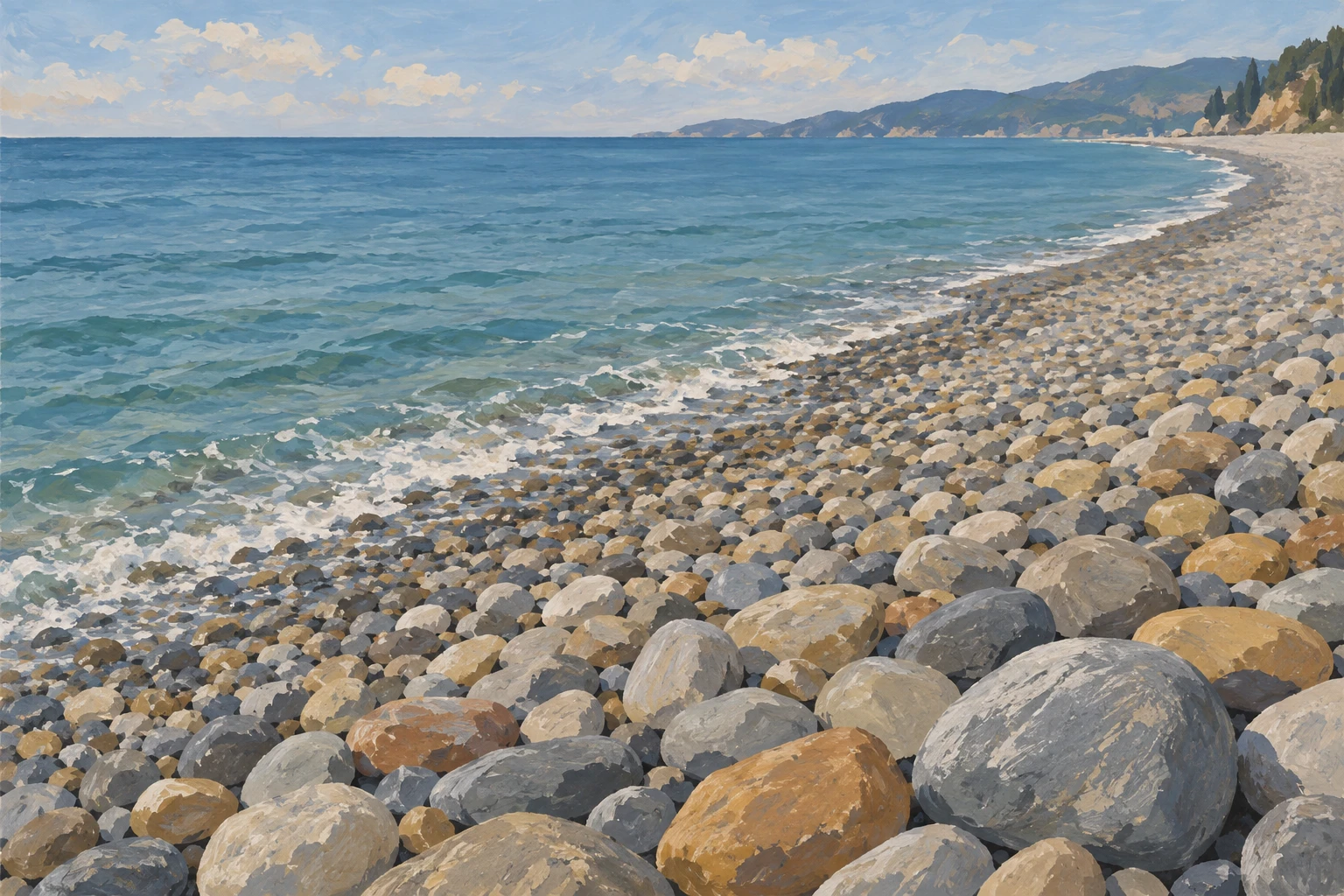
Show depth across a flat beach by gradually simplifying distinct foreground pebbles into small, grouped color marks in the distance.
Pebble Beach · Distance-Based Texture Simplification
- Shape & line
- Draw the nearest pebbles as irregular rounded shapes with clear overlaps and varied long-axis directions; reduce their visible size toward the upper-right shore, replacing distant individual outlines with compact clusters of marks.
- Color & light
- Use muted slate, warm gray, and ochre stones beside a blue-green sea. Light the beach softly from image-left, placing restrained dark accents beneath the image-right edges of foreground stones while grouping distant light and dark notes into broader patches.
- Texture & material
- Use matte, opaque gouache with a few dry-brush scuffs on the largest foreground stones. Progress from individually painted surfaces at the bottom edge to broken dabs in the middle distance and nearly continuous painted bands near the far shore.
- Composition
- Reserve the bottom third for clearly readable stones and keep the sea comparatively smooth. Carry the texture transition continuously along the image-right beach toward the upper-right distance, avoiding abrupt zones of detail so the ground reads as one receding surface.
Priority
Make the gradual reduction of stone size and surface detail the main depth cue.
What to avoid & what to check
Avoid equally detailed stones throughout the beach or fog that conceals the texture transition.
Check that distinct foreground stones become grouped marks and then quiet bands along the same continuous shore.
Exact prompt for this example
SUBJECT
One gently curving pebble beach beside a calm sea, with exposed stones covering a continuous shore from the bottom foreground to the upper-right distance.

COMPOSITION
Use a low, oblique view in a horizontal frame. Place the sea on image-left and the pebble beach on image-right. Let their boundary curve from the lower-left edge toward the upper-right distance, with the horizon in the upper quarter.

STYLE GUIDE
1. Shape & line
Draw the nearest pebbles as irregular rounded shapes with clear overlaps and varied long-axis directions; reduce their visible size toward the upper-right shore, replacing distant individual outlines with compact clusters of marks.

2. Color & light
Use muted slate, warm gray, and ochre stones beside a blue-green sea. Light the beach softly from image-left, placing restrained dark accents beneath the image-right edges of foreground stones while grouping distant light and dark notes into broader patches.

3. Texture & material
Use matte, opaque gouache with a few dry-brush scuffs on the largest foreground stones. Progress from individually painted surfaces at the bottom edge to broken dabs in the middle distance and nearly continuous painted bands near the far shore.

4. Composition
Reserve the bottom third for clearly readable stones and keep the sea comparatively smooth. Carry the texture transition continuously along the image-right beach toward the upper-right distance, avoiding abrupt zones of detail so the ground reads as one receding surface.

PRIORITY
Preserve the requested identity, count, action, composition and output settings. Apply the style rules within those constraints; a style reference must not replace the subject or layout. Within the style: Make the gradual reduction of stone size and surface detail the main depth cue.

AVOID
Avoid equally detailed stones throughout the beach or fog that conceals the texture transition.

OUTPUT
Create one landscape image in a 3:2 aspect ratio, rendered as an opaque gouache painting, without text, labels, borders, or watermarks.

SELF-CHECK
Check that distinct foreground stones become grouped marks and then quiet bands along the same continuous shore.
Model information comes from image provenance. The same prompt may produce a different result.