Text to imageCharacterStyle guide
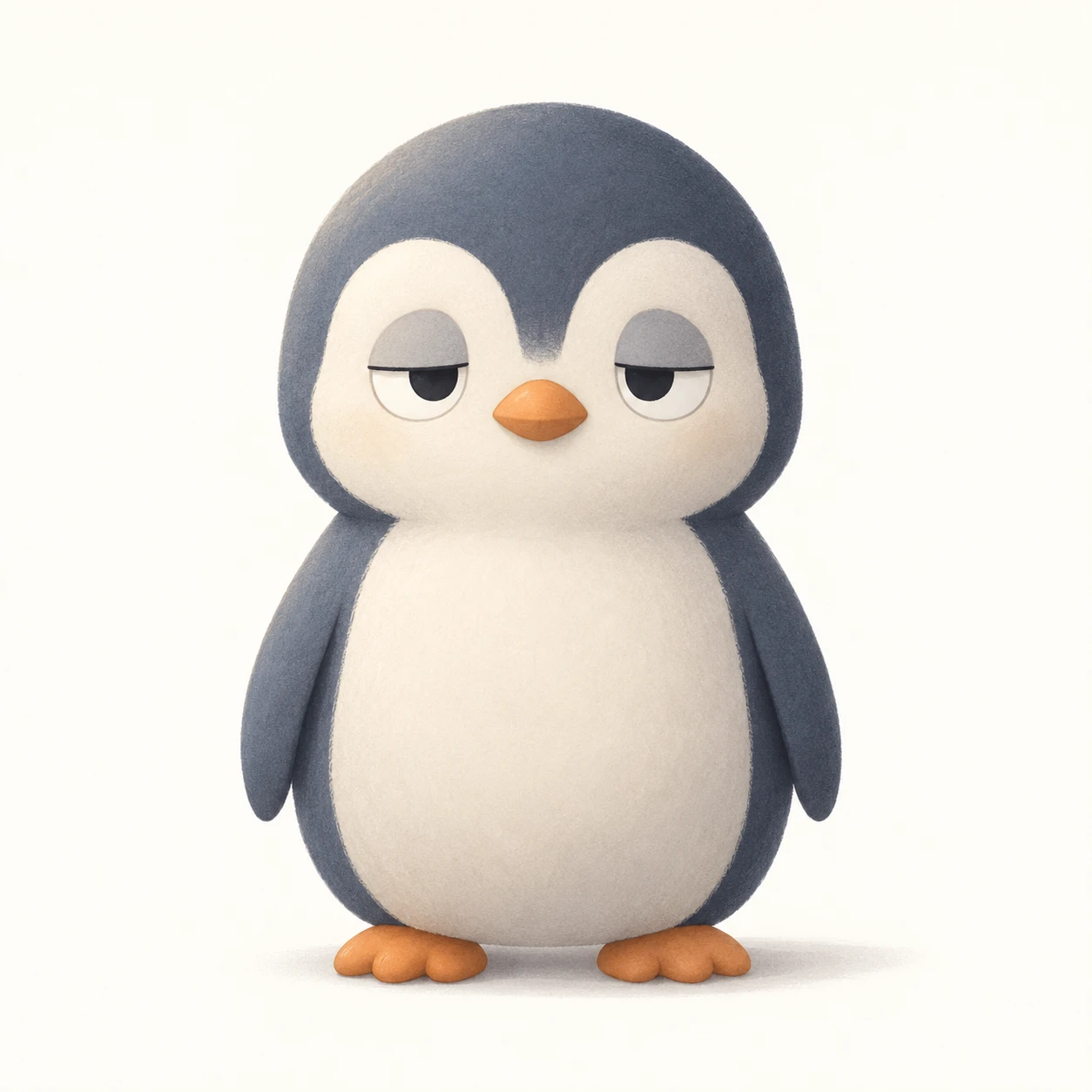
Sleepy Penguin · Compressed Eyelid Curves
Express a small penguin’s drowsiness by lowering the upper eyelids while keeping the lower eye contours rounded.
Sleepy Penguin · Compressed Eyelid Curves
- Shape & line
- Build the penguin from a rounded pear-shaped body and a softly domed head with smooth, slightly weighted outlines. Draw each upper eyelid as a shallow downward-curving line that cuts across the upper half of the eye; keep the lower contour rounded and show only a small portion of the dark pupil beneath the lid.
- Color & light
- Use muted blue-gray for the head and outer body, warm ivory for the face and belly, and subdued orange for the beak and feet. Light the character softly from the upper image-left, adding a broad quiet shadow on its image-right side while preserving clear contrast between the eyelids and ivory face.
- Texture & material
- Keep the plumage as matte, mostly flat color fields with a faint soft grain visible across the larger shapes. Blend the body shading gently, but leave the eyelid lines crisp so surface texture never interrupts the sleepy eye expression.
- Composition
- Place the two eyes at the same height with a comfortable gap above the small beak, and lower both upper lids by a similar visible amount. Keep the head upright, the shoulders relaxed, and the feet evenly planted; use a small soft ground shadow to support the still pose and let the eyes carry the expression.
Priority
Prioritize readable half-closed eyes and a calm, upright silhouette.
What to avoid & what to check
Avoid sharply angled eyelids or a downturned beak that would make the penguin look angry or sad.
Check that both lowered upper lids remain distinct from the rounded lower eye contours at thumbnail size.
Exact prompt for this example
SUBJECT
One original small penguin character standing upright with both flippers resting beside its body, a short orange beak, and two visibly half-closed eyes. Its relaxed posture and lowered eyelids convey gentle drowsiness.

COMPOSITION
Show the entire character in a near-frontal view at eye level, centered on a plain pale background. Make the head large enough for both eyelid shapes to remain readable, leave clear space above the head and beneath the feet, and keep the flippers away from the face.

STYLE GUIDE
1. Shape & line
Build the penguin from a rounded pear-shaped body and a softly domed head with smooth, slightly weighted outlines. Draw each upper eyelid as a shallow downward-curving line that cuts across the upper half of the eye; keep the lower contour rounded and show only a small portion of the dark pupil beneath the lid.

2. Color & light
Use muted blue-gray for the head and outer body, warm ivory for the face and belly, and subdued orange for the beak and feet. Light the character softly from the upper image-left, adding a broad quiet shadow on its image-right side while preserving clear contrast between the eyelids and ivory face.

3. Texture & material
Keep the plumage as matte, mostly flat color fields with a faint soft grain visible across the larger shapes. Blend the body shading gently, but leave the eyelid lines crisp so surface texture never interrupts the sleepy eye expression.

4. Composition
Place the two eyes at the same height with a comfortable gap above the small beak, and lower both upper lids by a similar visible amount. Keep the head upright, the shoulders relaxed, and the feet evenly planted; use a small soft ground shadow to support the still pose and let the eyes carry the expression.

PRIORITY
Preserve the requested identity, count, action, composition and output settings. Apply the style rules within those constraints; a style reference must not replace the subject or layout. Within the style: Prioritize readable half-closed eyes and a calm, upright silhouette.

AVOID
Avoid sharply angled eyelids or a downturned beak that would make the penguin look angry or sad.

OUTPUT
Create one square image in a clean, matte digital illustration medium, without lettering, captions, logos, or watermarks.

SELF-CHECK
Check that both lowered upper lids remain distinct from the rounded lower eye contours at thumbnail size.
Model information comes from image provenance. The same prompt may produce a different result.