Text to imageCharacterStyle guide
Snail Friend · Shared Gaze Target
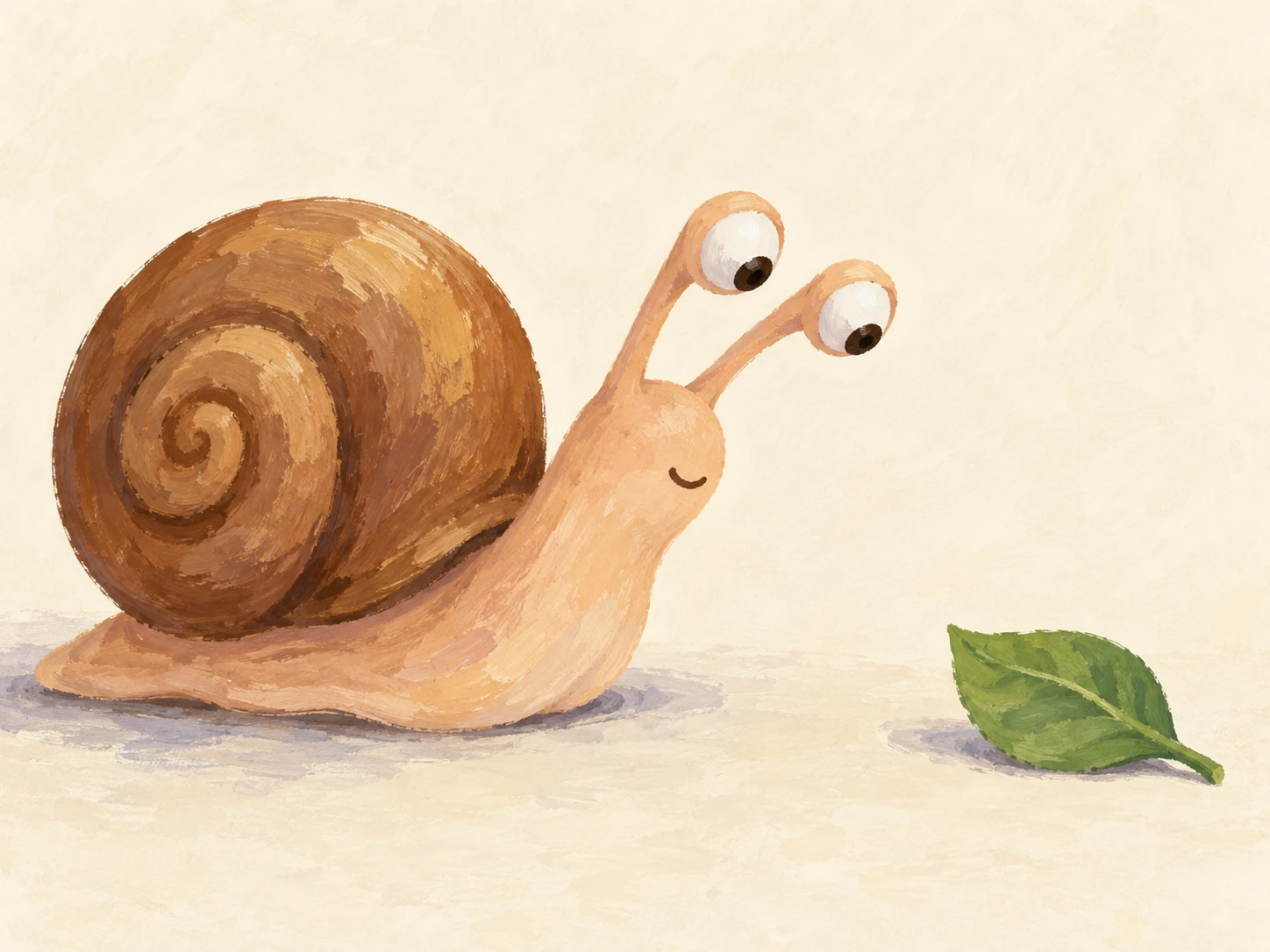
A character reference showing how coordinated pupils and eye stalks make a snail’s curiosity about a small leaf readable.
Snail Friend · Shared Gaze Target
- Shape & line
- Build the snail from a low rounded body, a broad spiral shell, and two gently bending eye stalks. Bend both stalks toward image-right and place both pupils toward the lower-right edges of their eye shapes, directing their gaze toward the leaf on the ground.
- Color & light
- Use a muted peach body, a warm brown shell, and a fresh green leaf against a pale cream background. Light the upper-left-facing surfaces softly and keep the pupils as the darkest accents, so the gaze remains clearer than the shell pattern.
- Texture & material
- Apply opaque gouache with broad, lightly uneven brush edges. Keep the body mostly smooth, describe the shell with one subdued spiral stroke, and give the leaf a single visible central vein without covering the eyes in surface texture.
- Composition
- Place the snail in the left two-thirds and the leaf low in the right third. Keep the two eye shapes separate and the leaf below their height; let the angled stalks and shifted pupils create one readable diagonal path of attention across the empty gap.
Priority
Make both eyes visibly attend to the same leaf before adding decorative detail.
What to avoid & what to check
Avoid centered pupils, conflicting gaze directions, or a leaf hidden behind the snail.
Check that both pupils lead toward the visible leaf and that both eyes remain distinct at thumbnail size.
Exact prompt for this example
SUBJECT
One original snail character with two eye stalks and one spiral shell, looking at one small leaf. The snail occupies image-left; the leaf rests on the ground at image-right, beyond the snail’s head. Both eyes attend to that same leaf.

COMPOSITION
Use a slightly elevated three-quarter view that reveals both eyes and the shell. Show the entire snail and leaf in a landscape frame, leaving a clear open gap between the head and leaf so the direction of attention is easy to follow.

STYLE GUIDE
1. Shape & line
Build the snail from a low rounded body, a broad spiral shell, and two gently bending eye stalks. Bend both stalks toward image-right and place both pupils toward the lower-right edges of their eye shapes, directing their gaze toward the leaf on the ground.

2. Color & light
Use a muted peach body, a warm brown shell, and a fresh green leaf against a pale cream background. Light the upper-left-facing surfaces softly and keep the pupils as the darkest accents, so the gaze remains clearer than the shell pattern.

3. Texture & material
Apply opaque gouache with broad, lightly uneven brush edges. Keep the body mostly smooth, describe the shell with one subdued spiral stroke, and give the leaf a single visible central vein without covering the eyes in surface texture.

4. Composition
Place the snail in the left two-thirds and the leaf low in the right third. Keep the two eye shapes separate and the leaf below their height; let the angled stalks and shifted pupils create one readable diagonal path of attention across the empty gap.

PRIORITY
Preserve the requested identity, count, action, composition and output settings. Apply the style rules within those constraints; a style reference must not replace the subject or layout. Within the style: Make both eyes visibly attend to the same leaf before adding decorative detail.

AVOID
Avoid centered pupils, conflicting gaze directions, or a leaf hidden behind the snail.

OUTPUT
One 4:3 image in a clean gouache character-illustration medium, with no lettering, captions, logos, or watermark.

SELF-CHECK
Check that both pupils lead toward the visible leaf and that both eyes remain distinct at thumbnail size.
Model information comes from image provenance. The same prompt may produce a different result.