Text to imageProductStyle guide
Black Vacuum Flask · Rim-Light Separation
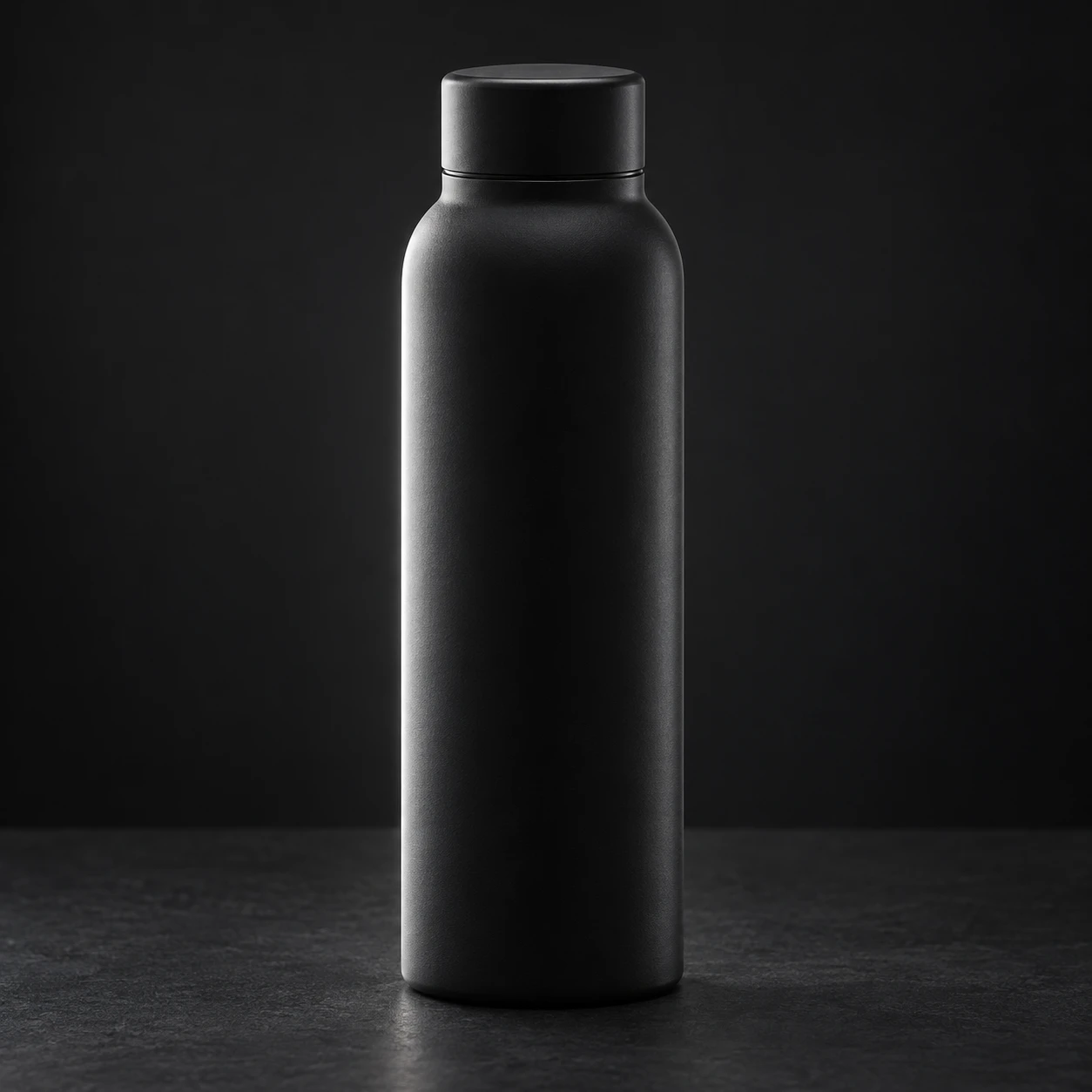
Narrow illuminated edges separate a black vacuum flask from a dark background while preserving its dark front and rounded volume.
Black Vacuum Flask · Rim-Light Separation
- Shape & line
- Build the flask from a straight cylindrical body and gently rounded shoulders; show the cap as a short cylinder with one restrained seam, and keep the outer silhouette smooth and uninterrupted.
- Color & light
- Place narrow light sources behind the flask on image-left and image-right so their light catches its visible outer edges. Make the image-left rim brighter and slightly wider, the image-right rim softer and thinner, and let both fade inward into a nearly black front against a charcoal background.
- Texture & material
- Render the black coating as fine matte material: soften the rim highlights into short tonal gradients rather than crisp mirror stripes, and retain a faint broad front gradient that suggests curvature without making the body look glossy.
- Composition
- Keep the flask vertical and fully inside the frame, with clear background beside both rim highlights. Ground its base with a small soft contact shadow, and keep the tabletop subdued so the two lit edges remain the strongest visual cues.
Priority
Prioritize readable illuminated edges around a dark, rounded body.
What to avoid & what to check
Avoid a uniform glowing outline or bright frontal lighting that erases the rim-light effect.
Check that both side rims separate from the background and fade naturally into the dark front.
Exact prompt for this example
SUBJECT
One plain black vacuum flask with a cylindrical body, rounded shoulders, and a closed screw cap, standing upright on a dark tabletop.

COMPOSITION
Use a centered, slightly elevated three-quarter product view that shows the entire flask, a shallow ellipse on the cap, and a little tabletop beneath its base. Keep generous dark space around both illuminated side edges.

STYLE GUIDE
1. Shape & line
Build the flask from a straight cylindrical body and gently rounded shoulders; show the cap as a short cylinder with one restrained seam, and keep the outer silhouette smooth and uninterrupted.

2. Color & light
Place narrow light sources behind the flask on image-left and image-right so their light catches its visible outer edges. Make the image-left rim brighter and slightly wider, the image-right rim softer and thinner, and let both fade inward into a nearly black front against a charcoal background.

3. Texture & material
Render the black coating as fine matte material: soften the rim highlights into short tonal gradients rather than crisp mirror stripes, and retain a faint broad front gradient that suggests curvature without making the body look glossy.

4. Composition
Keep the flask vertical and fully inside the frame, with clear background beside both rim highlights. Ground its base with a small soft contact shadow, and keep the tabletop subdued so the two lit edges remain the strongest visual cues.

PRIORITY
Preserve the requested identity, count, action, composition and output settings. Apply the style rules within those constraints; a style reference must not replace the subject or layout. Within the style: Prioritize readable illuminated edges around a dark, rounded body.

AVOID
Avoid a uniform glowing outline or bright frontal lighting that erases the rim-light effect.

OUTPUT
One square product photograph, with no lettering, logos, labels, captions, or watermark.

SELF-CHECK
Check that both side rims separate from the background and fade naturally into the dark front.
Model information comes from image provenance. The same prompt may produce a different result.