Text to imagePortraitStyle guide
Adult with an Exposed Ear · Transmitted Ear Light
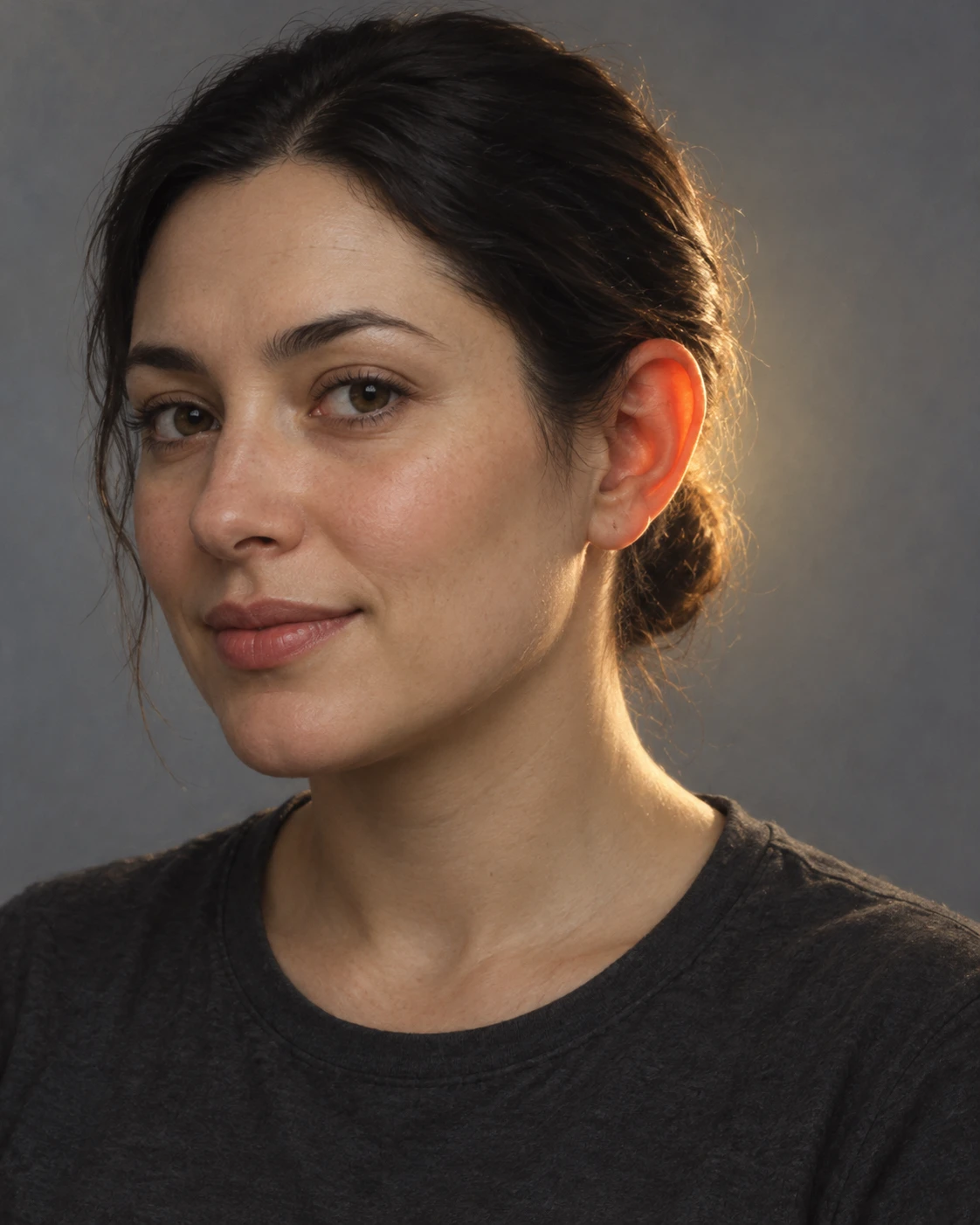
A portrait using reddish light transmitted through a backlit ear to reveal its thickness and volume.
Adult with an Exposed Ear · Transmitted Ear Light
- Shape & line
- Construct the exposed ear as a curved outer rim enclosing a shallow bowl; use overlapping inner folds and soft value changes to show depth, and give the thicker root a firm attachment to the head rather than outlining every fold.
- Color & light
- Place a warm backlight behind the head on image-right so it passes through the exposed ear. Make the thin outer ear glow reddish orange across its surface, keep the thicker root darker and less saturated, and use a gentle frontal fill to keep the face readable.
- Texture & material
- Paint skin with restrained matte texture and broad, blended transitions. Let the transmitted red belong to the ear tissue rather than a glossy highlight; keep the dark hair opaque and the shirt softly woven so their surfaces remain distinct.
- Composition
- Keep the entire image-right ear inside the crop and separate it from a muted cool-gray background. Pull all hair away from its silhouette, make its reddish glow the strongest color accent, and keep the eyes and mouth gently defined so the portrait still reads as a person.
Priority
Prioritize visible red transmission through the thin ear over a bright edge alone.
What to avoid & what to check
Avoid making the whole ear uniformly luminous or extending its red glow onto the cheek.
Check that the image-right ear has a glowing thin region and a darker thick root under the same backlight.
Exact prompt for this example
SUBJECT
One adult with dark hair pulled back, wearing a plain charcoal shirt. The ear on image-right is fully exposed, with its outer rim, shallow bowl, and thicker attachment to the head clearly distinguishable.

COMPOSITION
Make an eye-level head-and-shoulders portrait in a vertical frame. Turn the face slightly toward image-left, leaving the image-right ear visible beside the cheek. Place the head just left of center with quiet space beside the exposed ear.

STYLE GUIDE
1. Shape & line
Construct the exposed ear as a curved outer rim enclosing a shallow bowl; use overlapping inner folds and soft value changes to show depth, and give the thicker root a firm attachment to the head rather than outlining every fold.

2. Color & light
Place a warm backlight behind the head on image-right so it passes through the exposed ear. Make the thin outer ear glow reddish orange across its surface, keep the thicker root darker and less saturated, and use a gentle frontal fill to keep the face readable.

3. Texture & material
Paint skin with restrained matte texture and broad, blended transitions. Let the transmitted red belong to the ear tissue rather than a glossy highlight; keep the dark hair opaque and the shirt softly woven so their surfaces remain distinct.

4. Composition
Keep the entire image-right ear inside the crop and separate it from a muted cool-gray background. Pull all hair away from its silhouette, make its reddish glow the strongest color accent, and keep the eyes and mouth gently defined so the portrait still reads as a person.

PRIORITY
Preserve the requested identity, count, action, composition and output settings. Apply the style rules within those constraints; a style reference must not replace the subject or layout. Within the style: Prioritize visible red transmission through the thin ear over a bright edge alone.

AVOID
Avoid making the whole ear uniformly luminous or extending its red glow onto the cheek.

OUTPUT
Produce one realistic painted portrait image in a 4:5 aspect ratio, without lettering, captions, logos, or watermarks.

SELF-CHECK
Check that the image-right ear has a glowing thin region and a darker thick root under the same backlight.
Model information comes from image provenance. The same prompt may produce a different result.