Text to imageArt stylesStyle guide
One Avocado Half · White-Line Woodcut
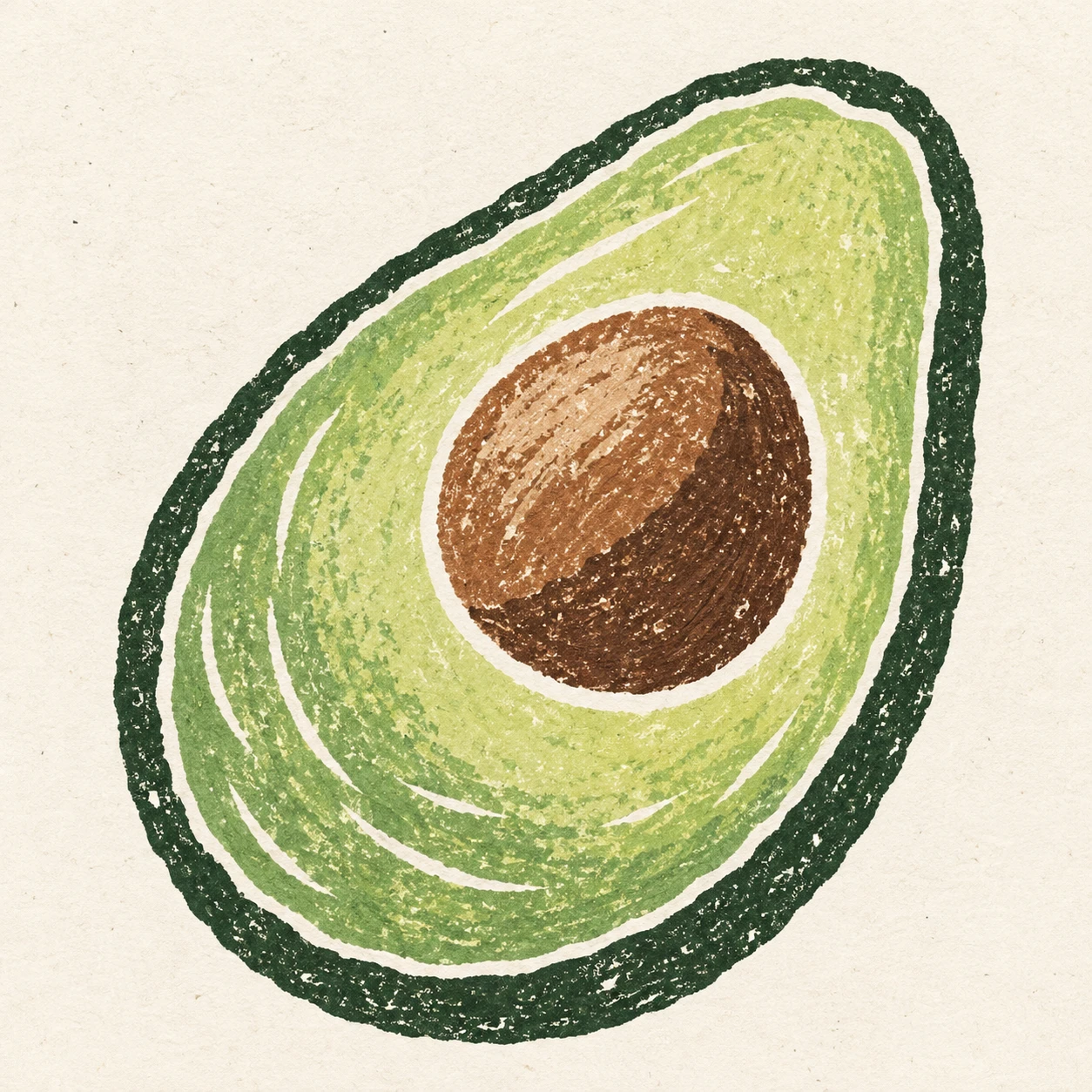
A white-line woodcut reference that builds an avocado half from colored areas separated by paper-white channels.
One Avocado Half · White-Line Woodcut
- Shape & line
- Construct the rind, flesh, and pit as simplified enclosed shapes separated by narrow paper-white channels. Run a continuous white channel around the pit and another between flesh and rind; add a few curved white cuts within the flesh without outlining any shape in black.
- Color & light
- Print the flesh in pale yellow-green and muted leaf green, the rind in deep green, and the pit in warm brown. Use a lighter color area on the image-upper-left portion of the pit and a darker brown area on its image-lower-right portion, keeping the tonal change as distinct printed shapes rather than a smooth gradient.
- Texture & material
- Give the colored areas slightly uneven ink coverage with scattered paper flecks and faint wood-grain streaks that stop at each white channel. Keep these uninked channels cleaner and more continuous than the incidental grain so the carved divisions remain unmistakable.
- Composition
- Keep the entire avocado inside the frame with generous bare paper around it. Position the pit slightly toward image-top-right within the flesh, leaving a broad green area toward image-bottom-left where the curved white cuts can be clearly seen; leave the surrounding paper unprinted.
Priority
Prioritize paper-white carved channels separating visibly printed color areas.
What to avoid & what to check
Avoid black outlines, glossy rendering, and white strokes that resemble paint applied over the ink.
Check that the pit, flesh, and rind remain readable through continuous uninked divisions.
Exact prompt for this example
SUBJECT
One avocado half with its cut face facing the viewer, a single round brown pit seated inside pale green flesh, and a dark green rind enclosing the outer edge.

COMPOSITION
Use a nearly overhead view on warm off-white paper. Place the avocado diagonally from image-bottom-left to image-top-right, large enough for the white channels and printed grain to remain readable.

STYLE GUIDE
1. Shape & line
Construct the rind, flesh, and pit as simplified enclosed shapes separated by narrow paper-white channels. Run a continuous white channel around the pit and another between flesh and rind; add a few curved white cuts within the flesh without outlining any shape in black.

2. Color & light
Print the flesh in pale yellow-green and muted leaf green, the rind in deep green, and the pit in warm brown. Use a lighter color area on the image-upper-left portion of the pit and a darker brown area on its image-lower-right portion, keeping the tonal change as distinct printed shapes rather than a smooth gradient.

3. Texture & material
Give the colored areas slightly uneven ink coverage with scattered paper flecks and faint wood-grain streaks that stop at each white channel. Keep these uninked channels cleaner and more continuous than the incidental grain so the carved divisions remain unmistakable.

4. Composition
Keep the entire avocado inside the frame with generous bare paper around it. Position the pit slightly toward image-top-right within the flesh, leaving a broad green area toward image-bottom-left where the curved white cuts can be clearly seen; leave the surrounding paper unprinted.

PRIORITY
Preserve the requested identity, count, action, composition and output settings. Apply the style rules within those constraints; a style reference must not replace the subject or layout. Within the style: Prioritize paper-white carved channels separating visibly printed color areas.

AVOID
Avoid black outlines, glossy rendering, and white strokes that resemble paint applied over the ink.

OUTPUT
Create one square image of the finished print, with no text, signature, border, or process panels.

SELF-CHECK
Check that the pit, flesh, and rind remain readable through continuous uninked divisions.
Model information comes from image provenance. The same prompt may produce a different result.