Text to imageArt stylesStyle guide
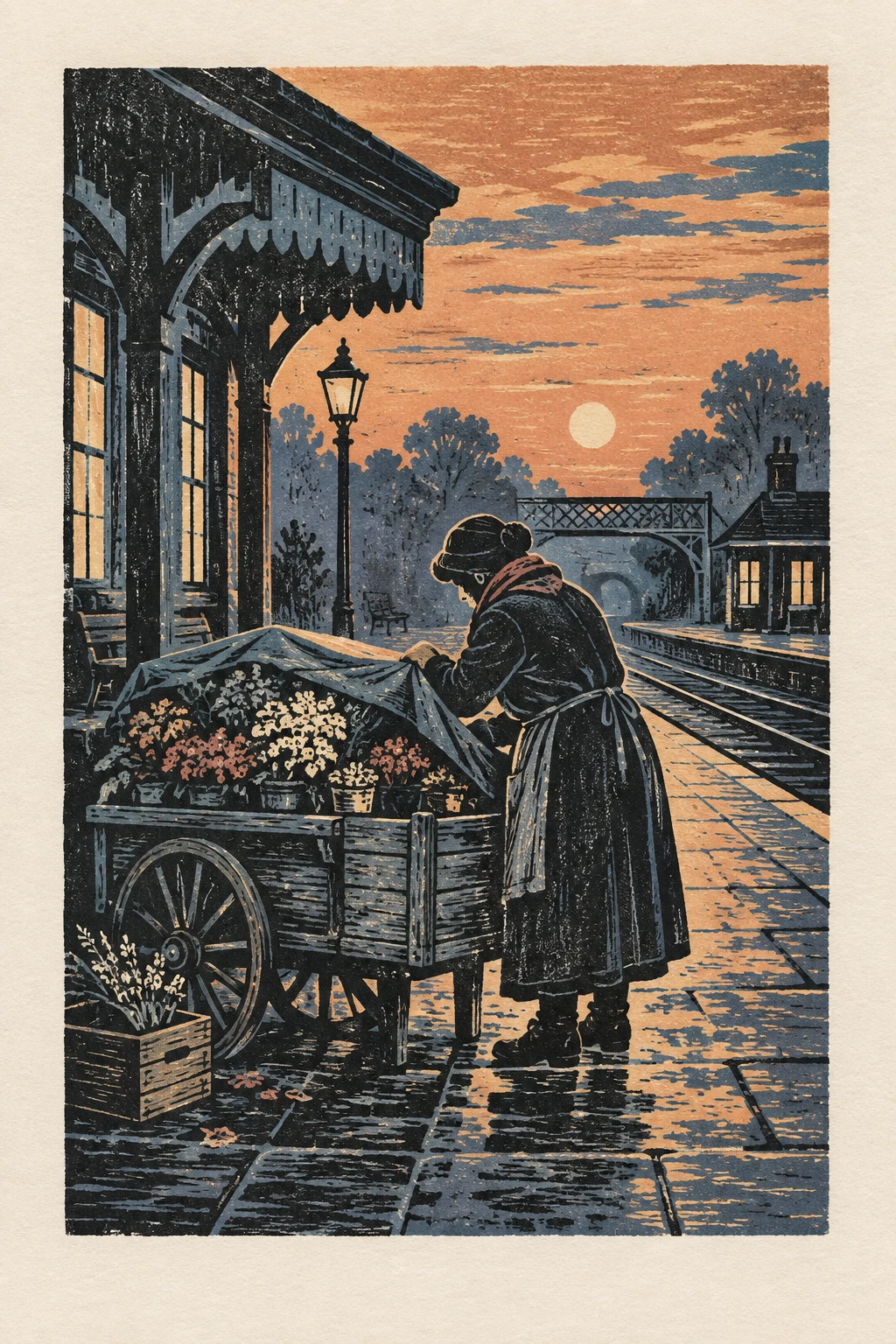
Station Flower Cart · Reduction Linocut
Construct a scene from successive carved color layers and visible gouge marks.
Remix this referenceStation Flower Cart · Reduction Linocut
- Shape & line
- Lock broad base, middle masses and final dark structural shapes into a coherent carved-block design.
- Color & light
- Use a pale base, a middle color layer and a dark final layer with sound registration between successive print stages.
- Texture & material
- Vary carved gouge density for petals, wood, paving and cloth, preserving ink-pressure variation and exposed paper.
- Composition
- Use a readable portrait composition with generous blank margins; large shapes must read before fine cuts.
Priority
Preserve the distinctive construction and medium first, readable spatial hierarchy second, subtle surface details third.
What to avoid & what to check
Avoid extra subjects, inconsistent repeated geometry, hidden key details, crowded overlaps, unwanted text and watermarks.
Check each style rule against the finished image: visible shape construction, color and light, material treatment, and composition. Preserve the exact subject count and scene requirements.
Exact prompt for this example
SUBJECT
Create an original reduction linocut print of a flower seller closing a cart outside a small railway station at dusk. Build the image as if one block were carved and printed in successive stages: a broad pale base, a middle layer defining cart and flower masses, and a dark final layer for structural shadows and outlines. Let carved gouges describe petals, wooden slats, paving, and the seller's coat with different mark densities. Keep the large shapes locked together so the image remains readable before the fine cuts are noticed. Show natural ink pressure variation and occasional exposed paper, but maintain sound registration between layers. Use a portrait print format with a generous unprinted margin. No station name, lettering, logos, or watermarks.

COMPOSITION
Portrait-format print of one flower seller closing a cart outside a small railway station at dusk. Leave a generous unprinted paper margin; all station signs remain blank.

STYLE GUIDE
1. Shape & line
Lock broad base, middle masses and final dark structural shapes into a coherent carved-block design.

2. Color & light
Use a pale base, a middle color layer and a dark final layer with sound registration between successive print stages.

3. Texture & material
Vary carved gouge density for petals, wood, paving and cloth, preserving ink-pressure variation and exposed paper.

4. Composition
Use a readable portrait composition with generous blank margins; large shapes must read before fine cuts.

PRIORITY
Preserve the requested identity, count, action, composition and output settings. Apply the style rules within those constraints; a style reference must not replace the subject or layout. Within the style: Preserve the distinctive construction and medium first, readable spatial hierarchy second, subtle surface details third.

AVOID
Avoid extra subjects, inconsistent repeated geometry, hidden key details, crowded overlaps, unwanted text and watermarks.

OUTPUT
One portrait-format reduction linocut print, aspect ratio 2:3, with a generous unprinted paper margin. No lettering, station name, logos or watermark.

SELF-CHECK
Check each style rule against the finished image: visible shape construction, color and light, material treatment, and composition. Preserve the exact subject count and scene requirements.
Model information comes from image provenance. The same prompt may produce a different result.