Text to imageSpace & architectureStyle guide
Small Stairwell · Tread–Riser Value Separation
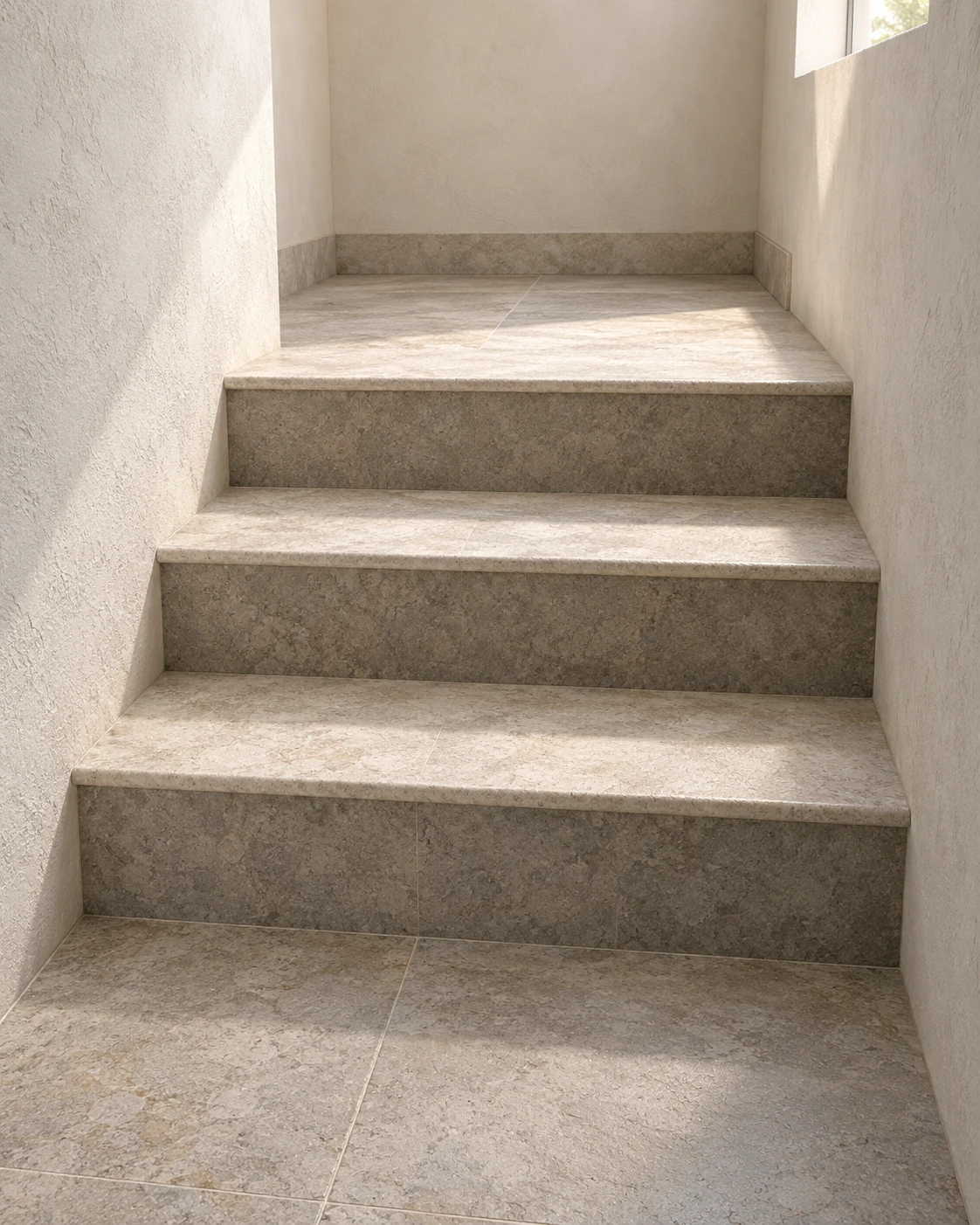
An architectural visualization that makes elevation and depth readable through bright horizontal treads and darker vertical risers on three steps.
Small Stairwell · Tread–Riser Value Separation
- Shape & line
- Build three clearly connected step profiles with straight front edges and modest perspective convergence toward the rear landing. Give each tread visible depth and each riser visible height; use fine bevel highlights rather than drawn outlines to separate their shared edges.
- Color & light
- Let broad daylight enter from an opening high on image-right. Make the upward-facing treads pale and luminous while the forward-facing risers remain distinctly darker in soft ambient light. Carry the same light direction onto the walls, with the image-left wall brighter than the image-right wall.
- Texture & material
- Use warm gray matte stone for the steps and ivory plaster for the walls. Add restrained stone mottling and softly uneven plaster grain, keeping both textures quieter than the tread–riser value change. Preserve broad diffuse highlights without glossy reflections.
- Composition
- Place the first riser in the lower third and let the three tread surfaces form a readable upward sequence toward the rear landing. Leave simple wall areas above and beside the stair so every step edge stays legible, and retain enough foreground floor to establish the viewer's lower position.
Priority
Prioritize the connected stair geometry and the bright-tread, dark-riser distinction.
What to avoid & what to check
Avoid floating steps, painted dark stripes, and dramatic lighting that hides a tread.
Check that all three treads and risers are visible and share one consistent light direction.
Exact prompt for this example
SUBJECT
A small plaster stairwell containing exactly three broad stone steps connecting a lower foreground floor to an upper rear landing. Each step has one horizontal tread and one vertical riser; plain side walls enclose the stair.

COMPOSITION
View from the lower floor toward the upper landing, slightly left of the stair centerline, looking gently downward enough to reveal all three treads. Keep the complete stair width, both wall junctions, and a strip of each landing visible.

STYLE GUIDE
1. Shape & line
Build three clearly connected step profiles with straight front edges and modest perspective convergence toward the rear landing. Give each tread visible depth and each riser visible height; use fine bevel highlights rather than drawn outlines to separate their shared edges.

2. Color & light
Let broad daylight enter from an opening high on image-right. Make the upward-facing treads pale and luminous while the forward-facing risers remain distinctly darker in soft ambient light. Carry the same light direction onto the walls, with the image-left wall brighter than the image-right wall.

3. Texture & material
Use warm gray matte stone for the steps and ivory plaster for the walls. Add restrained stone mottling and softly uneven plaster grain, keeping both textures quieter than the tread–riser value change. Preserve broad diffuse highlights without glossy reflections.

4. Composition
Place the first riser in the lower third and let the three tread surfaces form a readable upward sequence toward the rear landing. Leave simple wall areas above and beside the stair so every step edge stays legible, and retain enough foreground floor to establish the viewer's lower position.

PRIORITY
Preserve the requested identity, count, action, composition and output settings. Apply the style rules within those constraints; a style reference must not replace the subject or layout. Within the style: Prioritize the connected stair geometry and the bright-tread, dark-riser distinction.

AVOID
Avoid floating steps, painted dark stripes, and dramatic lighting that hides a tread.

OUTPUT
One image in a 4:5 portrait aspect ratio, rendered as a realistic architectural visualization, with no text, labels, watermark, or diagram overlays.

SELF-CHECK
Check that all three treads and risers are visible and share one consistent light direction.
Model information comes from image provenance. The same prompt may produce a different result.