Text to imageCafe & brandStyle guide
Neighborhood Book Swap · Folded-Corner Identity
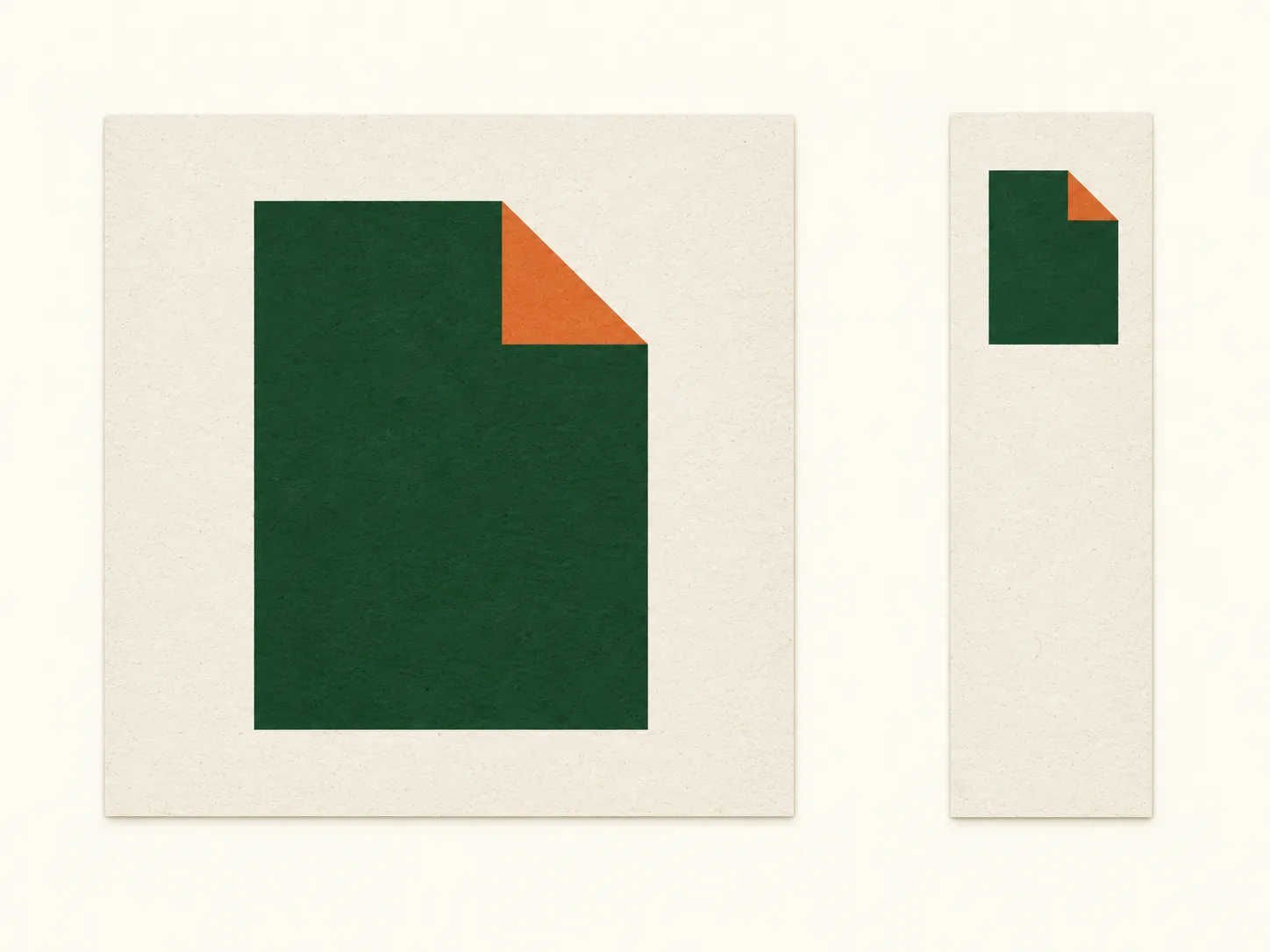
A wordless brand identity that connects a sign and bookmark through a folded page-corner motif.
Neighborhood Book Swap · Folded-Corner Identity
- Shape & line
- Build each page symbol as a solid upright rectangle with a diagonal cut across its upper-right corner. Place a triangular fold immediately below and left of that cut, sharing its diagonal edge, so the corner reads as a page turned inward rather than a detached arrow.
- Color & light
- Use deep forest green for the page body, muted orange for the triangular fold and warm ivory for the surrounding field. Keep all colors flat and opaque; separate the fold through color contrast without gradients or simulated lighting.
- Texture & material
- Suggest uncoated paper with a faint, evenly distributed grain inside the sign and bookmark surfaces. Keep symbol edges crisp and the ink coverage visually solid, allowing the paper texture to remain secondary to the geometric fold.
- Composition
- Center the large symbol on the left sign and place the smaller symbol near the top of the right bookmark, leaving open space below it. Preserve the same corner direction and a similarly prominent fold at both sizes, using generous margins to make the two applications feel related.
Priority
Prioritize a clearly readable folded corner and a consistent identity across both applications.
What to avoid & what to check
Avoid detached triangles, decorative book illustrations and perspective that obscures the fold.
Check that both symbols show the same upper-right inward fold and remain recognizable at their displayed sizes.
Exact prompt for this example
SUBJECT
Create a wordless identity for a neighborhood book swap, shown on exactly one square sign and one tall rectangular bookmark. Both carry the same upright page symbol with its upper-right corner folded inward. The sign presents the symbol prominently; the bookmark repeats it at a smaller size.

COMPOSITION
Show both applications straight-on against a warm ivory background, with the square sign on image-left and the bookmark on image-right. Align their bottom edges and leave a generous visible gap. Keep every edge inside the frame so the shared corner treatment and differences in scale are easy to compare.

STYLE GUIDE
1. Shape & line
Build each page symbol as a solid upright rectangle with a diagonal cut across its upper-right corner. Place a triangular fold immediately below and left of that cut, sharing its diagonal edge, so the corner reads as a page turned inward rather than a detached arrow.

2. Color & light
Use deep forest green for the page body, muted orange for the triangular fold and warm ivory for the surrounding field. Keep all colors flat and opaque; separate the fold through color contrast without gradients or simulated lighting.

3. Texture & material
Suggest uncoated paper with a faint, evenly distributed grain inside the sign and bookmark surfaces. Keep symbol edges crisp and the ink coverage visually solid, allowing the paper texture to remain secondary to the geometric fold.

4. Composition
Center the large symbol on the left sign and place the smaller symbol near the top of the right bookmark, leaving open space below it. Preserve the same corner direction and a similarly prominent fold at both sizes, using generous margins to make the two applications feel related.

PRIORITY
Preserve the requested identity, count, action, composition and output settings. Apply the style rules within those constraints; a style reference must not replace the subject or layout. Within the style: Prioritize a clearly readable folded corner and a consistent identity across both applications.

AVOID
Avoid detached triangles, decorative book illustrations and perspective that obscures the fold.

OUTPUT
Produce one 4:3 image as a flat graphic identity presentation, with no lettering, numerals, captions or watermark.

SELF-CHECK
Check that both symbols show the same upper-right inward fold and remain recognizable at their displayed sizes.
Model information comes from image provenance. The same prompt may produce a different result.