Text to imageCharacterStyle guide
Waving Turnip · Curved Line of Action
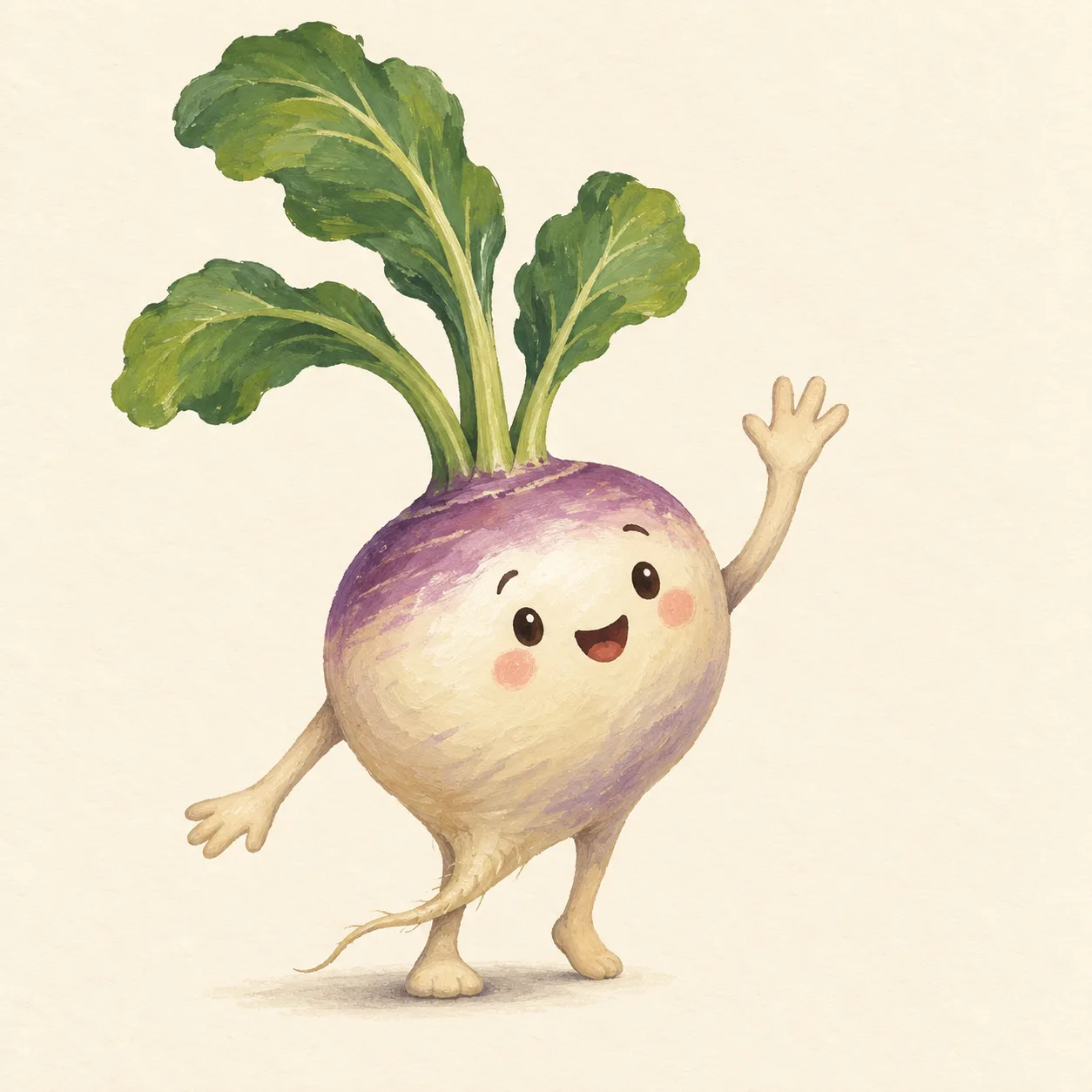
A continuous curve from root tip through body to leaves gives a turnip character's greeting a lively gesture.
Waving Turnip · Curved Line of Action
- Shape & line
- Build the gesture around a flowing S-curve: bend the root tip toward image-left, carry the bulb's central axis toward image-right, then curl the tallest leaf back toward image-left. Let the outer contours follow this movement with broad rounded turns, and use short tapered strokes for the limbs and smiling face.
- Color & light
- Paint the bulb ivory with a muted violet shoulder and the leaves in two broad green values. Light from image-upper-left, placing a pale patch on the upper-left bulb and a soft lavender shadow on its lower-right side. Keep the face dark enough to read clearly across the pale body.
- Texture & material
- Use matte, opaque gouache fills with faint brush drag along the bulb's curve. Add a few broad dry-brush marks to the leaves following their bends, while keeping the eyes and mouth crisp. Let subtle paper grain show mainly in the cream background.
- Composition
- Place the image-left foot flat beneath the bulb and lift the image-right heel slightly to support the cheerful lean. Separate the raised hand from the leaves with a clear cream gap, and extend the lowered arm into open space on image-left. Add a small soft ground shadow directly beneath the planted foot.
Priority
Make the root-to-leaf curve and the waving gesture readable before adding surface detail.
What to avoid & what to check
Avoid a rigid upright body, tangled leaf contours, and glossy plastic shading.
Check that the S-curve reads at thumbnail size and the raised hand remains separate from the leaves.
Exact prompt for this example
SUBJECT
One original anthropomorphic turnip character with a rounded bulb body, three leafy stems, two slender arms, two short legs, and a small friendly face. It leans toward image-right and raises its image-right hand in greeting; its image-left arm trails down and outward.

COMPOSITION
Show the entire character in a front three-quarter view, centered slightly left in a square frame. Leave generous space above the raised hand and toward image-right. Both feet, the curved root tip, and all three leaves remain visible against a plain warm cream background.

STYLE GUIDE
1. Shape & line
Build the gesture around a flowing S-curve: bend the root tip toward image-left, carry the bulb's central axis toward image-right, then curl the tallest leaf back toward image-left. Let the outer contours follow this movement with broad rounded turns, and use short tapered strokes for the limbs and smiling face.

2. Color & light
Paint the bulb ivory with a muted violet shoulder and the leaves in two broad green values. Light from image-upper-left, placing a pale patch on the upper-left bulb and a soft lavender shadow on its lower-right side. Keep the face dark enough to read clearly across the pale body.

3. Texture & material
Use matte, opaque gouache fills with faint brush drag along the bulb's curve. Add a few broad dry-brush marks to the leaves following their bends, while keeping the eyes and mouth crisp. Let subtle paper grain show mainly in the cream background.

4. Composition
Place the image-left foot flat beneath the bulb and lift the image-right heel slightly to support the cheerful lean. Separate the raised hand from the leaves with a clear cream gap, and extend the lowered arm into open space on image-left. Add a small soft ground shadow directly beneath the planted foot.

PRIORITY
Preserve the requested identity, count, action, composition and output settings. Apply the style rules within those constraints; a style reference must not replace the subject or layout. Within the style: Make the root-to-leaf curve and the waving gesture readable before adding surface detail.

AVOID
Avoid a rigid upright body, tangled leaf contours, and glossy plastic shading.

OUTPUT
Create one square character illustration in opaque gouache. Include no lettering, captions, logos, or watermark.

SELF-CHECK
Check that the S-curve reads at thumbnail size and the raised hand remains separate from the leaves.
Model information comes from image provenance. The same prompt may produce a different result.