Text to imageArt stylesStyle guide
One Feather · Scratchboard
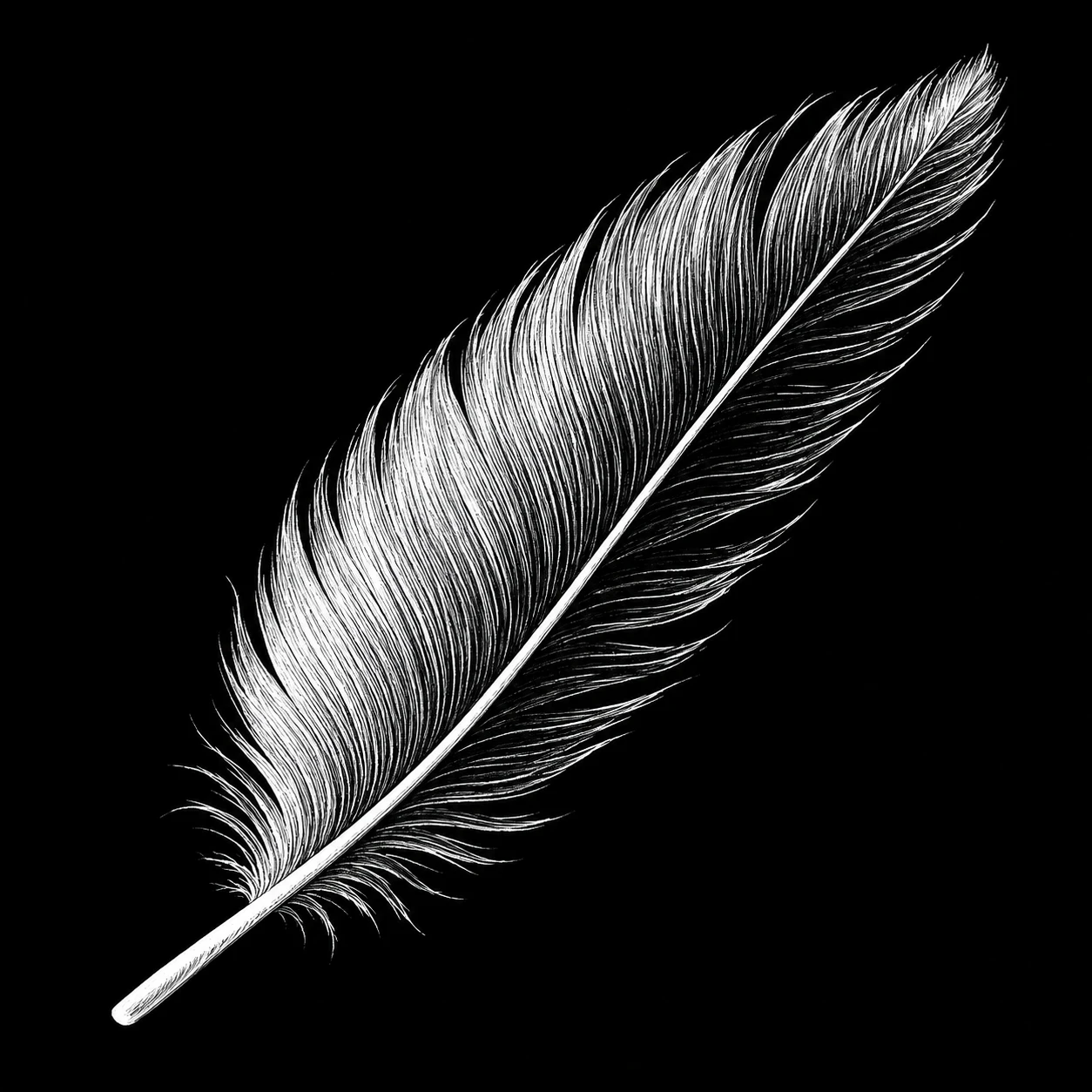
A scratchboard reference using white marks scratched from a black ground and changing line density to describe a feather’s grain and gentle curvature.
One Feather · Scratchboard
- Shape & line
- Construct the curved shaft with a slender white scrape, then draw tapered barb strokes sweeping outward toward the upper-right from both sides. Let their endpoints establish the feather silhouette, with a few small separations along the edges instead of a continuous outline.
- Color & light
- Use only black and exposed white. Pack white strokes more closely on the vane to the image-left of the shaft, and leave wider black intervals on the image-right vane, creating a broad light-to-dark turn without gray paint or gradients.
- Texture & material
- Make the marks look cut through a matte black coating into a white board: give the scrapes crisp edges, occasional slight width changes, and sparse tiny breaks. Preserve black channels between neighboring barbs so the surface reads as engraved scratchboard.
- Composition
- Keep the diagonal feather isolated on an uninterrupted black field. Make the vane on the image-left visibly broader than the image-right vane, and concentrate the finest scratches near the tip while leaving the surrounding margins completely black.
Priority
Prioritize tapered white scrapes and black spacing that reveal the feather’s structure.
What to avoid & what to check
Avoid soft gray shading, glowing edges, and a continuous white perimeter.
Check that one complete feather reads clearly and its tonal turn comes from scratch density.
Exact prompt for this example
SUBJECT
Show one gently curved feather with a single central shaft, two unequal vanes, and a short bare quill. Each vane consists of barbs branching from the same shaft.

COMPOSITION
Use a close, straight-on view. Place the quill toward the lower-left and the feather tip toward the upper-right, keeping the complete feather visible within generous black margins.

STYLE GUIDE
1. Shape & line
Construct the curved shaft with a slender white scrape, then draw tapered barb strokes sweeping outward toward the upper-right from both sides. Let their endpoints establish the feather silhouette, with a few small separations along the edges instead of a continuous outline.

2. Color & light
Use only black and exposed white. Pack white strokes more closely on the vane to the image-left of the shaft, and leave wider black intervals on the image-right vane, creating a broad light-to-dark turn without gray paint or gradients.

3. Texture & material
Make the marks look cut through a matte black coating into a white board: give the scrapes crisp edges, occasional slight width changes, and sparse tiny breaks. Preserve black channels between neighboring barbs so the surface reads as engraved scratchboard.

4. Composition
Keep the diagonal feather isolated on an uninterrupted black field. Make the vane on the image-left visibly broader than the image-right vane, and concentrate the finest scratches near the tip while leaving the surrounding margins completely black.

PRIORITY
Preserve the requested identity, count, action, composition and output settings. Apply the style rules within those constraints; a style reference must not replace the subject or layout. Within the style: Prioritize tapered white scrapes and black spacing that reveal the feather’s structure.

AVOID
Avoid soft gray shading, glowing edges, and a continuous white perimeter.

OUTPUT
Create one square image with no text, lettering, labels, or watermark.

SELF-CHECK
Check that one complete feather reads clearly and its tonal turn comes from scratch density.
Model information comes from image provenance. The same prompt may produce a different result.