Text to imageSpace & architectureStyle guide
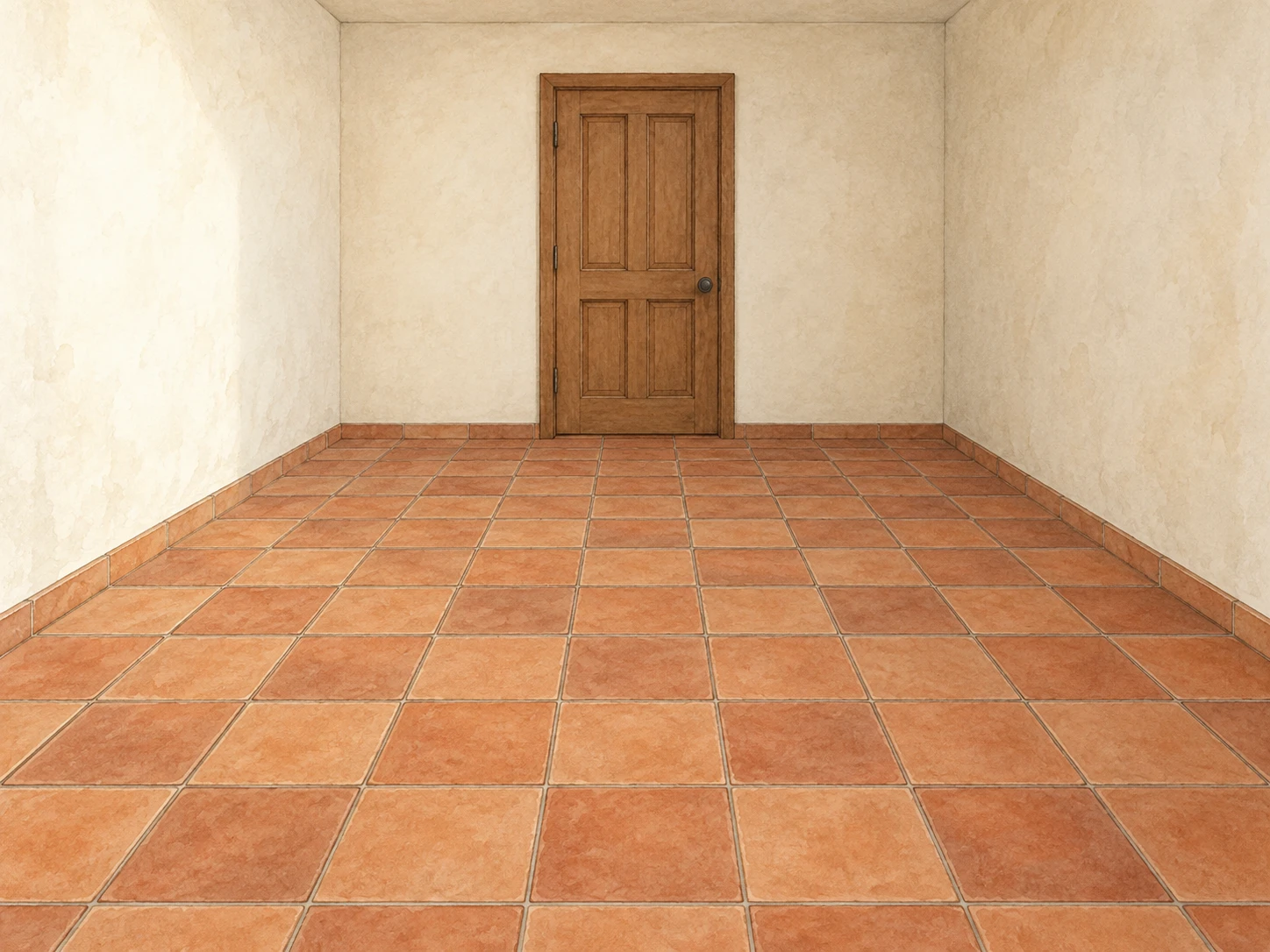
Small Tiled Foyer · Perspective-Compressed Floor Grid
Show the depth of a small foyer through equal square floor tiles that appear narrower and flatter toward the back.
Small Tiled Foyer · Perspective-Compressed Floor Grid
- Shape & line
- Draw straight wall edges and a regular square tile grid in restrained pencil lines. Direct the floor seams running into depth toward one shared vanishing point at eye level above the door's center, while keeping crosswise seams horizontal and wall verticals upright.
- Color & light
- Wash the walls in warm ivory and alternate subtle terracotta tones across the tiles. Let broad diffuse daylight from outside the frame on image-left make the left wall lighter than the right wall, keeping floor lighting even enough that the grid remains the main depth cue.
- Texture & material
- Give the plaster and matte clay tiles light watercolor granulation, with thin muted grout seams separating the tiles. Simplify grain and soften seam contrast toward the back so distant surface detail supports the shrinking grid without obscuring it.
- Composition
- Place broad, visibly deep tile rows along the bottom edge, then progressively reduce the gaps between horizontal seams toward the back wall. Narrow each tile column into depth at the same time, so equal square tiles become smaller, flatter quadrilaterals rather than equally spaced rectangles.
Priority
Make the floor grid's progressive compression the clearest evidence of room depth.
What to avoid & what to check
Avoid evenly spaced distant rows or floor seams that converge toward different points.
Check that tile widths and row depths both decrease consistently from the bottom edge to the back wall.
Exact prompt for this example
SUBJECT
One small empty rectangular foyer with pale plaster walls, a floor of equal square terracotta tiles, and one closed wooden door centered on the back wall. The tile grid continues uninterrupted from the foreground to the door.

COMPOSITION
Use a centered eye-level view facing the back wall, with the floor occupying the lower half of the image. Show both side walls and enough foreground tiles to make the change in apparent tile size easy to compare.

STYLE GUIDE
1. Shape & line
Draw straight wall edges and a regular square tile grid in restrained pencil lines. Direct the floor seams running into depth toward one shared vanishing point at eye level above the door's center, while keeping crosswise seams horizontal and wall verticals upright.

2. Color & light
Wash the walls in warm ivory and alternate subtle terracotta tones across the tiles. Let broad diffuse daylight from outside the frame on image-left make the left wall lighter than the right wall, keeping floor lighting even enough that the grid remains the main depth cue.

3. Texture & material
Give the plaster and matte clay tiles light watercolor granulation, with thin muted grout seams separating the tiles. Simplify grain and soften seam contrast toward the back so distant surface detail supports the shrinking grid without obscuring it.

4. Composition
Place broad, visibly deep tile rows along the bottom edge, then progressively reduce the gaps between horizontal seams toward the back wall. Narrow each tile column into depth at the same time, so equal square tiles become smaller, flatter quadrilaterals rather than equally spaced rectangles.

PRIORITY
Preserve the requested identity, count, action, composition and output settings. Apply the style rules within those constraints; a style reference must not replace the subject or layout. Within the style: Make the floor grid's progressive compression the clearest evidence of room depth.

AVOID
Avoid evenly spaced distant rows or floor seams that converge toward different points.

OUTPUT
Create one architectural watercolor illustration in a 4:3 landscape aspect ratio, without text, labels, dimensions, or a watermark.

SELF-CHECK
Check that tile widths and row depths both decrease consistently from the bottom edge to the back wall.
Model information comes from image provenance. The same prompt may produce a different result.