Text to imageCharacterStyle guide
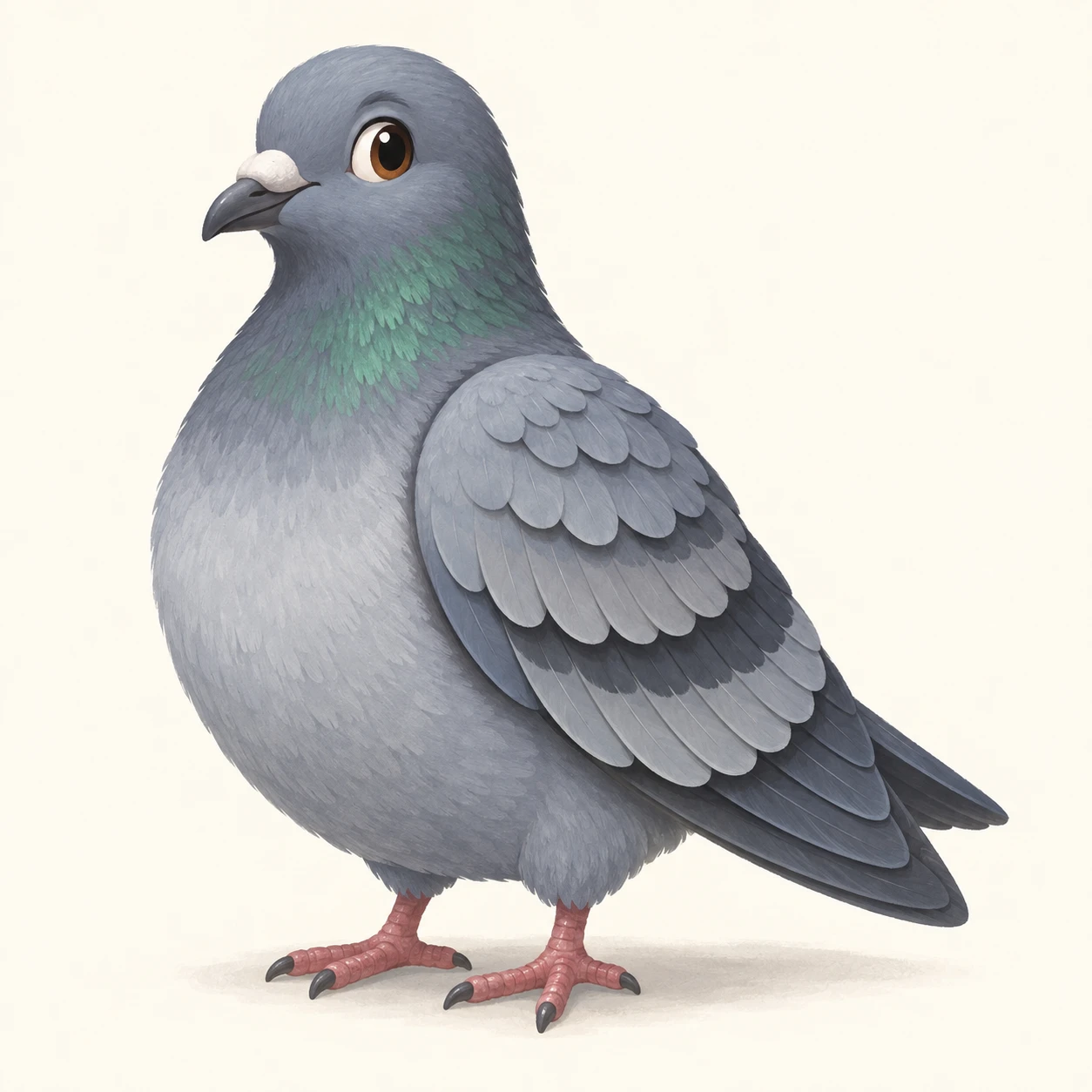
Pigeon Friend · Shingled Feather Overlap
Layer feathers like shingles to reveal the structure and volume of a pigeon character’s folded wing.
Pigeon Friend · Shingled Feather Overlap
- Shape & line
- Build the pigeon from a round head and pear-shaped body, then construct the image-right wing with short rounded feathers near the shoulder and progressively longer feathers toward the lower tailward tip. Let each upper row cover the roots of the row below; stop hidden contours at the covering edges so the feathers read as layered plates.
- Color & light
- Use muted blue-gray plumage, a slightly lighter chest and a restrained green neck patch. Light from image-upper-left, placing narrow soft shadows directly beneath the overlapping feather edges on the image-right wing; keep the exposed feather tips lighter so the sequence of layers remains visible.
- Texture & material
- Render the plumage in matte gouache with softly brushed fills. Add only a few tapered strokes from each larger feather’s root toward its tip, keeping them inside the feather shape; leave the small shoulder feathers mostly smooth so texture supports the overlap instead of obscuring it.
- Composition
- Center the full figure against a plain warm off-white field and separate the visible wing from the chest with a clear curved boundary. Keep the tail projecting toward image-right behind the wing, and anchor both feet with a small soft ground shadow while preserving a readable outer silhouette.
Priority
Make the direction and covering order of the folded wing’s feather layers immediately readable.
What to avoid & what to check
Avoid isolated feather scales, transparent overlapping contours and equally dark outlines around every feather.
Check that upper feathers visibly cover lower roots and that edge shadows reinforce the same overlap order.
Exact prompt for this example
SUBJECT
One original, friendly pigeon character standing upright with both wings folded against its body. Its rounded head, small beak, plump chest and two short feet establish a simple recognizable identity. The visible wing on image-right demonstrates orderly feather overlap.

COMPOSITION
Show the entire character in a three-quarter view, with its beak pointing toward image-left and its image-right flank facing the viewer. Keep the visible folded wing large and unobstructed, with comfortable space around the head, tail and feet.

STYLE GUIDE
1. Shape & line
Build the pigeon from a round head and pear-shaped body, then construct the image-right wing with short rounded feathers near the shoulder and progressively longer feathers toward the lower tailward tip. Let each upper row cover the roots of the row below; stop hidden contours at the covering edges so the feathers read as layered plates.

2. Color & light
Use muted blue-gray plumage, a slightly lighter chest and a restrained green neck patch. Light from image-upper-left, placing narrow soft shadows directly beneath the overlapping feather edges on the image-right wing; keep the exposed feather tips lighter so the sequence of layers remains visible.

3. Texture & material
Render the plumage in matte gouache with softly brushed fills. Add only a few tapered strokes from each larger feather’s root toward its tip, keeping them inside the feather shape; leave the small shoulder feathers mostly smooth so texture supports the overlap instead of obscuring it.

4. Composition
Center the full figure against a plain warm off-white field and separate the visible wing from the chest with a clear curved boundary. Keep the tail projecting toward image-right behind the wing, and anchor both feet with a small soft ground shadow while preserving a readable outer silhouette.

PRIORITY
Preserve the requested identity, count, action, composition and output settings. Apply the style rules within those constraints; a style reference must not replace the subject or layout. Within the style: Make the direction and covering order of the folded wing’s feather layers immediately readable.

AVOID
Avoid isolated feather scales, transparent overlapping contours and equally dark outlines around every feather.

OUTPUT
Create one square character illustration with an opaque pale background, without lettering, labels or watermarks.

SELF-CHECK
Check that upper feathers visibly cover lower roots and that edge shadows reinforce the same overlap order.
Model information comes from image provenance. The same prompt may produce a different result.