Text to imageCharacterStyle guide
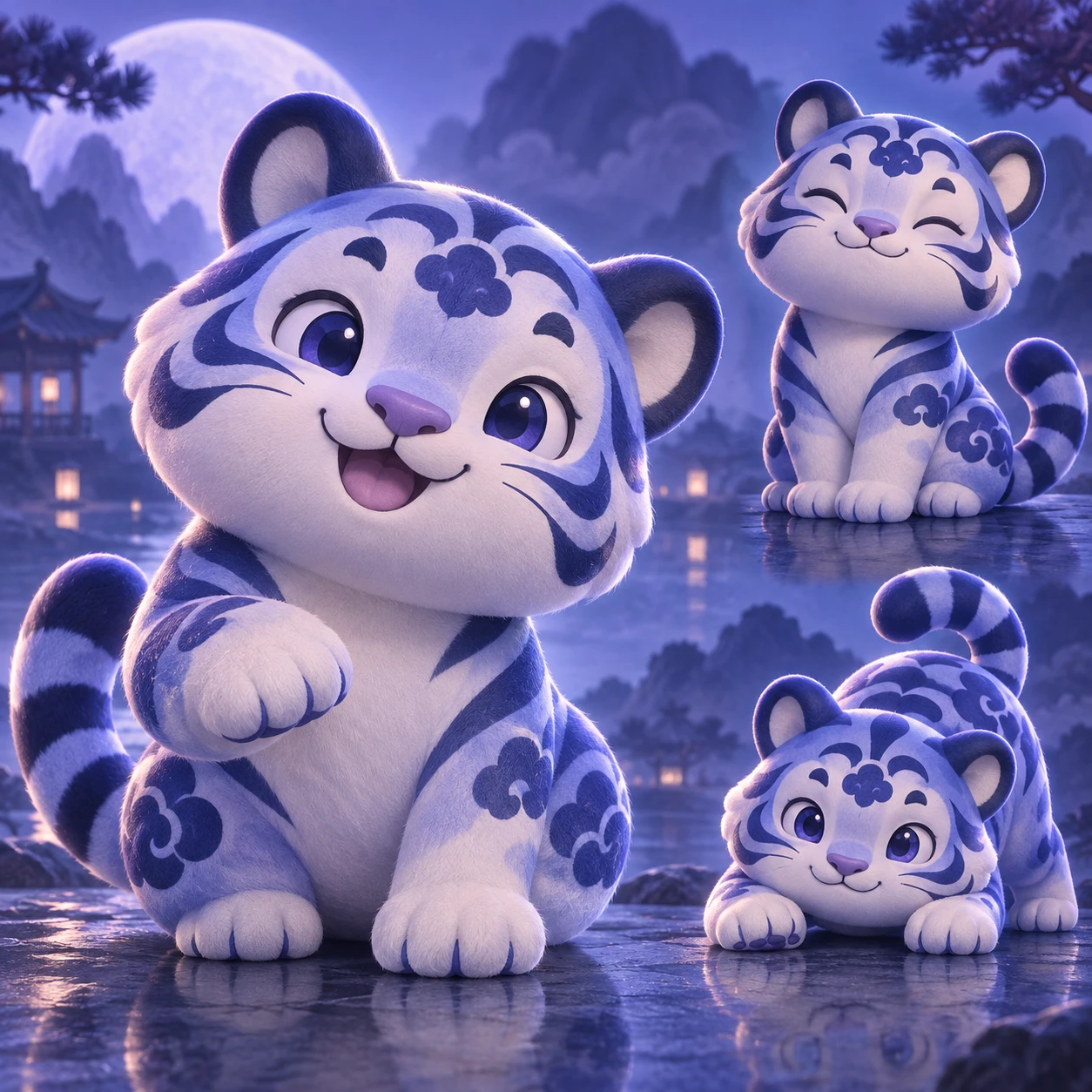
Tiger mascot study · Blue hour
Tiger mascot study · Blue hour. A study in cobalt and lavender with cool blue-hour light with a soft rim.
Remix this referenceTiger mascot study · Blue hour
- Shape & line
- Use rounded friendly mascot proportions with simplified folk-painting-inspired markings; repeat one consistent identity across the character sheet.
- Color & light
- Use cobalt and lavender as the scene palette with cool blue-hour light with a soft rim. Preserve readable subject values and coherent light direction throughout the image.
- Texture & material
- Use a soft matte stylized surface and simplified markings with restrained texture; avoid realistic animal anatomy and aggressive sharp details.
- Composition
- Use a cinematic close framing with readable silhouette, deep background gradients and refined reflection hierarchy; keep the full main object visible.
Priority
Preserve the distinctive construction and medium first, readable spatial hierarchy second, subtle surface details third.
What to avoid & what to check
Avoid extra subjects, inconsistent repeated geometry, hidden key details, crowded overlaps, unwanted text and watermarks.
Check each style rule against the finished image: visible shape construction, color and light, material treatment, and composition. Preserve the exact subject count and scene requirements.
Exact prompt for this example
SUBJECT
Create an original commercial reference image of an original round friendly tiger mascot inspired by Korean folk painting, clean commercial character sheet without text. Palette: cobalt and lavender. Lighting: cool blue-hour light with a soft rim. Art direction: cinematic close-up, refined reflections and deep gradients. Adapt the composition naturally to the subject. Clear focal point, convincing material detail, polished finish. No logos, watermark or extra lettering. Square image.

COMPOSITION
Square character sheet with one large friendly hero pose and two smaller supporting poses of the same mascot. Leave clear gaps and keep all ears, paws and tails inside the frame. Use a cinematic close framing with readable silhouette, deep background gradients and refined reflection hierarchy; keep the full main object visible.

STYLE GUIDE
1. Shape & line
Use rounded friendly mascot proportions with simplified folk-painting-inspired markings; repeat one consistent identity across the character sheet.

2. Color & light
Use cobalt and lavender as the scene palette with cool blue-hour light with a soft rim. Preserve readable subject values and coherent light direction throughout the image.

3. Texture & material
Use a soft matte stylized surface and simplified markings with restrained texture; avoid realistic animal anatomy and aggressive sharp details.

4. Composition
Use a cinematic close framing with readable silhouette, deep background gradients and refined reflection hierarchy; keep the full main object visible.

PRIORITY
Preserve the requested identity, count, action, composition and output settings. Apply the style rules within those constraints; a style reference must not replace the subject or layout. Within the style: Preserve the distinctive construction and medium first, readable spatial hierarchy second, subtle surface details third.

AVOID
Avoid extra subjects, inconsistent repeated geometry, hidden key details, crowded overlaps, unwanted text and watermarks.

OUTPUT
One finished square image. No lettering, logos, watermark, border or interface. Preserve the specified subject identity and count.

SELF-CHECK
Check each style rule against the finished image: visible shape construction, color and light, material treatment, and composition. Preserve the exact subject count and scene requirements.
Model information comes from image provenance. The same prompt may produce a different result.
 Tiger mascot study · Pastel minimal
 Tiger mascot study · Morning by the window
 Tiger mascot study